Life & Legacy
Early Life
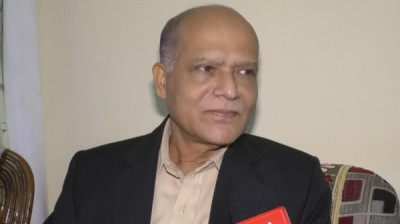
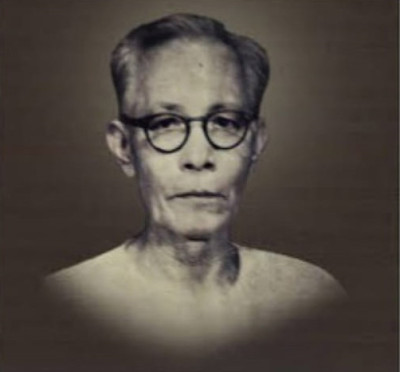
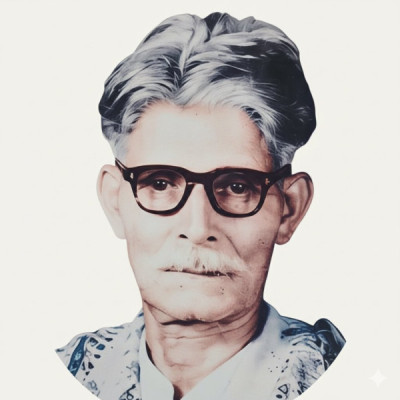
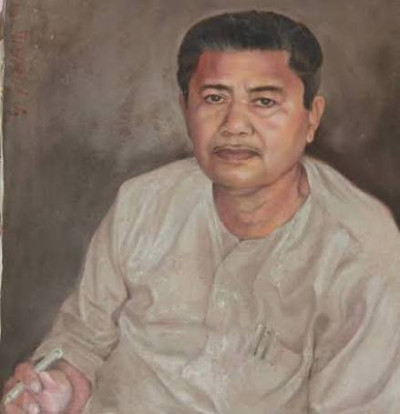
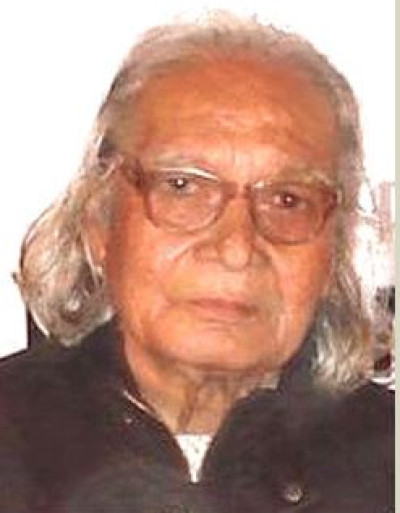
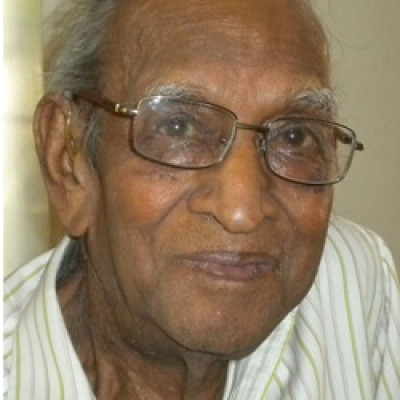
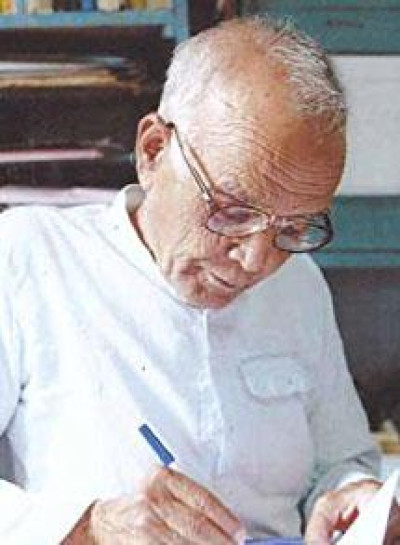
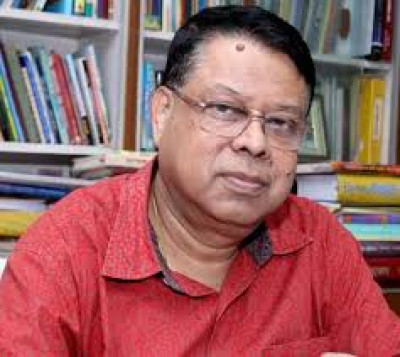
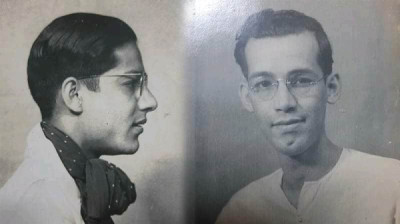
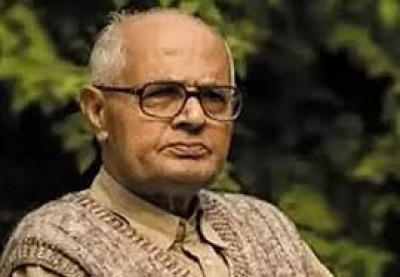
Birendra Kumar Bhattacharya was born on 14 October 1924 at Safrai Tea Estate in present-day Charaideo district (formerly part of Sivasagar district), Assam. His father, Shashidhar Bhattacharya, worked in a tea estate, while his mother was Padmavati Devi. Growing up in a modest family, he experienced the hardships of rural Assam, which later became an important influence on his literary imagination. His childhood surroundings exposed him to the lives of ordinary people, an experience that shaped the realistic nature of his writings.
Education
Birendra Kumar Bhattacharya completed his early education at Safrai Primary School and Kakajan M.E. School before passing his matriculation examination from Jorhat Government High School in 1941. He continued his studies at Cotton College, Guwahati, earning his Intermediate qualification in 1943 and a Bachelor of Science degree in 1945. Later, he studied at Gauhati University, where he completed both his Bachelor of Arts and Master of Arts in Assamese. His academic journey culminated in a Ph.D. awarded in 1977 for his research on humour and satire in Assamese literature. His scholarly background greatly enriched his literary career.
Personal Life
Birendra Kumar Bhattacharya married Binita Bhattacharya on 6 June 1958. Throughout his life, he remained deeply committed to literature, journalism and education while balancing family responsibilities. His disciplined lifestyle and dedication to writing earned him widespread respect among readers and fellow authors.
Career
Birendra Kumar Bhattacharya actively participated in India's Quit India Movement in 1942, an experience that deeply influenced many of his later writings. He initially worked as a journalist and assistant editor before becoming associated with several leading newspapers and literary magazines. His editorial vision played a significant role in shaping modern Assamese literature.
One of the defining chapters of his career was his editorship of the influential Assamese literary magazine Ramdhenu. Under his leadership, the magazine became the centre of a literary renaissance often referred to as the "Ramdhenu Era." During this period, he encouraged experimental writing, introduced talented young authors and promoted progressive literary ideas that transformed Assamese literature.
Apart from journalism, he served as Reader in the Department of Journalism at Gauhati University, where he inspired students with his knowledge of literature, media and social issues. His contributions extended beyond academics, as he remained actively involved in literary organizations and cultural institutions across Assam and India.
Literary Contributions
Birendra Kumar Bhattacharya was among the leading proponents of social realism in Assamese literature. His novels explored themes such as India's freedom movement, social inequality, political unrest, human dignity and moral courage. His characters often represented common people facing extraordinary challenges, making his works emotionally engaging and historically significant.
His novel Iyaruingam portrayed the lives of the Tangkhul Naga community during a period of political conflict and won the Sahitya Akademi Award in 1961. The novel remains one of the finest examples of Indian regional literature.
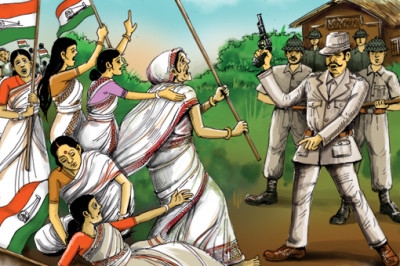
His masterpiece Mrityunjay, based on the Quit India Movement of 1942, earned him the Jnanpith Award in 1979. The novel examines the sacrifices, hopes and inner conflicts of ordinary people participating in India's struggle for independence. It is regarded as one of the greatest Assamese novels ever written.
Besides novels, Birendra Kumar Bhattacharya wrote numerous short stories, poems, essays, plays, travelogues and literary criticism. His works display remarkable narrative depth, psychological insight and a profound understanding of Assamese society. He also translated important literary works into Assamese, helping readers access world literature in their mother tongue.
His literary influence extended beyond writing. Through criticism, editing and mentorship, he encouraged several young writers who later became prominent names in Assamese literature, making him one of the most respected literary leaders in the state.
Awards and Recognition
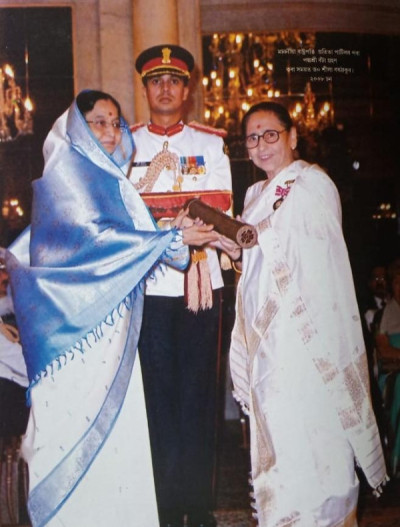
Birendra Kumar Bhattacharya received several prestigious literary honors in recognition of his outstanding contribution to Assamese and Indian literature. His awards reflect both his creative excellence and his lasting influence on modern Indian writing.
Major awards and honors include:
- Sahitya Akademi Award (1961) for the Assamese novel Iyaruingam.
- Jnanpith Award (1979) for the novel Mrityunjay, becoming the first Assamese writer to receive India's highest literary honor.
- Honorary Doctor of Letters (D.Litt.) from Jabalpur University.
- Widely recognized as one of the pioneers of modern Assamese literature.
- Honored by numerous literary and cultural organizations for his lifelong contribution to literature and journalism.
Major Positions Held
Throughout his distinguished career, Birendra Kumar Bhattacharya served in several important literary, academic, editorial, and cultural positions.
Some of his notable positions include:
- President, Asam Sahitya Sabha (1983-1985).
- Vice-President, Sahitya Akademi.
- Reader, Department of Journalism, Gauhati University.
- Editor, Ramdhenu (one of Assam's most influential literary magazines).
- Editor of Dainik Asomiya.
- Editor of Janata.
- Editor of Navayug.
- Associated with Banhi, Assam Tribune, Dainik Asom, Dharmayug, Dinman, Indian Literature and Economic and Political Weekly.
- President, Assam Arts and Craft Society.
- Literary critic, journalist, translator and mentor to several emerging Assamese writers.
Major Literary Works
Birendra Kumar Bhattacharya produced an extensive body of work across multiple literary genres.
Important novels include:
- Rajpathe Ringiyai
- Ai
- Iyaruingam
- Shataghni
- Nostochandra
- Mrityunjay
- Pratipad
- Ranga Megh
- Daaini
- Ballari
- Budhi Aitar Puran
- Kabor Aru Phool
Popular short story collections include:
- Kolong Ajio Boi
- Satsari
- Khiriki Kashar Asan
Poetry:
- Sandhyaswar
Travelogue:
- Simai Amoni Kare
Literary criticism and essays:
- Humor and Satire in Assamese Literature
- A Glimpse into 150 Years of Assamese Culture
Translations:
- Parineeta by Sarat Chandra Chattopadhyay
- History of India by D. D. Kosambi
His celebrated novel Iyaruingam was translated into English as Love in the Time of Insurgency, introducing Assamese literature to a wider international readership.
Literary Style and Contribution
Birendra Kumar Bhattacharya believed that literature should reflect society and inspire positive change. His writings combined realism with deep human emotions and explored themes such as freedom, injustice, identity, conflict, peace, nationalism and social transformation. His novels often portrayed ordinary people facing extraordinary circumstances, making his stories emotionally powerful and historically significant.
He also revolutionized Assamese literary journalism through his editorial work. Under his leadership, Ramdhenu became a platform that encouraged fresh voices and modern literary movements. Many renowned Assamese writers gained recognition through this magazine, making his editorial contribution as significant as his own creative writing.
Death
Birendra Kumar Bhattacharya passed away on 6 August 1997 in Guwahati, Assam, at the age of 72 after a brief illness. His death marked the end of an extraordinary literary career, but his writings continue to influence readers, scholars and aspiring authors across India.
Legacy
Birendra Kumar Bhattacharya remains one of the greatest literary icons of Assam. As the first Assamese recipient of the Jnanpith Award, he elevated Assamese literature to national prominence and inspired generations of writers to address social realities through literature. His novels continue to be taught in universities, translated into several languages and studied for their artistic excellence, historical value and humanistic vision.
His contributions as a novelist, editor, journalist, educator and literary leader ensured that Assamese literature gained lasting recognition within the broader landscape of Indian literature. Today, Birendra Kumar Bhattacharya is remembered as a fearless thinker, compassionate storyteller and one of the most influential famous personalities of Assam.
FAQs about Birendra Kumar Bhattacharya