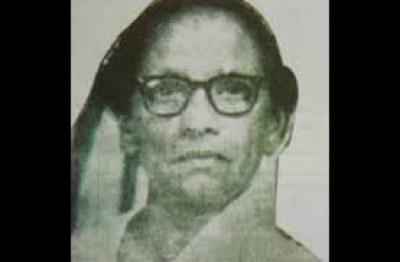
Life & Legacy
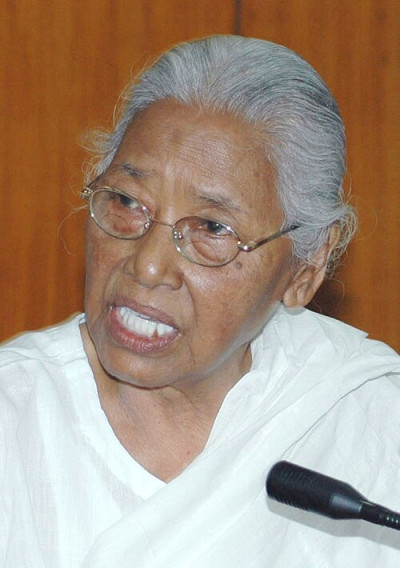
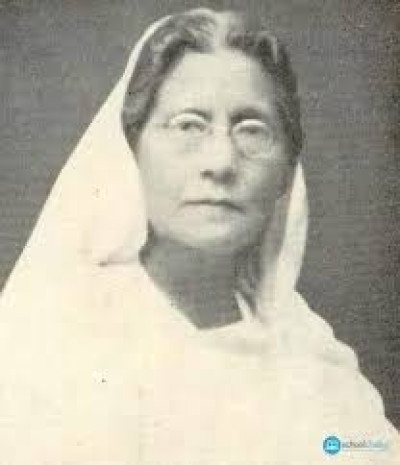
She was born on 12 November 1911 in Dibrugarh, Assam, into a highly educated and socially conscious family. Her father, Dr. Harekrishna Das, was a renowned surgeon and freedom fighter, while her mother, Hemprava Das, was an educator and social worker. Growing up in such an environment, Amalprava Das developed a strong sense of patriotism, discipline, and service to society from an early age.
Amalprava Das received her early education in Assam before moving to Kolkata for higher studies. She studied at Bethune College and later at Scottish Church College. She earned a Master's degree in Applied Chemistry, becoming one of the earliest Assamese women to achieve such academic distinction. She was also the first Assamese woman to obtain a postgraduate degree in Chemistry. Despite having opportunities for a successful professional career, she chose the path of public service and national development.
A turning point in her life came when Mahatma Gandhi visited Assam in 1934 and stayed at her family residence. Inspired by Gandhi's ideals of simplicity, self-reliance, and service, Amalprava adopted the Gandhian way of life. She wore khadi, promoted village industries, and dedicated herself to the welfare of rural communities. She later received training in village industries and basic education at Wardha, one of the major centres of Gandhian activities in India.
Amalprava Das founded the Kasturba Gandhi Ashram at Sarania Hills in Guwahati, which became a major centre for women's development and rural reconstruction. Through this institution, she trained women in spinning, weaving, handicrafts, cottage industries, and community service. She worked tirelessly to help economically disadvantaged women become self-reliant and financially independent. The Ashram gradually evolved into one of the leading Gandhian institutions in the North-East.
She established several organizations and welfare initiatives, including Kasturba Welfare Centre, Gram Sevika Vidyalaya, Gauhati Katai Mandal, Guwahati Yuvak Sevadal, and Go-Seva Samiti. These institutions focused on education, healthcare, women's empowerment, rural employment, sanitation, child welfare, and community development.
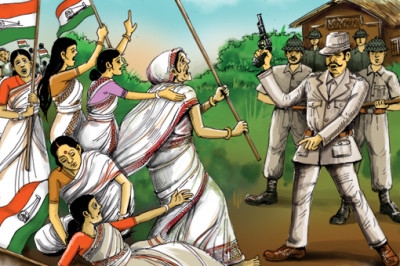
During India's freedom movement, Amalprava Das actively participated in Gandhian campaigns. She was arrested for her involvement in the freedom struggle and spent time in prison during the Quit India Movement. Despite these challenges, she remained committed to social service and nation-building.
One of her most significant contributions was the promotion of Gram Sevika training programmes. Hundreds of village women were trained and later worked in remote areas of Assam, Meghalaya, Arunachal Pradesh, and Nagaland. These workers helped spread literacy, healthcare awareness, sanitation practices, child welfare programmes, and self-employment opportunities among rural populations.
Amalprava Das also played an important role in disaster relief and rehabilitation. Following the devastating Assam earthquake of 1950, she personally worked in affected areas, helping widows, orphaned children, and displaced families. Her humanitarian efforts earned widespread admiration across the region.
She remained closely associated with several Gandhian movements, including the Bhoodan and Gramdan movements led by Acharya Vinoba Bhave. She travelled extensively, encouraging rural development, community harmony, and social justice. She also participated in peace initiatives and worked towards national integration.
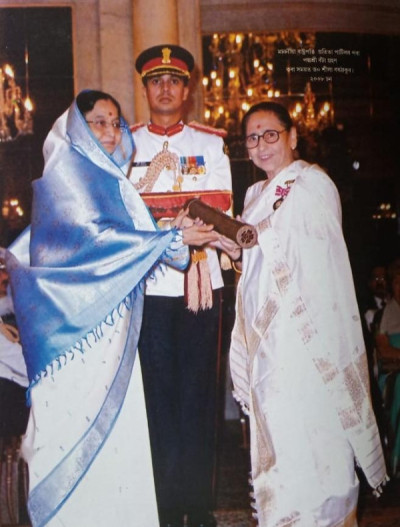
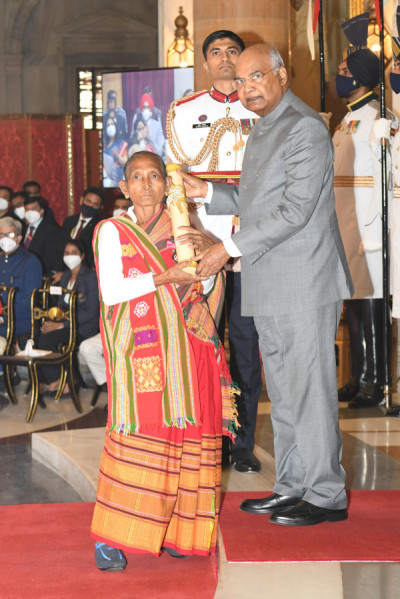
For her exceptional service to society, the Government of India awarded her the Padma Shri in 1954. She became the first woman from Assam to receive this prestigious civilian honour. In 1981, she received the Jamnalal Bajaj Award for her outstanding contribution to constructive social work. Later, she was offered the Padma Vibhushan, India's second-highest civilian award, but she declined the honour, reflecting her humility and commitment to selfless service rather than public recognition.
Amalprava Das remained unmarried and devoted her entire life to serving humanity. Thousands of women, children, and social workers regarded her as a guiding force and affectionately called her "Baideu". Her life stands as an inspiring example of compassion, sacrifice, and dedication to social upliftment.
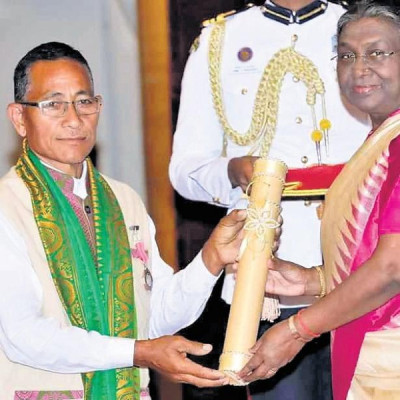
Amalprava Das passed away in 1993, leaving behind a remarkable legacy of service and nation-building. Today, her contributions continue to inspire social workers, educators, and community leaders across India. The Government of Assam instituted the Amalprava Das Award in her memory to recognize individuals who dedicate themselves to selfless social service. Her vision of empowering rural communities, promoting education, and strengthening women's participation in society remains highly relevant even today.
Major Achievements
- First Assamese woman to receive the Padma Shri Award.
- Founder of Kasturba Gandhi Ashram at Sarania, Guwahati.
- Pioneer of women's self-help and rural development programmes in Assam.
- Active participant in India's freedom movement.
- Promoted Gram Sevika training and rural education.
- Worked extensively for disaster relief and rehabilitation.
- Supported Bhoodan and Gramdan movements.
- Established multiple welfare institutions for women and children.
- Contributed significantly to Gandhian social reform in North-East India.
Awards and Recognition
- Padma Shri (1954)
- Jamnalal Bajaj Award (1981)
- Offered Padma Vibhushan (declined)
- Numerous recognitions for Gandhian social service
- Amalprava Das Award instituted by the Government of Assam in her memory
Positions Held
- Founder, Kasturba Gandhi Ashram
- Representative of Kasturba Gandhi National Memorial Trust, Assam
- Sanchalika, Assam Branch of Gandhi Smarak Nidhi
- Chairperson, Social Welfare Advisory Board, Assam
- Leader and organizer of various Gandhian welfare programmes
Death and Legacy
Amalprava Das passed away in 1994 at the age of 83, leaving behind an extraordinary legacy of selfless service, Gandhian values, and social reform. The Kasturba Gandhi Ashram at Sarania Hills in Guwahati, established under her leadership, continues to promote women's empowerment, rural development, vocational training, and community welfare based on Gandhian principles. Her lifelong dedication to uplifting marginalized communities continues to inspire generations of social workers and volunteers across Assam. To commemorate her invaluable contribution to society, the Amal Prabha Das Sarvodaya Award was instituted to recognize individuals who have made outstanding contributions to social service, rural development, and the ideals of the Sarvodaya movement. Her enduring influence remains an important part of Assam's social and cultural heritage.
FAQs about Amalprava Das
1. Who was Amalprava Das?
Amalprava Das was a renowned Gandhian social worker, freedom fighter, and women's welfare activist from Assam who dedicated her life to rural development and social service.
2. Why is Amalprava Das famous in Assam?
She is famous for founding the Kasturba Gandhi Ashram, promoting women's empowerment, and becoming the first Assamese woman to receive the Padma Shri Award.
3. When was Amalprava Das born?
Amalprava Das was born on 12 November 1911 in Dibrugarh, Assam.
4. What was Amalprava Das's educational qualification?
She earned a Master's degree in Applied Chemistry and became the first Assamese woman to obtain a postgraduate degree in Chemistry.
5. What role did Mahatma Gandhi play in her life?
Mahatma Gandhi greatly influenced her life and inspired her to dedicate herself to social service, rural development, and Gandhian ideals.
6. What is the Kasturba Gandhi Ashram?
It is a Gandhian institution established by Amalprava Das in Guwahati to promote women's welfare, vocational training, and community development.
7. Which award did Amalprava Das receive from the Government of India?
She received the Padma Shri in 1954 and later the Jamnalal Bajaj Award in 1981.
8. Did Amalprava Das participate in India's freedom movement?
Yes, she actively participated in the freedom struggle and was imprisoned for her involvement in Gandhian movements.
9. Why did Amalprava Das decline the Padma Vibhushan?
She declined the Padma Vibhushan because she believed public honours could create a sense of vanity and preferred selfless service.
10. What is the legacy of Amalprava Das?
Her legacy includes women's empowerment initiatives, Gandhian institutions, rural development programmes, and the Amalprava Das Award instituted in her honour by the Government of Assam.