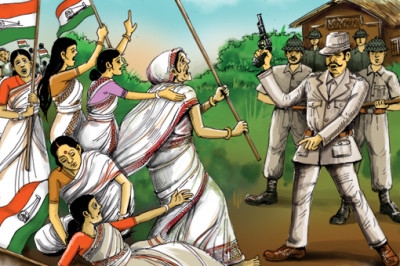
Life & Legacy
From ancient times, women in Assam have contributed decisively to social, cultural, and political life. From early dynasties to the Ahom period and later during British rule, Assamese women consistently demonstrated leadership, resilience, and patriotism. Dariki Dasi Barua belongs to this long tradition of women who placed the welfare of society and the nation above personal comfort and safety.
Dariki Dasi Barua was married to Anondaram Baruah, an active Congress worker from Golaghat. Unlike many women of her time who were confined to domestic spaces, she became an equal partner in her husband's political journey. She shared his ideals, participated in nationalist activities, and accompanied him during Congress campaigns. Her political consciousness was shaped not by formal education, but by lived experience, moral conviction, and exposure to the freedom movement at the grassroots level.
During the early 1930s, Mahatma Gandhi launched the Civil Disobedience Movement, urging Indians to openly defy unjust colonial laws. One of the important components of this movement was the anti-opium and anti-liquor campaign. The British administration promoted intoxicants like opium and alcohol to weaken Indian society and extract revenue. In Assam, this had a devastating impact, particularly on rural and working communities.
Dariki Dasi Barua became deeply involved in this campaign. She believed that addiction was not merely a social problem but a political tool of colonial exploitation. She worked tirelessly to mobilise women, encouraging them to come out of their homes and actively oppose opium shops. Her leadership inspired many village women who had never before participated in public protests.
What makes Dariki Dasi Barua's contribution extraordinary is the fact that she carried out all these activities while she was pregnant. At a time when even basic healthcare facilities were scarce, pregnancy posed serious risks. Yet, she refused to step back from the movement. For her, the freedom of the nation and the future of generations to come were more important than her own physical suffering.
She led groups of women to picket opium shops, participated in protests, and openly defied colonial authority. Her courage shattered prevailing social norms that restricted women to household roles. She demonstrated that women had equal responsibility in shaping the destiny of the nation.
On 1 February 1932, while leading an anti-opium picketing programme in Golaghat, Dariki Dasi Barua was arrested by British authorities on charges of disturbing law and order. She was sentenced to six months of rigorous imprisonment. At the time of her arrest, her husband Anondaram Baruah was also imprisoned, leaving her without familial support.
Due to her pregnancy, jail authorities advised her to seek conditional release. However, Dariki Dasi Barua refused to ask for special treatment. She believed that accepting privileges would weaken the moral force of the freedom movement. Her refusal reflected her unwavering commitment to equality, sacrifice, and national duty.
Inside the prison, she suffered from poor living conditions, inadequate nutrition, and lack of medical care. Gradually, her health deteriorated, and she developed severe stomach-related ailments. Despite her worsening condition, she remained firm in her resolve and never expressed regret for her participation in the struggle.
On 26 April 1932, Dariki Dasi Barua passed away while in custody. Her death was not merely a personal tragedy but a national loss. She became one of the earliest women martyrs of Assam's freedom movement who laid down her life during imprisonment rather than in armed conflict.
Dariki Dasi Barua's sacrifice highlighted the hidden suffering endured by women freedom fighters, many of whom remain absent from mainstream historical narratives. Her story reveals that the freedom struggle was not limited to major cities or famous leaders, but was deeply rooted in villages, households, and everyday lives.
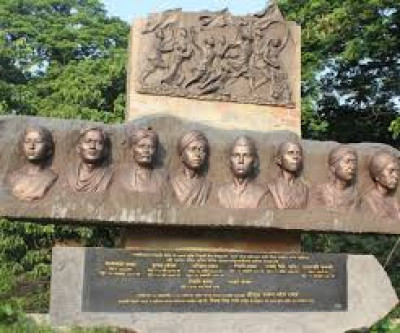
Her legacy continues to inspire discussions on women's participation in nationalist movements, especially in Assam. She stands alongside other courageous Assamese women such as Kanaklata Barua, Joymoti, and Mula Gabharu, representing a continuous tradition of resistance and sacrifice.
Today, Dariki Dasi Barua is remembered as a symbol of moral courage, gender equality, and selfless patriotism. For students, researchers, and general knowledge learners, her life offers valuable insight into the social dimensions of India's freedom struggle and the vital contributions of women from rural and marginalised backgrounds.
FAQs on Dariki Dasi Barua
1. Who was Dariki Dasi Barua?
Dariki Dasi Barua was an Assamese woman freedom fighter from Golaghat who participated in the Civil Disobedience Movement and anti-opium campaigns.
2. Why is Dariki Dasi Barua important in Assam history?
She represents the courage and sacrifice of Assamese women who actively resisted British rule despite social and physical hardships.
3. Which movement did Dariki Dasi Barua participate in?
She was actively involved in the Civil Disobedience Movement of 1932.
4. What was her role in the anti-opium movement?
She led women in picketing opium shops and spreading awareness about the social harm caused by addiction.
5. Was Dariki Dasi Barua pregnant during her imprisonment?
Yes, she was pregnant when she was arrested and imprisoned by British authorities.
6. When was Dariki Dasi Barua arrested?
She was arrested on 1 February 1932 in Golaghat, Assam.
7. How did Dariki Dasi Barua die?
She died in prison on 26 April 1932 due to illness and lack of medical care.
8. Did she accept conditional release from jail?
No, she refused conditional release despite her pregnancy.
9. Who was her husband?
Her husband was Anondaram Baruah, an active Congress worker.
10. What does Dariki Dasi Barua symbolise today?
She symbolises sacrifice, women's leadership, and grassroots participation in India's freedom struggle.