Life & Legacy
Early Life
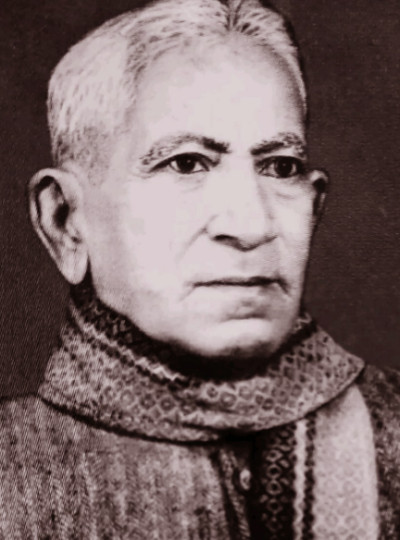
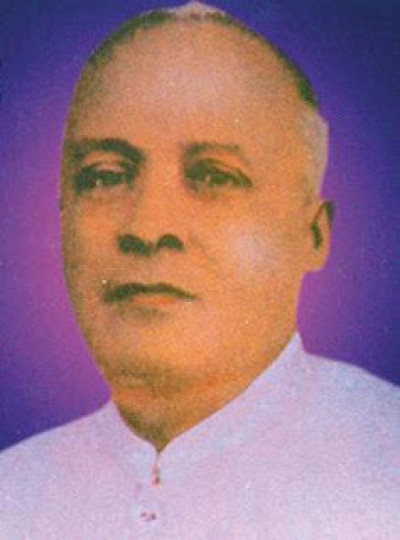
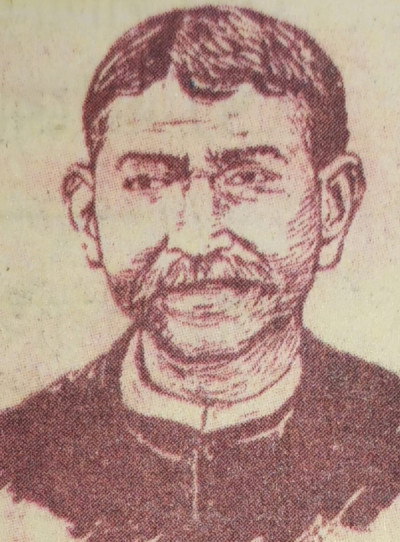
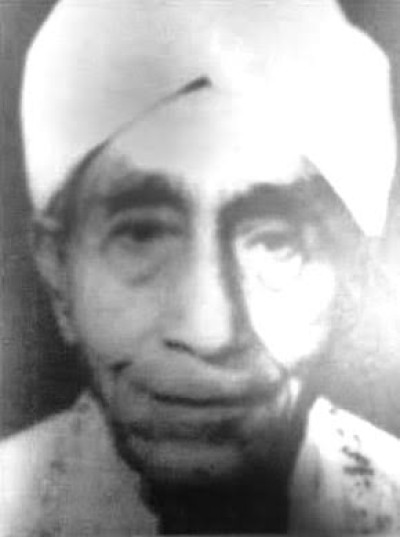
The exact birth year of Atmaram Sarma is still debated by historians, though many scholars believe he was born around the late eighteenth century, most likely in the Kaliabor region of present-day Assam. Several historical studies identify him as belonging to a traditional Brahmin family. From an early age, he received education in Sanskrit grammar, religious scriptures and classical literature, which later helped him undertake complex translation work. Various oral traditions also associate him with religious learning at satras in Assam, although complete documentary evidence is unavailable.
Education
Atmaram Sarma was educated in Sanskrit, Assamese and Bengali, which were the primary literary languages of the period. His deep understanding of Sanskrit literature and traditional learning enabled him to interpret religious texts accurately. While no formal university education existed during his lifetime, he was widely regarded as a learned scholar with exceptional language skills.
Literary Career and Contribution
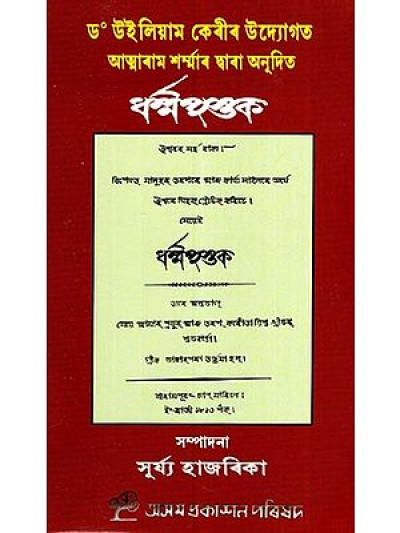
The greatest achievement of Atmaram Sarma was his involvement in translating the Holy Bible into Assamese under the supervision of the renowned missionary-scholar Dr. William Carey at the Serampore Mission Press. Around the beginning of the nineteenth century, Carey sought the assistance of an Assamese scholar capable of producing a readable translation for Assamese-speaking people. Atmaram Sarma accepted this challenging responsibility and became one of the principal contributors to the project.
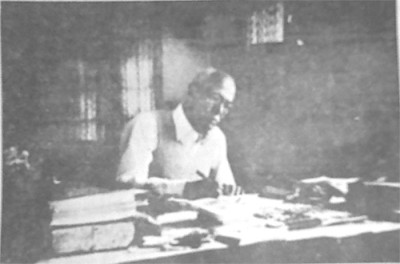
The translation process required extraordinary effort because Assamese had not yet developed modern grammatical standards or printed reference books. Drawing upon his knowledge of Sanskrit and Assamese, Atmaram prepared a translation that balanced classical vocabulary with locally understood expressions. Every proof copy was carefully reviewed before publication to improve accuracy.
A devastating fire at the Serampore Press in 1812 destroyed many printing materials, including portions of the Assamese manuscript. Despite this setback, the translation work was painstakingly reconstructed, leading to the publication of the Assamese New Testament in 1813. This publication is widely regarded as the first printed book in the Assamese language and represents a landmark in the history of Assamese literature.
He is also believed to have assisted in translating the Old Testament, which was later published from the same press. Besides translation work, Atmaram reportedly prepared Christian religious literature in Assamese and helped introduce the language to missionary scholars who later worked in Assam.
Importance in Assamese Literature
Although his writings carried a strong Sanskrit influence, they introduced organized prose writing at a time when Assamese literature was dominated by verse. His work demonstrated that Assamese could serve as an effective language for scholarly writing, translation and printing. Many language historians consider Atmaram Sarma one of the earliest architects of modern Assamese prose. His contribution also indirectly encouraged the future development of Assamese journalism, grammar, dictionaries and educational publications.
Achievements
- Among the earliest known Assamese prose writers.
- Principal contributor to the first Assamese translation of the Bible.
- Played a major role in publishing the first printed Assamese book.
- Helped establish the foundation of modern Assamese prose.
- Assisted early missionary scholars in understanding the Assamese language.
- Made significant contributions to the early printing history of Assamese literature.
Positions Held
- Assamese language scholar.
- Translator at the Serampore Mission Press.
- Early contributor to Assamese printed literature.
Books and Literary Works
- Dharmapustak (Assamese New Testament Translation, contributor)
- Assamese translation of the Old Testament (associated contributor)
- Various Assamese Christian religious tracts and instructional writings
Awards and Recognition
No official awards or government honours are known to have been conferred upon Atmaram Sarma. However, literary historians widely acknowledge him as one of the pioneers of Assamese prose writing and the earliest translator associated with the first printed Assamese publication.
Death
Historical accounts differ regarding the final years of Atmaram Sarma. Several researchers believe he spent much of his later life engaged in missionary activities and language work. One widely accepted tradition suggests that he died in August 1855 while travelling through the Naga Hills during missionary service. Despite the uncertainty surrounding many aspects of his life, his literary contribution continues to hold an important place in the history of Assamese language and literature.
FAQs about Atmaram Sarma