Life & Legacy
Early Life
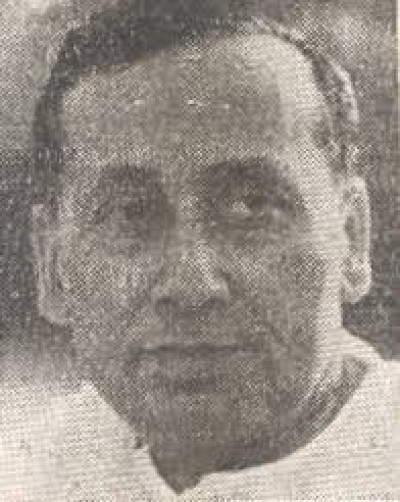
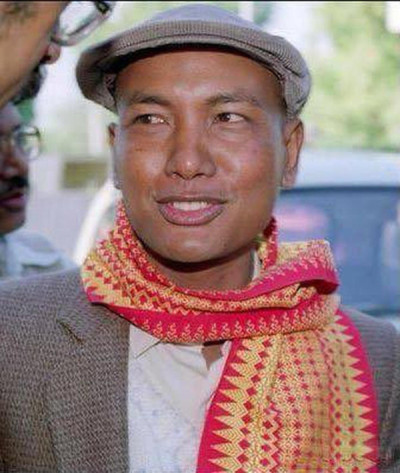
Upendranath Brahma was born on 31 March 1956 in Boragari village near Dotma in present-day Kokrajhar district, Assam. He was born into a humble Bodo family to Manglaram Brahma and Lefsri Brahma. Growing up in a financially modest household, he experienced the social and economic challenges faced by the tribal communities of Assam from an early age. These experiences shaped his determination to work for equality, education, and community development.
Education
Brahma completed his schooling from several educational institutions, including Dotma High School, Kokrajhar High School, and Sakti Ashram High School. He secured first division in the HSLC examination with distinction in Mathematics. He later earned a Bachelor's degree with honours in Physics from Cotton College and completed his Master's degree in Physics from Gauhati University. During his academic years, he also pursued a Bachelor of Arts degree and briefly enrolled in a Bachelor of Laws course. Before becoming a full-time social leader, he worked as a science teacher, believing that education was the strongest foundation for social transformation.
Political and Social Leadership
Upendranath Brahma began his public life through student activism. He served as President of the Goalpara District Students' Union and later became Vice-President of the All Bodo Students' Union (ABSU). In 1986, he was elected President of ABSU, a position that transformed both the organisation and the future of the Bodo community.
Under his leadership, ABSU launched a peaceful democratic movement seeking constitutional safeguards and greater autonomy for Bodo-inhabited areas. His vision focused on preserving the Bodo language, culture, land rights, educational opportunities, and overall development while encouraging unity and non-violent public participation. His leadership inspired thousands of young people across Assam to actively engage in social reform and community welfare.
Major Achievements
- Widely honoured as Bodofa (Father of the Bodos).
- Served as President of the All Bodo Students' Union (ABSU).
- Led one of the most significant democratic movements for the rights of the Bodo people.
- Promoted education as the primary tool for community empowerment.
- Advocated for the protection and promotion of Bodo language, literature, and cultural identity.
- Encouraged peaceful dialogue and constitutional methods to address regional issues.
- Inspired future generations of tribal leaders and social reformers across Northeast India.
- Played a defining role in shaping the modern identity and political aspirations of the Bodo community.
Literary Contributions
Apart from being a social leader, Upendranath Brahma was also interested in literature and journalism. He wrote poems, essays, scientific articles, and short stories. He edited publications such as Bidangsri and later contributed to Orkhi and The Bodoland Times, using these platforms to spread awareness about education, social reform, and community development. His writings reflected his belief that knowledge and literature were essential for preserving the identity of any society.
Awards and Recognition
Although many of the honours were conferred after his death, Upendranath Brahma continues to receive widespread recognition for his extraordinary contributions.
- Conferred the title Bodofa (Father of the Bodos) posthumously.
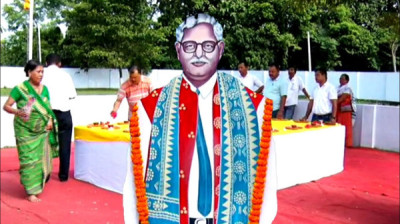
- His birth anniversary on 31 March is observed as Students' Day by the Government of Assam.
- His death anniversary is commemorated annually as Bodofa Day.
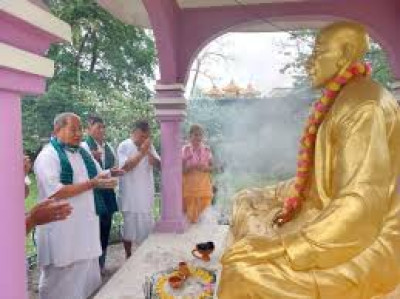
- Memorials, statues, educational institutions, roads, and public places have been named in his honour.
- Remembered as one of the greatest tribal leaders in the history of Assam.
Death
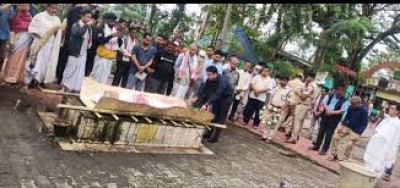
Upendranath Brahma was diagnosed with blood cancer during the peak of his public life. Despite his illness, he remained actively involved in guiding the Bodo movement until his final days. He passed away on 1 May 1990 at Tata Memorial Hospital in Mumbai at the age of only 34. His mortal remains were brought back to Kokrajhar and laid to rest at Thulungapuri, which has since become an important memorial site visited by thousands of admirers every year.
Legacy
The legacy of Upendranath Brahma continues to influence Assam and the wider Northeast. His commitment to peaceful democratic values, education, social justice, and cultural preservation transformed him into an enduring symbol of hope for the Bodo community. Even decades after his passing, his ideals continue to inspire policymakers, students, social workers, and community leaders. His life remains a powerful example of selfless leadership dedicated to equality, dignity, and the progress of society.
FAQs about Upendranath Brahma