Life & Legacy
Early Life
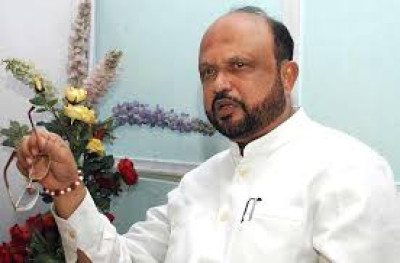
Prafulla Kumar Mahanta was born on 23 December 1952 at Uluoni village near Kaliabor in the Nagaon district of Assam. He was born into a middle-class Assamese family. His father, Deba Kanta Mahanta, served as a government employee, while his mother, Lakshmi Prova Mahanta, looked after the family. Growing up in rural Assam, he developed a close understanding of the social, cultural, and economic challenges faced by ordinary people.
From an early age, Mahanta displayed leadership qualities and actively participated in educational and social activities. His interest in public affairs gradually led him toward student politics, which later became the foundation of his political career.
Education
Prafulla Kumar Mahanta completed his higher education at Gauhati University, where he earned a Bachelor of Laws (LLB) degree. During his university years, he became actively involved in student organizations and emerged as a dynamic youth leader. His ability to organize students and articulate public concerns earned him widespread recognition across Assam.
His involvement in campus politics prepared him for a much larger role in the political developments that unfolded in the state during the late 1970s.
Leadership of the Assam Movement
In 1979, Mahanta was elected President of the All Assam Students Union (AASU), one of the most influential student organizations in the state. Under his leadership, AASU spearheaded the Assam Movement, a mass democratic movement demanding the identification and removal of illegal immigrants from Assam and the protection of the state's cultural, linguistic, and political identity.
The movement continued for nearly six years and witnessed large-scale participation from students, intellectuals, farmers, professionals, and ordinary citizens. Throughout this period, Mahanta became the public face of the movement and was recognized nationally for his leadership.
The movement concluded with the signing of the historic Assam Accord on 15 August 1985 between the leaders of the movement and the Government of India. The accord remains one of the most significant political agreements in Assam's modern history and continues to influence discussions on citizenship and regional identity.
Formation of Asom Gana Parishad (AGP)
Following the Assam Accord, Prafulla Kumar Mahanta and several leaders of the Assam Movement entered electoral politics by forming the Asom Gana Parishad (AGP) in 1985. The party emerged as a regional political force dedicated to protecting Assam's interests while promoting development and good governance.
The newly formed AGP received overwhelming public support during the 1985 Assam Legislative Assembly elections. Riding on the momentum created by the Assam Movement, the party secured a historic victory and formed the government in the state.
Mahanta became the first President of the Asom Gana Parishad and established himself as one of the most influential regional political leaders in India.
Youngest Chief Minister of Assam
At the age of just 32, Prafulla Kumar Mahanta took oath as the 11th Chief Minister of Assam in December 1985, making him one of the youngest Chief Ministers in the history of India.
His first tenure as Chief Minister lasted from 1985 to 1990. The government focused on restoring administrative stability after years of political agitation while addressing issues relating to infrastructure, education, rural development, and employment. His administration also faced major challenges, including insurgency, law and order issues, and the complexities of implementing the Assam Accord.
Despite these difficulties, his rise from student leader to Chief Minister remains one of the most remarkable political journeys in independent India.
Return to State Leadership
Following the 1991 Assembly elections, Mahanta served as the Leader of the Opposition in the Assam Legislative Assembly. During this period, he remained one of the principal voices of regional politics in Assam and continued to advocate issues concerning the state's development and identity.
The Asom Gana Parishad returned to power in the 1996 Assembly elections, and Mahanta assumed office for a second term as Chief Minister. His second administration worked on improving roads, education, rural infrastructure, agriculture, and investment in Assam while simultaneously dealing with complex security and administrative challenges.
During both terms as Chief Minister, Mahanta remained one of the central figures in Assam's political landscape and played an important role in strengthening regional political representation within the Indian democratic system.
FAQs on Prafulla Kumar Mahanta