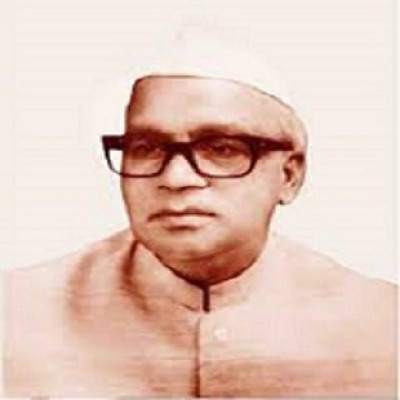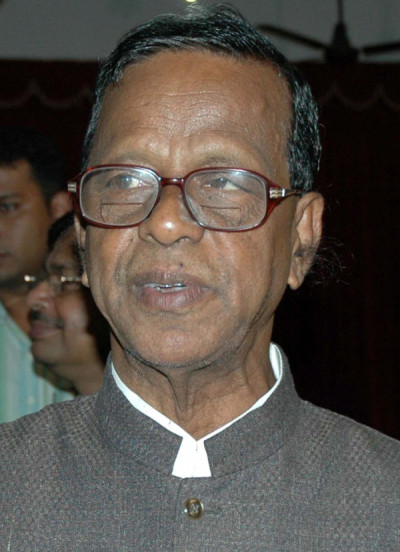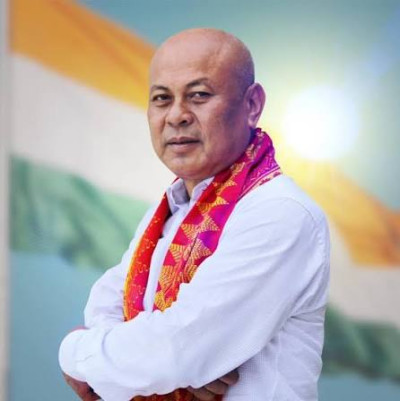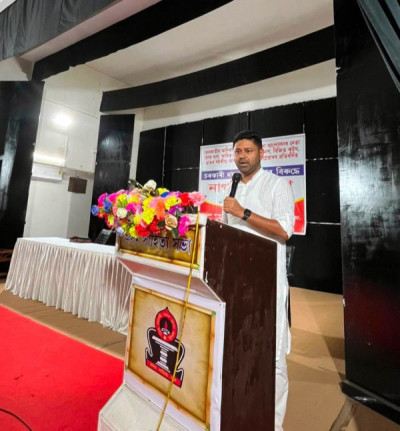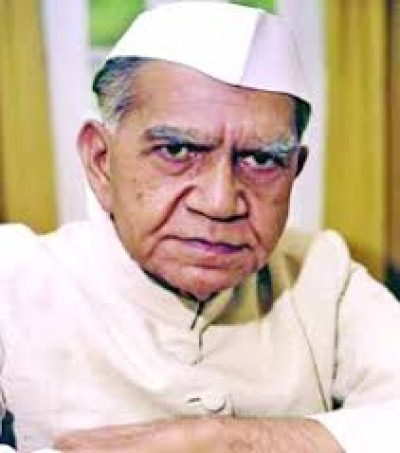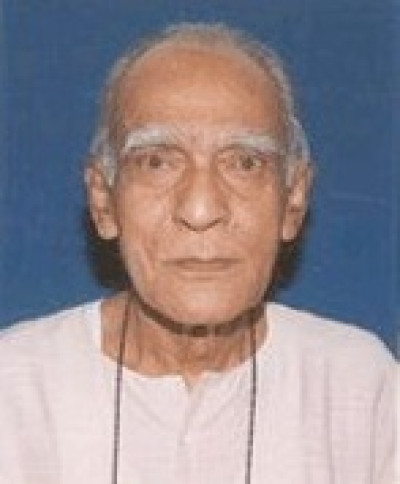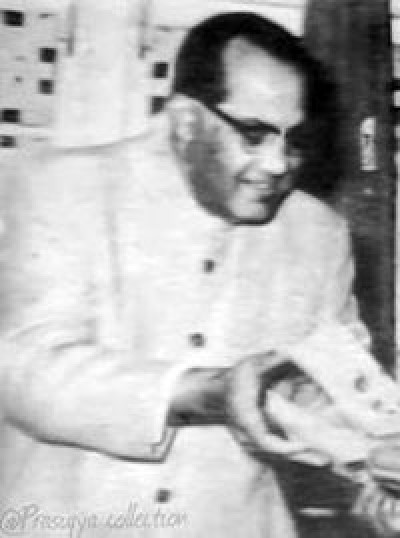
Life & Legacy
Early Life
Hiteswar Saikia was born on 3 October 1934 at Bogabagh Tea Estate in present-day Sivasagar district, Assam. He belonged to a respected Assamese family where values such as discipline, honesty, and public service were deeply encouraged. Growing up in Upper Assam during the final years of British rule gave him firsthand experience of the social and economic challenges faced by ordinary people. These early experiences greatly influenced his understanding of governance and public welfare.
During his youth, he developed a strong interest in national affairs and the freedom movement inspired by Mahatma Gandhi. His desire to serve society eventually guided him towards public life and politics.
Education
Hiteswar Saikia completed his early education in Assam before pursuing higher studies at the prestigious Cotton College in Guwahati. He later earned a Master's degree in History from Lucknow University. His academic background in history helped him develop a broad understanding of Indian politics, administration, and society. Before entering full-time politics, he briefly worked as a college lecturer, where he gained valuable experience in education and public interaction.
Entry into Politics
Hiteswar Saikia formally joined the Indian National Congress during the 1960s and quickly established himself as an energetic and capable organizer. His leadership abilities earned him important responsibilities within the party's youth organization and district-level administration.
In the 1972 Assam Legislative Assembly election, he was elected as the Member of the Legislative Assembly (MLA) from the Nazira constituency. His victory marked the beginning of a long and successful political career. Soon after entering the Assembly, he was entrusted with several important ministerial responsibilities, including Home, Education, Public Relations, and Transport. His efficient handling of these portfolios earned him recognition as one of Assam's promising political leaders.
Rise as a Senior Political Leader
Throughout the 1970s and 1980s, Hiteswar Saikia steadily strengthened his position within Assam politics through his administrative efficiency and practical decision-making. As Home Minister, he focused on improving law enforcement, modernizing police administration, and strengthening the state's internal security system. His reforms included better police training, improved communication facilities, and the establishment of modern investigative infrastructure.
He also introduced several educational reforms aimed at expanding access to quality education across Assam. His efforts helped improve school administration and encouraged greater government support for educational institutions. These initiatives demonstrated his belief that education and good governance were essential for the long-term development of the state.
First Term as Chief Minister
Hiteswar Saikia first became the Chief Minister of Assam in February 1983 during one of the most difficult periods in the state's history. Assam was witnessing widespread political unrest and the Assam Agitation had created significant challenges for governance and public administration.
Despite the difficult circumstances, Saikia focused on maintaining constitutional governance while attempting to restore law and order. His administration worked to stabilize the state's institutions and create conditions for dialogue between different stakeholders. Although the period remained politically sensitive, his experience in administration proved valuable in handling complex governance issues.
During this tenure, continuous discussions between the Central Government and leaders of the Assam Movement eventually led to the signing of the historic Assam Accord in 1985, which became a significant milestone in Assam's political history. Although the agreement was signed after his resignation, his administrative role during this critical period contributed to the overall process that eventually resulted in the accord.
Second Term as Chief Minister
After serving as the Governor of Mizoram, Hiteswar Saikia returned to Assam politics and once again became the Chief Minister of Assam in June 1991. His second term is widely regarded as one of the most significant phases of his political career. The state was facing serious security concerns, insurgency, economic challenges, and developmental issues. Saikia adopted a balanced approach by combining firm administrative action with dialogue and rehabilitation efforts to restore stability.
One of his major priorities was improving law and order while encouraging peaceful solutions to long-standing conflicts. His government initiated discussions with surrendered militants, strengthened the state's security machinery, and introduced rehabilitation measures aimed at bringing affected youth back into mainstream society. His administration also worked closely with the Central Government on issues relating to Assam's security and development.
Development and Administrative Reforms
Hiteswar Saikia believed that lasting peace could only be achieved through development. During his tenure, several important projects were initiated to strengthen Assam's economy and public infrastructure. His government supported the establishment of the Numaligarh Oil Refinery, which later became one of Assam's most important industrial projects. He also played a key role in securing approval for the establishment of Tezpur University and Assam University at Silchar, significantly expanding higher education opportunities in the state.
His government introduced reforms in the education sector by bringing thousands of government-aided schools under state administration, improving financial security for teachers and expanding access to quality education. Separate administrative systems for elementary education and improvements in school inspection also strengthened Assam's educational framework.
As Home Minister and later Chief Minister, Saikia modernized several areas of police administration by improving training facilities, communication systems, forensic capabilities, and intelligence operations. These reforms strengthened the efficiency of Assam Police during a difficult period.
Governor of Mizoram
Between his two terms as Chief Minister, Hiteswar Saikia served as the Lieutenant Governor and later the Governor of Mizoram. His experience in handling complex political situations in Northeast India proved valuable during Mizoram's transition to full statehood following the historic Mizo Peace Accord.
Although the Governor's office functions within constitutional limits, Saikia helped maintain administrative stability during an important phase in Mizoram's history. His tenure reflected his ability to work across different regions of Northeast India while promoting peace, democratic governance, and cooperation between the state and the Central Government.
Family Life
Hiteswar Saikia married Hemoprova Saikia, who later became an elected Member of the Assam Legislative Assembly and served as a minister in the Government of Assam. Their family has remained actively associated with public service. Their eldest son, Debabrata Saikia, is a senior politician and has served as the Leader of the Opposition in the Assam Legislative Assembly. The family's continued involvement in public life reflects Hiteswar Saikia's enduring political legacy.
Major Achievements
- Served as the Chief Minister of Assam for two separate terms.
- Successfully held several important ministerial portfolios, including Home and Education.
- Served as Lieutenant Governor and later Governor of Mizoram.
- Played an important administrative role during the period leading to the Assam Accord.
- Strengthened Assam's police administration through modernization and institutional reforms.
- Introduced significant reforms in the state's education sector.
- Helped expand higher education by supporting the establishment of Tezpur University and Assam University.
- Supported the development of the Numaligarh Oil Refinery project.
- Encouraged rehabilitation and peace initiatives during periods of insurgency.
- Worked extensively for infrastructure development, public administration, and socio-economic progress in Assam.
Awards and Recognition
Hiteswar Saikia received several honours for his contribution to public administration and national integration. He was presented with the Rajiv Gandhi National Sadbhavana Award in recognition of his efforts towards communal harmony and public service. He also received the National Citizen's Award for his contribution to governance. After his death, he was widely honoured with the title "Karmashree," reflecting the respect he earned for his lifelong dedication to the people of Assam. Numerous educational institutions, organizations, and public events continue to commemorate his contribution to the state's development.
Hiteswar Saikia Foundation
To preserve the ideals and vision of the late leader, the Hiteswar Saikia Foundation was established in Guwahati in December 1996. The Foundation is a non-political socio-cultural and research institution created by his family members, close associates, and admirers. It works to promote education, research, social welfare, cultural preservation, public awareness, and community development across Assam.
The Foundation regularly encourages academic research, supports deserving students through educational initiatives, organizes seminars and public discussions, and promotes peace, social harmony, and inclusive development. Through its activities, it continues to uphold Hiteswar Saikia's lifelong commitment to public service and responsible leadership.
Death and Legacy
Hiteswar Saikia passed away on 22 April 1996 while serving as the Chief Minister of Assam. His death marked the end of a distinguished political career spanning more than three decades. Leaders from across the country, public organizations, and citizens paid tribute to his contribution to Assam's political and administrative development.
Today, Hiteswar Saikia is remembered as one of Assam's most influential Chief Ministers. His leadership during difficult political circumstances, commitment to strengthening democratic institutions, focus on education and infrastructure, and efforts towards peace continue to be appreciated by historians, political observers, and the people of Assam. His contributions remain an important chapter in the political history of the state and continue to inspire future generations of public servants.
FAQs About Hiteswar Saikia
1. Who was Hiteswar Saikia?
Hiteswar Saikia was a senior Indian politician from Assam and a prominent leader of the Indian National Congress. He served as the Chief Minister of Assam twice and played an important role in strengthening governance, improving education, promoting development, and addressing insurgency-related challenges in the state.
2. When and where was Hiteswar Saikia born?
Hiteswar Saikia was born on 3 October 1934 at Bogabagh Tea Estate in present-day Sivasagar district, Assam, India.
3. How many times did Hiteswar Saikia serve as the Chief Minister of Assam?
Hiteswar Saikia served as the Chief Minister of Assam two times. His first tenure was from 1983 to 1985, and his second tenure lasted from 1991 until his death in 1996.
4. What were the major achievements of Hiteswar Saikia?
Hiteswar Saikia introduced several administrative and educational reforms, strengthened Assam's police system, supported the establishment of the Numaligarh Oil Refinery, helped expand higher education through Tezpur University and Assam University, promoted infrastructure development, and worked towards restoring peace during difficult political situations.
5. What was Hiteswar Saikia's contribution to the Assam Accord?
Although the Assam Accord was officially signed in 1985 after he resigned as Chief Minister, Hiteswar Saikia's government managed the administrative challenges during the Assam Agitation and participated in the process that eventually led to negotiations between the Central Government and the movement's leaders.
6. What positions did Hiteswar Saikia hold apart from being Chief Minister?
Apart from serving as Chief Minister, Hiteswar Saikia served as a Member of the Assam Legislative Assembly, Home Minister, Education Minister, Lieutenant Governor of Mizoram, and later Governor of Mizoram.
7. Who are the family members of Hiteswar Saikia?
Hiteswar Saikia was married to Hemoprova Saikia, a former Assam minister and MLA. His eldest son, Debabrata Saikia, is a senior politician and has served as the Leader of the Opposition in the Assam Legislative Assembly.
8. When did Hiteswar Saikia die?
Hiteswar Saikia passed away on 22 April 1996 while serving as the Chief Minister of Assam. His death marked the end of a distinguished political career dedicated to public service.
9. What is the Hiteswar Saikia Foundation?
The Hiteswar Saikia Foundation is a non-political socio-cultural and research organization established in 1996 to preserve his ideals. It promotes education, research, cultural activities, social welfare, scholarships, and community development across Assam.
10. Why is Hiteswar Saikia remembered in Assam?
Hiteswar Saikia is remembered for his leadership during challenging political times, his contribution to Assam's development, educational reforms, administrative efficiency, infrastructure initiatives, and his efforts to promote peace and stability. His legacy continues to hold an important place in the political history of Assam.