In Depth
The name Powa Mecca is commonly explained through the Assamese word "poa", meaning one-fourth. According to local religious belief, offering prayers at this shrine is associated with receiving a quarter of the spiritual merit of a pilgrimage to Mecca. A tradition connected with the site says that sacred earth from Mecca was brought here. This belief has contributed to the shrine's enduring spiritual importance among devotees.
History of Powa Mecca
The history of Powa Mecca is closely associated with Pir Ghiyasuddin Auliya, a Sufi religious figure remembered in local tradition for spreading Islamic teachings in the Hajo region. Stories about his life describe his arrival from outside Assam and his role in establishing a centre for prayer and spiritual instruction. Some accounts connect him with Iraq or Persia, but details of his early life and arrival vary between historical narratives and local traditions.
The site is also known for its historic mosque, traditionally dated to 1657 during the reign of Mughal Emperor Shah Jahan. Historical accounts associate its construction with Mir Lutfullah Shirazi, a Mughal official connected with the administration of Kamrup. An inscription linked with the mosque is an important source for understanding its construction history and Mughal-era patronage.
The shrine continued to hold religious importance through later periods of regional political change. Accounts of Ahom-era patronage describe support for religious institutions in the region after Mughal control declined. These historical associations reflect the complex political and cultural history of Hajo.
Although the shrine's mosque has a recognised historical association with the 17th century, stories about the earliest establishment of the religious centre should be understood in the context of local tradition. Powa Mecca remains important not only as a place of worship but also as a part of Assam's wider heritage.
Religious and Cultural Significance
Powa Mecca is an important destination for Muslim devotees who visit to offer prayers and pay their respects at the dargah associated with Pir Ghiyasuddin Auliya. The site represents the long history of Islamic religious practice and Sufi traditions in Assam.
Hajo is especially notable for its association with more than one religious tradition. The town is home to important Muslim and Hindu sacred places and is also revered by some Buddhist communities. Powa Mecca and the nearby Hayagriva Madhava Temple illustrate the area's rich spiritual landscape and its significance for pilgrims from different backgrounds.
This shared heritage makes Hajo an interesting destination for cultural tourism. Visitors can learn about local religious customs, historical architecture and the traditions that have shaped the area over centuries. When visiting places of worship, travellers should dress respectfully, follow local instructions and remain considerate of people engaged in prayer.
What to See at Powa Mecca
1. The Dargah of Pir Ghiyasuddin Auliya
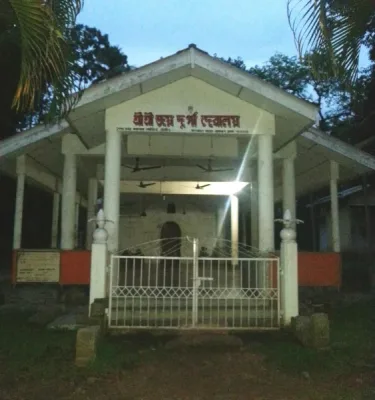
The dargah is the spiritual centre of the pilgrimage site. Devotees visit to pray and remember the Sufi figure associated with the spread of Islam in the region. Its religious importance makes it the principal place of interest for many visitors.
2. The Historic Mosque
The mosque is traditionally dated to 1657 and is associated with Mughal-era architecture and patronage. Its historic fabric and religious function give visitors an opportunity to appreciate the development of Islamic architecture in Assam.
3. The Historical Inscription
An inscription associated with the mosque provides historical information about its construction. Such records are valuable for understanding the period in which the structure was built and the people connected with its establishment. Visitors should observe any restrictions concerning access to historical features.
4. The Sacred Tree and Prayer Traditions
A tree near the shrine is associated with a local custom in which devotees tie coloured threads as a symbolic expression of their hopes and prayers. Customs may vary, so visitors should follow the guidance of shrine caretakers and avoid disturbing the surroundings.
5. Garurachala Hill and the Surrounding Views
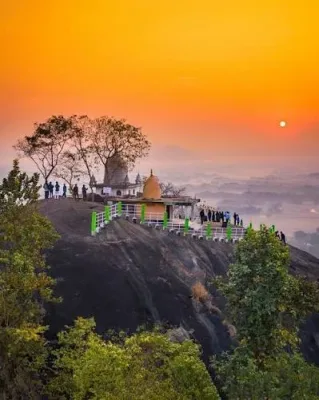
The hilltop location offers views of the surrounding settlements and landscape. The climb and approach may involve steps or uneven sections, so comfortable footwear is advisable. Take care during wet weather and avoid leaving litter along the route.
6. Local Stalls and the Hajo Area
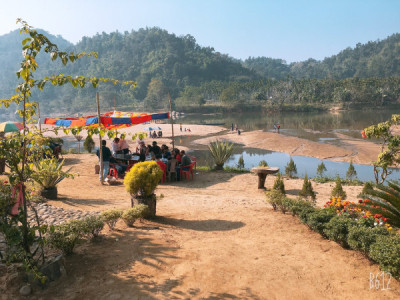
Small shops and stalls may be found around the approach to the shrine, depending on the day and season. The wider Hajo area is also known for traditional bell-metal craftsmanship and local cultural practices, making it worthwhile to explore beyond the hilltop.
Urs Festival at Powa Mecca
The Urs observance is an important religious occasion associated with the memory of a Sufi saint. Devotees gather at the shrine to offer prayers and participate in religious activities. Visitors may encounter larger crowds during the annual observance, and transport or access conditions can differ from ordinary days.
The exact dates should be confirmed locally because the programme may follow the religious calendar and local arrangements. If you plan to visit during Urs, allow additional time for travel, follow the instructions of shrine authorities and be respectful of worshippers.
Best Time to Visit Powa Mecca
October to March is generally a comfortable period for visiting Hajo and exploring its religious and historical attractions. The weather is often more suitable for walking around the hill and combining the visit with other nearby places.
The monsoon season brings rain and can make steps and paths slippery. If travelling during heavy rainfall, check local conditions before starting the journey. Early morning or a less crowded time of day may provide a more relaxed visit, but confirm access arrangements with the local shrine management.
How to Reach Powa Mecca from Guwahati
Powa Mecca is located approximately 25-35 km from Guwahati, depending on the starting point and route. It is accessible by road, making it suitable for a day trip from the state capital.
By Car or Taxi
A private car or taxi is a convenient way to reach Hajo. From Guwahati, travel towards Hajo using the available regional road route. Once in Hajo, follow local directions towards Garurachala Hill and the shrine. Travel time depends on traffic, road conditions and your departure point.
A private vehicle is useful if you also intend to visit Hayagriva Madhava Temple and other attractions around Hajo.
By Bus
Public and private buses operate on routes between Guwahati and Hajo, although service frequency and stopping points may vary. You can check services from the city or major transport points such as Jalukbari and Paltan Bazar before travelling.
After reaching Hajo, ask locally about the most convenient way to reach the shrine at Garurachala Hill. Depending on the stopping point, you may need an auto-rickshaw or another local transport option.
By Train
Guwahati Railway Station is the principal major railway connection for visitors arriving from other parts of India. From the station, continue by taxi or other road transport towards Hajo. Check current rail and onward transport arrangements before finalising your journey.
By Air
The nearest major airport is Lokpriya Gopinath Bordoloi International Airport in Guwahati. Taxis and other road transport options can be arranged from the airport for the journey to Hajo. Confirm the estimated fare and travel time with your transport provider before departure.
Where to Stay Near Powa Mecca
Accommodation options in Hajo may be limited, so visitors looking for a wider choice of hotels and facilities can consider staying in Guwahati or nearby areas. Sualkuchi and the Amingaon area may also be convenient depending on your itinerary.
The following accommodation details and telephone numbers were supplied for this guide. Contact the property before travelling to confirm its current operation, room availability, rates, facilities and exact location.
1. Silk Route Spa Resort
Address: Gondhmow, Pub Bongshar, Sualkuchi, Kamrup, Assam 781103, near the Block Office.
Phone: +91 84493 95900 / +91 97069 98141.
This resort is an option for travellers who prefer a stay around Sualkuchi and want to explore the wider area.
2. SOMA - THE NATURE
Address: Ranikhamar Picnic Spot, Assam 781124.
Phone: +91 70990 04522.
This property has been listed as a nature-focused stay near Hajo. Confirm the precise location, distance and available facilities before booking.
3. New Kalita Hotel
Address: Garaka, Assam 781354.
Phone: No phone number was supplied in the reference information.
This has been listed as a local accommodation and dining option. Verify its current operation and contact details before making plans.
4. FabHotel Red Rose
Address: Opposite IIT Guwahati, Joyguru, Kali Pahar, Guwahati, Assam 781031.
Phone: +91 70424 24242 / +91 78965 48867.
This is an option for visitors considering accommodation in the Guwahati area. Confirm the current property listing, address and booking availability before travelling.
Travel Tips for Powa Mecca
Wear modest clothing and respect local religious customs.
Follow instructions from shrine caretakers, particularly around the dargah and mosque.
Wear comfortable footwear for the hill approach.
Check the weather before visiting during the monsoon.
Confirm local access arrangements and any restrictions on photography.
Expect additional crowds during Urs and other religious occasions.
Keep the shrine and surrounding area clean.
If combining Powa Mecca with Hayagriva Madhava Temple, plan enough time for both visits.
Quick information about Powa Mecca
Information | Details |
|---|---|
Name | Powa Mecca, also spelled Poa Mecca |
Location | Garurachala Hill, Hajo, Kamrup district, Assam |
Distance from Guwahati | Approximately 25-35 km, depending on the route and starting point |
Religious significance | Historic Muslim pilgrimage site |
Main shrine | Dargah associated with Pir Ghiyasuddin Auliya |
Historic mosque | Traditionally dated to 1657 |
Historical association | Mughal-era construction and local Sufi traditions |
Annual observance | Urs; dates vary according to the local religious calendar |
Best time to visit | October to March for comfortable sightseeing |
Nearest airport | Lokpriya Gopinath Bordoloi International Airport, Guwahati |
Nearest major railway station | Guwahati Railway Station |
Nearby attraction | Hayagriva Madhava Temple |
Accommodation | Local lodging around Hajo and hotels or resorts in nearby areas and Guwahati |
Timings | Confirm locally before visiting |
FAQs About Powa Mecca
1. Where is Powa Mecca located?
Powa Mecca is located on Garurachala Hill in Hajo, Kamrup district, Assam. It is approximately 25-35 km from Guwahati, depending on the route and starting point.
2. Why is Powa Mecca famous?
Powa Mecca is famous as a historic Muslim pilgrimage site associated with Pir Ghiyasuddin Auliya. Its historic mosque, dargah and spiritual traditions make it an important religious landmark in Assam.
3. What does the name Powa Mecca mean?
The name is commonly explained through the Assamese word "poa", meaning one-fourth. According to local belief, prayers at the shrine are associated with a quarter of the spiritual merit of a pilgrimage to Mecca.
4. Who was Pir Ghiyasuddin Auliya?
Pir Ghiyasuddin Auliya is remembered in local tradition as a Sufi religious figure associated with the spread of Islam in the Hajo region. Accounts of his background and arrival vary, so some biographical details remain uncertain.
5. When was the Powa Mecca mosque built?
The mosque is traditionally dated to 1657, during the reign of Mughal Emperor Shah Jahan. Its construction is associated with Mir Lutfullah Shirazi, a Mughal official linked with Kamrup.
6. What can visitors see at Powa Mecca?
Visitors can see the dargah associated with Pir Ghiyasuddin Auliya, the historic mosque, the surrounding hilltop setting and features connected with local prayer traditions. The wider Hajo area also has other religious and cultural attractions.
7. When is the Urs festival celebrated at Powa Mecca?
Urs is an important annual religious observance associated with the shrine. The dates and programme can vary, so visitors should confirm the current schedule with the local shrine management.
8. How can I reach Powa Mecca from Guwahati?
You can travel from Guwahati to Hajo by private car, taxi or available bus services. From Hajo, continue towards Garurachala Hill using local directions or transport.
9. Are hotels available near Powa Mecca?
Visitors can look for local lodging around Hajo or stay in Guwahati and nearby areas. Options supplied for this guide include Silk Route Spa Resort, SOMA - THE NATURE, New Kalita Hotel and FabHotel Red Rose. Confirm current details before booking.
10. Can I visit Powa Mecca and Hayagriva Madhava Temple on the same day?
Yes. Both are important religious destinations in Hajo, and many visitors combine them in one trip. Allow sufficient time for travel, sightseeing and prayer, and check the opening arrangements of each site before departure.