In Depth
The worship of Goddess Mahamaya has deep connections with the indigenous communities of the region, including the Kachari, Koch and Nath communities. The goddess was also regarded as an important family deity by the local zamindars. Over generations, her worship expanded beyond the local communities and the temple became a significant pilgrimage centre for devotees from different parts of Assam and neighbouring regions.
The temple is traditionally associated with a centuries-old Shakta tradition and is regarded locally as one of the major Shakti pilgrimage sites of Lower Assam. Its religious importance, cultural heritage and distinctive temple setting make it an interesting place to explore for visitors interested in the spiritual history of Assam.
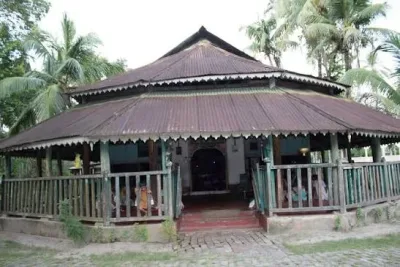
The main temple follows a traditional Assamese architectural character and is surrounded by a peaceful rural landscape. Devotees visit throughout the year to offer prayers, while the temple becomes particularly active during major religious occasions and festivals. Durga Puja is one of the most important periods at Mahamaya Temple, attracting large numbers of pilgrims.
Another important place connected with the goddess is Mahamaya Snaanghat, situated near the Tipkai River. Local belief identifies this riverside location with the goddess's bathing place. An annual Shakti Yagya is traditionally held here around January, adding another dimension to the religious significance of the area.
Mahamaya Temple is therefore more than a place of worship; it represents the blending of indigenous traditions, Shakta practices and the cultural history of western Assam. Visitors exploring Dhubri and nearby Bilasipara can include Mahamaya Dham in their itinerary to experience one of the region's prominent religious and cultural landmarks.
History of Mahamaya Temple, Dhubri
The history of Mahamaya Temple is closely connected with the long-standing worship of the Goddess Mahamaya in the Parbatjhora region. Before the shrine became widely known across Lower Assam, the goddess was worshipped by several local communities, particularly the Kacharies, Koches and Naths.
Mahamaya was also regarded as the presiding deity of the local zamindar family. Over time, the shrine developed into an important centre of Shakta worship, and the temple's reputation spread throughout the surrounding areas.
Local traditions place the history of the temple several centuries in the past. Stories associated with the origin of the shrine include accounts of the goddess being rediscovered in the forest following a divine experience. Such traditions form an important part of the cultural memory surrounding Mahamaya Dham, although individual versions of the origin story vary.
The temple's continued importance demonstrates the enduring influence of Shaktism in Assam and the way local religious traditions have developed over generations.
Religious Significance of Mahamaya Dham
Mahamaya is regarded as a powerful manifestation of Shakti, representing the divine feminine power. In Lower Assam, the temple is one of the most prominent centres of Goddess worship.
The shrine is particularly significant for devotees who follow Shakta traditions. Its religious importance has grown beyond its original local community, making it a destination for pilgrims from different parts of Assam and neighbouring regions.
The temple also reflects the cultural diversity of Assam, where indigenous beliefs and established Hindu traditions have interacted and developed together over centuries.
What to See at Mahamaya Temple?
Visitors to Mahamaya Temple can explore several religious and cultural features, including:
- The main shrine dedicated to Goddess Mahamaya
- Traditional temple architecture
- The peaceful surroundings of Bogribari
- Religious ceremonies and festival activities
- Mahamaya Snaanghat near the Tipkai River
- The annual Shakti Yagya tradition
- Local cultural and devotional activities
- The rural landscape surrounding the temple
During major festivals, the temple area becomes particularly lively as devotees gather for prayers and religious observances.
Festivals and Religious Events
Mahamaya Temple observes several important religious occasions during the year. Durga Puja is among the most prominent festivals and attracts devotees from the surrounding districts.
The temple area also hosts the Sat Bisoma Mela around the spring festival period. At Mahamaya Snaanghat, an annual Shakti Yagya is traditionally performed around January.
Visitors planning their trip around a particular festival should confirm the current dates and programme with the temple authorities or local administration.
Mahamaya Snaanghat
Mahamaya Snaanghat is another religiously significant location associated with the temple. It is situated near the Tipkai River, a tributary connected to the Brahmaputra river system.
According to local belief, the site is associated with Goddess Mahamaya's bathing place. The location is particularly important during the annual Shakti Yagya held around January.
Its riverside setting also provides a quieter environment compared with the main temple complex and can be included as part of a visit to Mahamaya Dham.
How to Reach Mahamaya Temple from Guwahati?
Mahamaya Temple is located at Bogribari in the Dhubri region of western Assam.
By Road: From Guwahati, travellers can drive towards Dhubri and then continue towards Bogribari. The journey is approximately 250-280 km depending on the route. Regular buses and shared or hired vehicles are available towards Dhubri and Bilasipara.
From Dhubri: The temple is approximately 30 km from Dhubri town. Visitors can hire a taxi, auto-rickshaw or other local transport to reach Bogribari.
From Bilasipara: Bilasipara is approximately 10 km from the temple, making it one of the closest major towns for visitors travelling by road.
By Air: Rupsi Airport is one of the nearest airport options for reaching the Dhubri region. Travellers can continue by road from the airport.
For better flight connectivity, Lokpriya Gopinath Bordoloi International Airport in Guwahati can be used, followed by a road journey to Dhubri and Bogribari.
By Train: Travellers can reach Dhubri or nearby railway stations and continue the remaining distance by road. Depending on the train route, Fakiragram Junction can also be useful for connecting to the Dhubri region.
Where to Stay Near Mahamaya Temple?
Visitors looking for accommodation can consider staying in Bogribari, Bilasipara or Dhubri town.
Bogribari provides the advantage of being close to the temple, while Bilasipara offers additional local accommodation options. Dhubri town provides a wider selection of hotels, guesthouses and other facilities and is suitable for travellers planning to explore several attractions in the district.
Accommodation availability can vary during Durga Puja and other major religious events, so advance booking is recommended during busy periods.
Best Time to Visit Mahamaya Temple
October to March is generally a comfortable period to visit Mahamaya Temple because of the relatively pleasant weather in Assam. Winter is particularly suitable for combining temple visits with sightseeing around Dhubri and western Assam.
Those interested in experiencing the temple's major religious celebrations may plan their visit during Durga Puja or other important festivals. Festival dates can change each year, so visitors should verify the schedule locally before travelling.
Quick Info About Mahamaya Temple
| Information | Details |
|---|---|
| Name | Mahamaya Temple |
| Also Known As | Mahamaya Dham |
| Location | Bogribari, Assam |
| Region | Parbatjhora, Lower Assam |
| District/Area | Dhubri region |
| Nearest Town | Bilasipara |
| Distance from Dhubri | About 30 km |
| Distance from Bilasipara | About 10 km |
| Presiding Deity | Goddess Mahamaya |
| Religious Tradition | Shaktism |
| Nearby Religious Site | Mahamaya Snaanghat |
| Nearby River | Tipkai River |
| Major Festival | Durga Puja |
| Other Event | Sat Bisoma Mela |
| Annual Religious Ceremony | Shakti Yagya at Mahamaya Snaanghat |
| Best Time to Visit | October to March |
| Nearest Airport Option | Rupsi Airport |
| Major Airport | Lokpriya Gopinath Bordoloi International Airport, Guwahati |
FAQs about Mahamaya Temple
1. Where is Mahamaya Temple located?
Mahamaya Temple, also known as Mahamaya Dham, is located at Bogribari in the Parbatjhora region of western Assam, about 30 km from Dhubri town and around 10 km from Bilasipara.
2. Why is Mahamaya Temple famous?
Mahamaya Temple is famous for its long-standing Shakta tradition and its importance as a major centre of Goddess Mahamaya worship in Lower Assam.
3. Which goddess is worshipped at Mahamaya Temple?
The temple is dedicated to Goddess Mahamaya, a revered manifestation of Shakti and the divine feminine power.
4. How far is Mahamaya Temple from Dhubri?
Mahamaya Temple is approximately 30 km from Dhubri town by road.
5. How far is Mahamaya Temple from Bilasipara?
The temple is approximately 10 km from Bilasipara, making Bilasipara one of the nearest towns for visitors travelling to Mahamaya Dham.
6. What is the best time to visit Mahamaya Temple?
October to March is generally a comfortable period to visit because the weather is more suitable for travelling and sightseeing. Durga Puja is also an important period for devotees.
7. What is Mahamaya Snaanghat?
Mahamaya Snaanghat is a nearby religious site associated with Goddess Mahamaya and located near the Tipkai River. An annual Shakti Yagya is traditionally held there around January.
8. How can I reach Mahamaya Temple from Guwahati?
Visitors can travel from Guwahati to Dhubri by road and then continue approximately 30 km towards Bogribari. Private cars, taxis and bus services can be used for the journey.
9. Is Mahamaya Temple a Shakti Peetha?
Mahamaya Temple is widely regarded in local religious tradition as a major Shakti pilgrimage centre in Lower Assam. Claims about its classification among the canonical Shakti Peethas can vary by tradition.
10. Where can I stay when visiting Mahamaya Temple?
Visitors can stay in Bogribari, Bilasipara or Dhubri. Dhubri generally offers more accommodation choices, while staying closer to Bogribari can reduce travel time to the temple.