Life & Legacy
Early Life
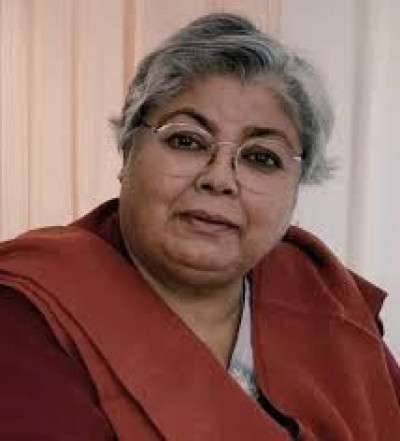
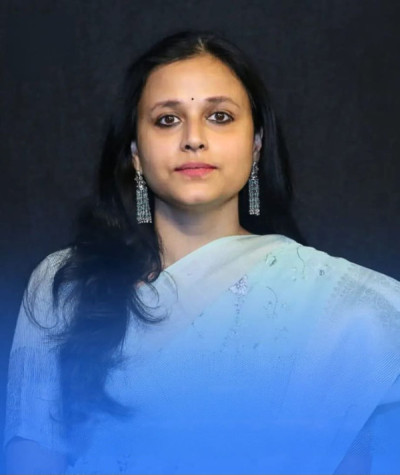
Dr. Purabi Saikia was born in Assam and developed a deep interest in nature and environmental conservation from an early age. Growing up amidst the rich biodiversity of Northeast India inspired her passion for studying forests, plants, and ecosystems. Her dedication to science and environmental protection eventually led her to become one of India's leading researchers in plant ecology.
Education
Dr. Purabi Saikia has an impressive academic background in biological and environmental sciences.
She completed her Bachelor of Science (Botany Honours) from North Lakhimpur College under Dibrugarh University, Assam. She later obtained her Master of Science in Botany with specialization in Plant Ecology from Gauhati University. She earned her Ph.D. in Forestry from the North Eastern Regional Institute of Science and Technology (NERIST), Itanagar, Arunachal Pradesh, where she conducted advanced research in forest ecology and biodiversity.
Academic and Research Career
Dr. Saikia started her academic career as a researcher and later joined the Central University of Jharkhand as an Assistant Professor in the Department of Environmental Sciences in 2013. During her tenure, she carried out several nationally funded research projects focusing on forest vegetation dynamics, biodiversity conservation, ecological restoration, invasive plant species, and climate change.
In 2024, she joined the Department of Botany, Institute of Science, Banaras Hindu University (BHU), Varanasi, as an Associate Professor. At BHU, she continues her research on forest ecology, ecosystem restoration, conservation biology, plant-soil interactions, biomass estimation, ecological niche modelling, and sustainable management of natural resources.
Her research has played an important role in improving scientific understanding of Indian forests and developing strategies for conserving fragile ecosystems.
Research Contributions
Dr. Purabi Saikia has led and participated in numerous research projects funded by organizations such as the Ministry of Environment, Forest and Climate Change (MoEFCC), Department of Science and Technology (DST), Department of Biotechnology (DBT), Science and Engineering Research Board (SERB), University Grants Commission (UGC), and ISRO's Space Applications Centre.
Her research areas include:
- Plant Ecology
- Forest Ecology
- Biodiversity Conservation
- Conservation Biology
- Ecosystem Restoration
- Plant Population Ecology
- Plant-Soil Interactions
- Ecological Niche Modelling
- Biomass and Carbon Assessment
- Invasive Plant Species Management
- Climate Change and Forest Dynamics
She has published more than one hundred research papers in reputed national and international journals and has contributed numerous book chapters and edited scientific books. Her publications have received recognition from researchers worldwide.
Teaching and Academic Guidance
Apart from research, Dr. Saikia has made valuable contributions as an educator. She has supervised Ph.D. scholars, postgraduate dissertations, and guided young researchers working in environmental sciences and botany. She regularly delivers invited lectures at universities, scientific conferences, and international workshops.
Professional Memberships
Dr. Purabi Saikia is associated with several prestigious scientific organizations, including:
- IUCN Commission on Ecosystem Management (South Asia)
- Global Forest Biodiversity Initiative (GFBI), USA
- Various national and international scientific societies related to ecology, forestry, and environmental sciences
Major Achievements
- Internationally recognized environmental scientist from Assam.
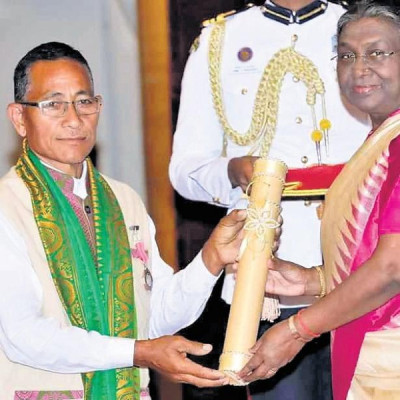
- Recipient of the Vigyan Yuva-Shanti Swarup Bhatnagar Award in Environmental Science.
- Honoured with the Asom Gaurav Award by the Government of Assam.
- Conducted multiple nationally funded research projects.
- Published over 100 scientific research papers.
- Authored and edited several academic books and book chapters.
- Guided numerous postgraduate and doctoral research scholars.
- Contributed significantly to biodiversity conservation and forest ecology research in India.
- Represented India at various international scientific conferences.
- Recognized for advancing ecological research and sustainable environmental management.
Awards and Recognition
- Vigyan Yuva-Shanti Swarup Bhatnagar Award (Environmental Science).
- Asom Gaurav Award - Government of Assam.
- Fellow Award (Society for Science of Climate Change and Sustainable Environment).
- Women Scientist Award.
- PHSS Foundation Young Women Leadership Award.
- SERB Young Scientist Research Grant.
- DBT Research Associateship.
- UGC Start-up Research Grant.
- International Travel Grants from SERB.
Positions Held
- Associate Professor, Department of Botany, Banaras Hindu University.
- Former Assistant Professor, Department of Environmental Sciences, Central University of Jharkhand.
- Environmental Scientist.
- Plant Ecologist.
- Conservation Biologist.
- Research Supervisor.
- Member, IUCN Commission on Ecosystem Management.
- Member, Global Forest Biodiversity Initiative (GFBI), USA.
Books Written and Edited
Dr. Purabi Saikia has authored and edited several academic books and scientific publications. Some notable works include:
- Forests for Inclusive and Sustainable Economic Growth (Editor).
- Earth Observation in Urban Monitoring: Techniques and Challenges (Editor).
- Fibre Crops-based Phytoremediation: Socio-Economic and Environmental Sustainability (Co-editor).
- Numerous book chapters on biodiversity conservation, forest ecology, vegetation dynamics, and ecological restoration.
Legacy
Dr. Purabi Saikia has emerged as one of Assam's most accomplished scientists in environmental science and plant ecology. Her research has strengthened biodiversity conservation efforts, improved scientific understanding of forest ecosystems, and inspired young researchers across India. Through her academic leadership, internationally recognized publications, and commitment to sustainable environmental management, she continues to make valuable contributions to science while bringing pride to Assam and the nation.
FAQs about Dr. Purabi Saikia
1. Who is Dr. Purabi Saikia?
Dr. Purabi Saikia is an environmental scientist, plant ecologist, conservation biologist, and Associate Professor at Banaras Hindu University from Assam.
2. Why is Dr. Purabi Saikia famous?
She is renowned for her research in forest ecology, biodiversity conservation, ecosystem restoration, and environmental science, earning several prestigious national awards.
3. What is Dr. Purabi Saikia's educational qualification?
She holds a Ph.D. in Forestry from NERIST, an M.Sc. in Botany from Gauhati University, and a B.Sc. in Botany from North Lakhimpur College.
4. Which university is Dr. Purabi Saikia associated with?
She is currently an Associate Professor in the Department of Botany at Banaras Hindu University, Varanasi.
5. Which awards has Dr. Purabi Saikia received?
She has received the Vigyan Yuva-Shanti Swarup Bhatnagar Award, the Asom Gaurav Award, the Women Scientist Award, the Fellow Award, and several research grants and recognitions.
6. What are Dr. Purabi Saikia's research areas?
Her research focuses on plant ecology, forest ecology, biodiversity conservation, conservation biology, ecosystem restoration, climate change, and ecological niche modelling.
7. Has Dr. Purabi Saikia published scientific research?
Yes. She has published more than 100 research papers along with several books and book chapters in reputed national and international publications.
8. Has Dr. Purabi Saikia supervised research scholars?
Yes. She has supervised Ph.D. scholars, postgraduate dissertations, and numerous environmental research projects.
9. Has Dr. Purabi Saikia written any books?
Yes. She has authored, edited, and co-edited several academic books related to forestry, environmental science, ecology, and biodiversity conservation.
10. Why is Dr. Purabi Saikia important to Assam?
She is one of Assam's leading environmental scientists whose internationally recognized research has contributed significantly to biodiversity conservation, forest ecology, and environmental sustainability.