Life & Legacy
Early Life
Dr. Purnima Devi Barman was born and raised in Assam, where she developed a close relationship with nature from an early age. Growing up near the wetlands and floodplains of the Brahmaputra Valley, she spent much of her childhood observing birds and wildlife. Her grandmother played an important role in nurturing her curiosity by teaching her about the natural world and the importance of living in harmony with nature. These early experiences inspired her lifelong passion for wildlife conservation.
Education
Dr. Barman pursued higher education at Gauhati University, earning a Master's degree in Zoology with specialization in Ecology and Wildlife Biology. Motivated by her interest in bird conservation, she later undertook doctoral research on the Greater Adjutant Stork. While carrying out her research, she realized that scientific knowledge alone could not save the species. She devoted herself to field conservation and community engagement before eventually completing her PhD on the ecology and breeding of the Greater Adjutant in Assam.
Beginning of Her Conservation Journey
In 2007, Dr. Barman witnessed villagers cutting down a tree that contained nests of Greater Adjutant Storks. The heartbreaking incident became the turning point of her career. At that time, the bird was widely disliked because of its appearance, scavenging habits, and foul-smelling nesting sites. Many nesting trees were destroyed, placing the already endangered species at greater risk.
Instead of relying only on awareness campaigns, she chose to work directly with local communities. She introduced conservation through traditional Assamese culture, encouraging people to celebrate the bird rather than fear it. Her efforts gradually changed public attitudes, creating a strong sense of responsibility among villagers toward protecting the Hargila.
Founding the Hargila Army
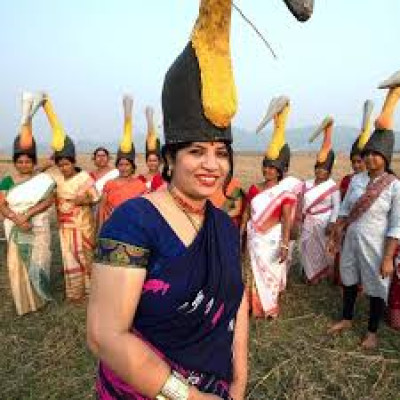
One of Dr. Barman's greatest achievements is the creation of the Hargila Army, a women-led conservation movement dedicated to protecting the Greater Adjutant Stork. Starting with a small group of village women, the movement has expanded into a network of more than 20,000 women across Assam.
Members of the Hargila Army actively protect nesting trees, rescue fallen chicks, monitor breeding colonies, organize awareness campaigns, and promote environmental education. The initiative has become a powerful example of how women can lead successful conservation movements while strengthening their communities.
Women's Empowerment Through Conservation
Dr. Barman believes that conservation becomes sustainable when local people benefit directly. Under her leadership, women associated with the Hargila Army produce traditional Assamese textiles, handicrafts, and clothing featuring Hargila-inspired designs. These products generate additional income while spreading awareness about bird conservation.
The movement has empowered thousands of rural women by improving financial independence, leadership skills, and community participation. Today, the Hargila has become both an environmental icon and a source of livelihood for many families.
Conservation Achievements
Dr. Barman's work has produced remarkable conservation results. When her campaign began, only a few dozen active nesting sites existed in the Kamrup region. Through habitat protection, artificial nesting platforms, rescue operations, and continuous community participation, the breeding population has increased significantly, making Assam home to the world's largest breeding colony of the Greater Adjutant Stork.
Her conservation model also includes wetland restoration, tree plantation drives, environmental education, and biodiversity awareness programs that benefit many other species sharing the same ecosystem.
Professional Positions
Throughout her career, Dr. Barman has served in several important scientific and conservation roles.
Positions held include:
- Senior Wildlife Biologist at Aaranyak.
- Founder of the Hargila Army.
- Member of the Women in Nature Network (WiNN) India.
- Member of the IUCN Stork, Ibis and Spoonbill Specialist Group.
- International keynote speaker on wildlife conservation and community participation.
- Researcher and mentor in biodiversity conservation initiatives.
Major Awards and Recognition
Dr. Purnima Devi Barman has received numerous prestigious national and international honors.
Major awards include:
- UNEP Champions of the Earth Award (2022).
- Whitley Gold Award (2024).
- Whitley Award (Green Oscar) (2017).
- Nari Shakti Puraskar by the Government of India.
- UNDP India Biodiversity Award.
- Green Guru Award.
- Earth Hero Award.
- Conservation Leadership Programme Award.
- Future Conservationist Leader Award.
- Women Achiever Award.
- World Female Ranger Award.
- Honorary Doctorates recognizing her contributions to wildlife conservation and social service.
She has also been featured among TIME Women of the Year and recognized by Asian Scientist for her outstanding contributions to environmental conservation.
Publications and Research
Dr. Barman has authored and co-authored several scientific publications focusing on the ecology, breeding behavior, conservation, and habitat management of the Greater Adjutant Stork. Her research has contributed significantly to bird conservation in India and has been presented at national and international conferences.
International Recognition
Her conservation model has received worldwide appreciation. She has delivered keynote lectures and participated in global conferences on biodiversity, bird conservation, women's leadership, and climate resilience. Her work has been featured by international organizations, universities, conservation groups, documentaries, and leading global media, inspiring similar community-based conservation projects around the world.
Personal Life
Apart from her conservation work, Dr. Barman is a mother and believes that protecting biodiversity is essential for future generations. She enjoys bird watching, interacting with students, promoting environmental education, and encouraging young people to participate in wildlife conservation.
Legacy
Dr. Purnima Devi Barman has demonstrated that conservation succeeds when science, culture, and community work together. Her efforts have transformed public attitudes toward the Greater Adjutant Stork while empowering thousands of rural women. Today, her Hargila conservation model is recognized internationally as one of the world's finest examples of community-led wildlife conservation. She continues to inspire conservationists, researchers, students, and environmental leaders across the globe with her dedication to protecting nature and promoting sustainable development.
FAQs about Dr. Purnima Devi Barman
1. Who is Dr. Purnima Devi Barman?
Dr. Purnima Devi Barman is an internationally recognized wildlife conservationist from Assam known for protecting the endangered Greater Adjutant Stork through community-based conservation.
2. Why is Purnima Devi Barman famous?
She is famous for founding the Hargila Army and successfully transforming the conservation of the Greater Adjutant Stork in Assam.
3. What is the Hargila Army?
The Hargila Army is a women-led conservation movement founded by Dr. Purnima Devi Barman to protect the Greater Adjutant Stork and its habitat.
4. Which bird is associated with Dr. Purnima Devi Barman?
She is closely associated with the Greater Adjutant Stork, popularly known as the Hargila in Assam.
5. Which awards has Dr. Purnima Devi Barman received?
She has received the UNEP Champions of the Earth Award, Whitley Gold Award, Whitley Award, Nari Shakti Puraskar, UNDP India Biodiversity Award, and several other national and international honors.
6. Where did Dr. Purnima Devi Barman study?
She completed her Master's degree and PhD in Zoology with specialization in Ecology and Wildlife Biology from Gauhati University.
7. What organization is Dr. Purnima Devi Barman associated with?
She serves as a Senior Wildlife Biologist at Aaranyak and is associated with several international conservation organizations.
8. How has Dr. Purnima Devi Barman helped women in Assam?
She empowered thousands of rural women through the Hargila Army by combining conservation with sustainable livelihood opportunities based on traditional handicrafts.
9. Has Dr. Purnima Devi Barman written research publications?
Yes. She has authored and co-authored numerous scientific papers and conservation reports on the Greater Adjutant Stork and biodiversity conservation.
10. Is Dr. Purnima Devi Barman still alive?
Yes. Dr. Purnima Devi Barman continues her conservation work, environmental education, and global advocacy for wildlife protection and community-led conservation.