Life & Legacy
Early Life
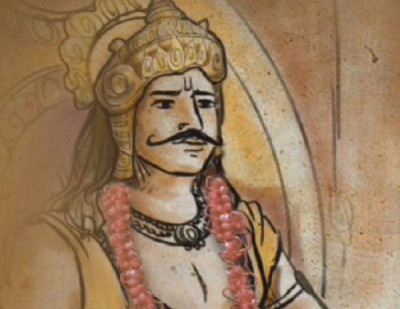
Momai Tamuli Borbarua was born around 1590 into a Tai Ahom family. Historical records suggest that he did not belong to a powerful noble lineage and spent his early years performing ordinary duties. Because of his honesty, discipline, intelligence, and organizational skills, he gradually attracted the attention of the Ahom court. His determination and ability to efficiently manage responsibilities eventually earned him important positions in the royal administration, proving that merit and capability could lead to high office during the Ahom period.
Rise in the Ahom Administration
His career began with responsibilities connected to royal service, where he worked as Tamuli, the supervisor of the royal gardens. Recognizing his administrative talent, Swargadeo Pratap Singha promoted him through several important positions, including Tipomia Rajkhowa and Bor Tamuli. Eventually, the king created the powerful office of Borbarua to strengthen the administration of the kingdom and appointed Momai Tamuli Borbarua as its first holder.
As Borbarua, he became one of the most influential officials in the Ahom kingdom. His responsibilities included civil administration, military organization, law enforcement, revenue management, and supervision of large sections of the kingdom. His leadership significantly improved the efficiency of the Ahom government.
Administrative Reforms
Momai Tamuli Borbarua is best known for reorganizing the famous Paik system, which became the backbone of the Ahom kingdom. Under this system, able-bodied men rendered military or public service to the state in rotation while continuing agricultural activities during their free periods. He established a well-defined administrative hierarchy consisting of Bora, Saikia, Hazarika, Rajkhowa, Phukan, and Barua, ensuring efficient supervision and accountability throughout the kingdom.
His reforms improved tax collection, manpower management, public works, agriculture, and defense. The system ensured that every village contributed to the prosperity and security of the state while preventing excessive burden on individual families.
Contribution to Rural Development
Momai Tamuli Borbarua believed that the strength of a kingdom depended on prosperous villages. He reorganized settlements into efficient administrative units and encouraged every household to become economically self-reliant. Weaving, spinning, agriculture, and other traditional occupations were promoted so that villages could produce many of their own necessities.
He also established several new settlements, including Kharongi, Morongi, Tetoiya, Doyang, Dhanmukh, Bhuyan, Dolamari, and Borchoria. These villages played an important role in expanding cultivation, administration, and population across different parts of Assam.
Military Leadership and Diplomacy
Apart from administration, Momai Tamuli Borbarua was an accomplished military commander. He led Ahom forces during conflicts against the Mughal Empire and played a significant role in protecting Assam's sovereignty during the seventeenth century. His disciplined organization of manpower greatly strengthened the military capability of the Ahom kingdom.
In 1639, he represented the Ahom kingdom in negotiating the historic Treaty of Asurar Ali with Mughal commander Allah Yar Khan. The treaty established the Barnadi River as the boundary between the Ahom kingdom and Mughal territories, bringing temporary peace and allowing the kingdom to focus on internal development.
Family
Momai Tamuli Borbarua is also remembered as the father of Lachit Borphukan, one of Assam's greatest military heroes. The discipline, patriotism, and dedication displayed by Momai Tamuli greatly influenced his family and helped shape Lachit's future leadership, which later culminated in the historic Ahom victory at the Battle of Saraighat.
Major Achievements
- First person appointed as Borbarua in the Ahom kingdom.
- Reorganized and strengthened the Paik administrative system.
- Established an efficient hierarchy of Bora, Saikia, Hazarika, Rajkhowa, Phukan, and Barua.
- Improved military organization and state administration.
- Developed numerous villages and promoted agricultural expansion.
- Encouraged household industries such as weaving and spinning for economic self-sufficiency.
- Represented the Ahom kingdom during the Treaty of Asurar Ali in 1639.
- Successfully protected Ahom sovereignty through effective administration and military planning.
- Played a significant role in strengthening one of the most powerful periods of the Ahom kingdom.
- Remembered as the father of Lachit Borphukan, the legendary Ahom commander.
Awards and Recognition
Modern award systems did not exist during the seventeenth century. However, Momai Tamuli Borbarua earned immense respect and trust from Swargadeo Pratap Singha, who appointed him as the first Borbarua, one of the highest administrative positions in the Ahom kingdom. Today, historians regard him as one of the greatest administrators in the history of Assam, and his contributions continue to be studied in Assamese history.
Books Written
There are no authenticated historical records confirming that Momai Tamuli Borbarua authored any books or literary works. His legacy is based on his outstanding administrative reforms, military leadership, and governance rather than literary contributions.
Death
Momai Tamuli Borbarua passed away in 1663 after dedicating several decades to the service of the Ahom kingdom. His administrative model continued to influence successive Ahom rulers and remained one of the strongest pillars of the kingdom for many years after his death.
Legacy
Momai Tamuli Borbarua occupies a unique place among the greatest personalities of Assam. His vision transformed the Ahom kingdom into a well-organized and self-sufficient state through effective governance, disciplined administration, rural development, and military preparedness. The systems he introduced strengthened Assam politically, economically, and socially, while his emphasis on merit-based leadership remains an inspiring example even today. As the architect of the Ahom administrative structure and the father of Lachit Borphukan, Momai Tamuli Borbarua continues to be remembered as one of the most influential figures in the history of Assam.
FAQs about Momai Tamuli Borbarua