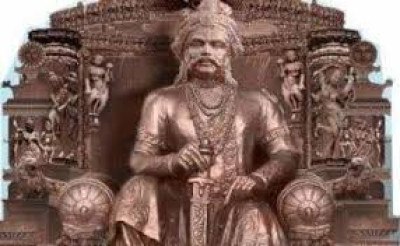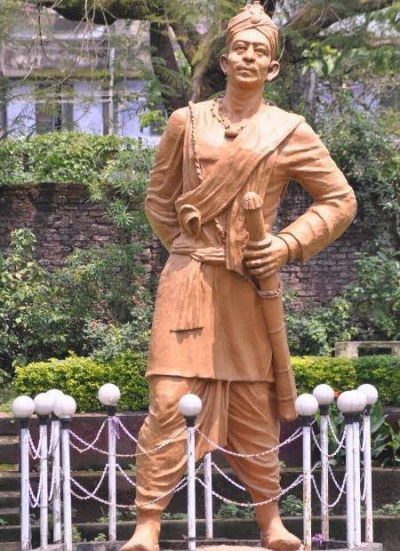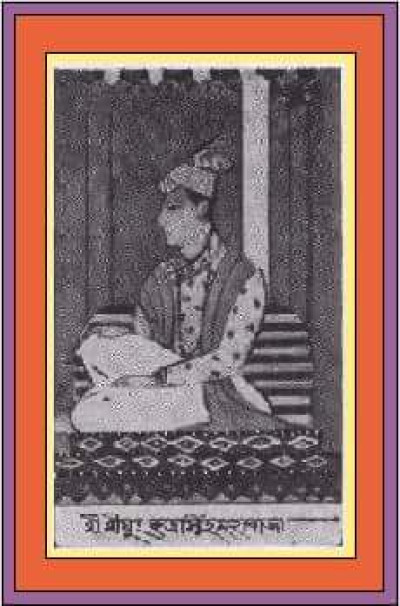
Life & Legacy
Early Life
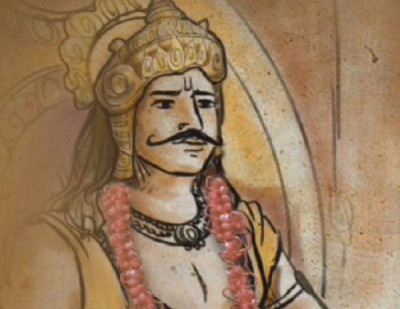
Rudra Singha was born around 1665 as Sukhrungphaa, the son of Swargadeo Gadadhar Singha, the ruler who restored stability in Assam after years of Mughal invasions and internal conflicts. Growing up in the royal household, he received extensive training in administration, diplomacy, military strategy and governance. His father's successful campaigns against the Mughals provided him with a secure kingdom, allowing him to focus on development, expansion and long-term state building after ascending the throne in 1696.
Administration and Governance
After becoming king, Rudra Singha introduced several administrative reforms that strengthened the Ahom government. He reorganized the Paik system, improved revenue collection and ensured greater efficiency in the functioning of the kingdom. His administration emphasized discipline, accountability and public welfare. He maintained close supervision over provincial officers while encouraging capable nobles to participate in governance. His policies helped create political stability, allowing agriculture, trade and infrastructure to flourish throughout Assam.
Military Leadership
Rudra Singha was one of the finest military strategists produced by the Ahom dynasty. Instead of remaining defensive, he modernized the Ahom army by strengthening infantry, cavalry, naval forces and intelligence networks. He successfully led campaigns against neighboring kingdoms including the Dimasa and Jaintia rulers, compelling them to acknowledge Ahom supremacy. These victories expanded the influence of the Ahom Kingdom and secured Assam's borders from external threats.
One of his greatest ambitions was to launch a massive military campaign against Mughal Bengal. He organized an enormous army with support from allied kingdoms and carefully planned an offensive that could have significantly changed the political landscape of eastern India. However, his sudden death in 1714 prevented the expedition from taking place.
Diplomacy and Regional Influence
Unlike many earlier rulers, Rudra Singha understood the importance of diplomacy alongside military power. He established friendly relations with neighboring kingdoms including Koch, Jaintia, Dimasa and Tripura. Through alliances and negotiations, he expanded Ahom influence without relying solely on warfare. His diplomatic vision strengthened regional stability and enhanced trade across eastern India.
Architectural Contributions
Rudra Singha is widely regarded as the father of monumental Ahom architecture. During his reign, large-scale construction projects replaced many traditional wooden structures with durable stone and brick monuments.
His most notable architectural achievements include:
- Establishment of Rangpur as the new Ahom capital.
- Construction of the famous Joysagar Tank, one of India's largest man-made water reservoirs.
- Development of the Namdang Stone Bridge, an engineering masterpiece that remained functional for centuries.
- Construction and renovation of temples, royal buildings and administrative complexes across the kingdom.
These monuments continue to reflect the engineering excellence and artistic vision of the Ahom civilization.
Promotion of Religion and Culture
Although Rudra Singha personally followed Shaivism, he respected different religious traditions within Assam. He extended royal patronage to both Shaivite and Vaishnavite institutions, helping maintain religious harmony throughout the kingdom. Several temples were built or restored during his reign, including important Shiva temples that remain places of worship today.
He also encouraged the preservation of Assamese traditions by supporting Bihu celebrations, Sattriya culture, music, dance, literature and classical learning. Scholars, artists and religious leaders received generous royal patronage, making his court an important cultural center of the region.
Education and Intellectual Development
Rudra Singha believed that knowledge was essential for a strong kingdom. He encouraged higher learning and reportedly sent promising scholars to renowned educational centers such as Varanasi for advanced studies. His support for education strengthened literary and scholarly activities in Assam and helped preserve traditional knowledge for future generations.
Economic Development and Trade
Economic prosperity increased significantly during Rudra Singha's reign. He promoted agriculture by improving irrigation systems and constructing large water reservoirs that benefited farming communities. Trade routes with Bengal and neighboring kingdoms were strengthened, encouraging commercial exchange and increasing state revenue. His efficient administration ensured that economic growth was matched with political stability, making Assam one of the strongest regional powers of its time.
Achievements
Rudra Singha's reign is remembered for numerous achievements that transformed the Ahom Kingdom into one of the strongest powers in eastern India.
- Strengthened the Ahom administration through major administrative reforms.
- Modernized the Paik system and improved governance.
- Expanded the kingdom's influence over neighboring Dimasa and Jaintia kingdoms.
- Established Rangpur as the new capital of the Ahom Kingdom.
- Built the famous Joysagar Tank, one of the largest man-made tanks in India.
- Constructed the historic Namdang Stone Bridge, an engineering marvel of medieval Assam.
- Encouraged large-scale temple construction and promoted stone architecture.
- Patronized Assamese literature, music, dance and traditional arts.
- Supported both Shaivism and Neo-Vaishnavism, ensuring religious harmony.
- Strengthened trade links with Bengal and neighboring kingdoms.
- Sent scholars for higher learning outside Assam and encouraged intellectual development.
- Created an efficient intelligence network for diplomacy and military planning.
- Planned a united regional alliance against Mughal expansion.
- Promoted agriculture through irrigation works and public infrastructure.
- Elevated the Ahom Kingdom to its greatest political and cultural height.
Military Campaigns
Rudra Singha successfully led or supervised several important military campaigns that expanded Ahom authority.
Expedition against the Dimasa Kingdom (1706-1707)
When the Dimasa ruler attempted to reject Ahom authority, Rudra Singha launched a carefully planned military expedition using two large armies advancing through different routes. The campaign resulted in the capture of important forts including Maibang. The Dimasa kingdom accepted Ahom supremacy and ceded territories, although the campaign was later shortened due to disease and logistical challenges.
Campaign against the Jaintia Kingdom
After the Jaintia ruler refused Ahom demands regarding the release of the Dimasa king, Rudra Singha prepared another major expedition. Diplomatic pressure and military preparations eventually forced the Jaintias to acknowledge Ahom authority and agree to maintain peaceful relations while paying tribute.
These campaigns greatly expanded Ahom influence across northeastern India and demonstrated Rudra Singha's military capabilities.
Vision for a United Eastern India
One of Rudra Singha's greatest ambitions was to unite the kingdoms of eastern India against Mughal expansion. He developed diplomatic relations with neighboring rulers and planned an unprecedented campaign into Mughal-controlled Bengal. Historical records mention that a massive composite army was assembled for this purpose. Unfortunately, his sudden death in August 1714 ended the campaign before it could begin, making it one of the great "what if" moments in Indian history.
Awards and Recognition
As a medieval monarch, Rudra Singha did not receive modern awards. However, he continues to receive immense historical recognition.
- Regarded as one of the greatest Ahom kings.
- Often described as the most illustrious ruler of the Ahom dynasty.
- Remembered as the father of monumental Ahom architecture.
- Considered one of the greatest administrators in Assam's history.
- Recognized for bringing the Ahom Kingdom to its highest level of political power.
- Honored through historical research, books, museums and educational institutions across Assam.
- Numerous monuments and heritage structures from his reign continue to preserve his legacy.
Death
Rudra Singha died on 27 August 1714 while preparing for his ambitious military expedition against Mughal Bengal. His sudden death ended one of the most carefully planned campaigns in medieval Indian history. He was succeeded by his eldest son, Swargadeo Siva Singha, who inherited a strong and prosperous kingdom built upon Rudra Singha's vision and leadership.
Legacy
Rudra Singha left behind an extraordinary legacy that continues to inspire the people of Assam. Historians widely consider his reign the political and cultural peak of the Ahom Kingdom. His contributions to governance, architecture, diplomacy, military organization, education and Assamese culture permanently shaped the identity of Assam.
Many of the monuments built during his reign remain important heritage sites, while his administrative reforms influenced later Ahom rulers. His leadership demonstrated that a strong kingdom could achieve prosperity through good governance, cultural preservation and strategic diplomacy. Today, Rudra Singha is remembered as one of the greatest kings in Assamese history and one of the most influential rulers of medieval India.
FAQs about Rudra Singha
1. Who was Rudra Singha?
Rudra Singha was the 30th Ahom king who ruled Assam from 1696 to 1714 and is regarded as one of the greatest rulers in Assamese history.
2. What was Rudra Singha's original name?
His Tai-Ahom name was Sukhrungphaa before he became king and was later known as Swargadeo Rudra Singha.
3. Why is Rudra Singha famous?
He is famous for strengthening the Ahom Kingdom, promoting architecture, expanding diplomacy, modernizing the military and encouraging Assamese culture.
4. When did Rudra Singha rule the Ahom Kingdom?
He ruled the Ahom Kingdom from 1696 until his death in 1714.
5. Who were Rudra Singha's parents?
He was the son of Swargadeo Gadadhar Singha, one of the greatest Ahom rulers.
6. Which monuments were built during Rudra Singha's reign?
Major monuments include Joysagar Tank, Namdang Stone Bridge, Rangpur capital and several temples and administrative buildings.
7. What were Rudra Singha's major military achievements?
He successfully led campaigns against the Dimasa and Jaintia kingdoms and planned a major invasion of Mughal Bengal.
8. Why is Rudra Singha called one of the greatest Ahom kings?
His reign brought political stability, military strength, economic prosperity, cultural growth and architectural excellence to Assam.
9. Did Rudra Singha support religion and culture?
Yes. He patronized Shaivism, respected Vaishnavism and promoted Assamese festivals, literature, music, dance and education.
10. When did Rudra Singha die?
Rudra Singha died on 27 August 1714 while preparing for his planned campaign against Mughal Bengal.