Life & Legacy
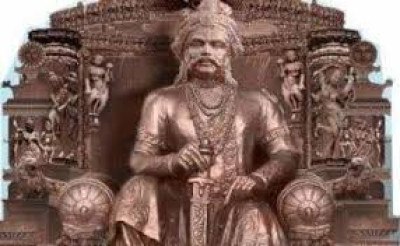
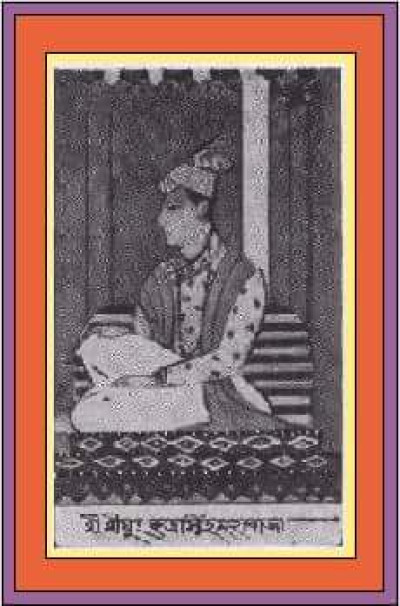
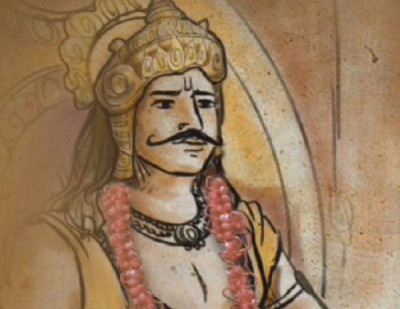
Born as Malladev, Naranarayan was the son of Viswa Singha, the founder of the Koch dynasty. The Koch Kingdom emerged in a period of political instability following the collapse of the Kamata and Kamarupa kingdoms and the withdrawal of Bengal Sultanate forces. Viswa Singha laid the foundation of a new political order, but it was Naranarayan who consolidated, expanded, and stabilized the kingdom into a formidable empire.
Early Life and Education
Naranarayan received a strong foundation in education and statecraft. Along with his younger brother Sukladhwaj, later famous as Chilarai, he was sent to Kashi to study under renowned teachers. This exposure to classical learning, governance principles, and religious philosophy shaped his worldview. The bond between the two brothers later became one of the strongest pillars of the Koch Kingdom's success.
After the death of Viswa Singha, a brief struggle for succession followed. Malladev emerged victorious, ascended the throne, and adopted the royal title Nara Narayana. He inherited a relatively small kingdom surrounded by hostile powers, including the Ahoms, Kacharis, Jaintias, Tripura, and the Bengal Sultanate.
Military Expansion and Role of Chilarai
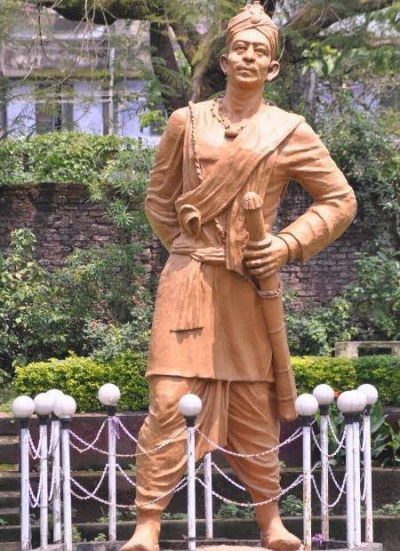
Naranarayan's military achievements are inseparable from the brilliance of his brother Chilarai, whom he appointed as the commander-in-chief of the Koch army. Chilarai was known for his speed, strategy, and decisive leadership, earning comparisons with legendary generals of Indian history.
The Koch forces launched a series of campaigns that reshaped the political map of Northeast India. After an initial setback against the Ahoms, Naranarayan reorganized his army and infrastructure. The famous Gohain Kamal Ali, a strategic military road, was constructed to facilitate troop movement.
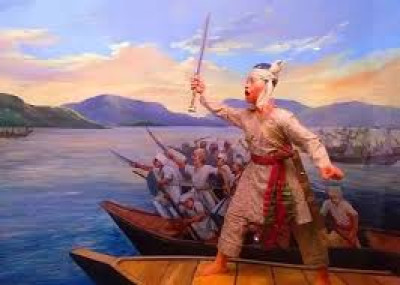
Under Chilarai's command, the Koch army defeated the Ahoms in decisive land and naval battles, forcing them to sign a treaty and cede territory north of the Brahmaputra. Following this victory, the Koch forces subdued the Kachari Kingdom, Jaintia Kingdom, Manipur, Sylhet, and Tripura, either through conquest or diplomatic submission.
Instead of outright annexation, Naranarayan adopted a policy of tributary states, allowing local rulers to govern in exchange for loyalty, annual tribute, and military support. This policy ensured stability, economic flow, and cultural integration, similar to the approach once followed by Samudragupta.
Economic Reforms and Coinage
One of the most significant contributions of Koch King Naranarayan was the introduction of a regular monetary system. He issued silver coins known as Narayanimudr, which carried an invocation to Lord Shiva and bore the accession year 1555 AD.
These coins replaced the earlier barter system and played a vital role in boosting trade, taxation, and economic organization. Large quantities of Narayanimudr have been discovered across Assam, North Bengal, Meghalaya, and parts of Northeast India, indicating a well-integrated economy.
Trade routes connecting India, Bhutan, Tibet, and Southeast Asia passed through Koch territory. Revenue from trade, tribute, and military campaigns supplied the silver required for coin minting. The widespread circulation of these coins strengthened state authority and inspired neighboring kingdoms to adopt coinage.
Patron of Culture and Religion
Beyond warfare and administration, Naranarayan was a great patron of art, religion, and culture. He actively supported the Neo-Vaishnavite movement led by Mahapurush Srimanta Sankardeva. His reign witnessed the flourishing of Ekasarana Naam Dharma, which promoted devotion to a single supreme deity and emphasized equality, moral discipline, and cultural unity.
Naranarayan commissioned the creation of the Vrindavani Vastra, a monumental silk textile depicting scenes from Lord Krishna's life. This project symbolized the synthesis of spirituality, literature, and visual art, and remains one of Assam's greatest cultural treasures.
Architectural Contributions
The king undertook major construction and restoration projects. One of his most notable achievements was the rebuilding of the Kamakhya Temple, which had suffered destruction during earlier invasions. He also built several temples, roads, and administrative centers that strengthened the kingdom's infrastructure.
These works were not merely religious but also political, reinforcing royal authority and cultural identity across his vast territory.
Diplomacy and Challenges
While Naranarayan dominated much of Northeast India, he faced resistance from the Bengal Sultanate, particularly during the rule of Suleman Karranni. Although the Koch forces initially achieved success, prolonged conflict with Bengal limited further westward expansion.
Despite these challenges, Naranarayan maintained internal peace, efficient administration, and cultural stability throughout his reign.
Legacy of Koch King Naranarayan
Koch King Naranarayan ruled until around 1587 and left behind a powerful, prosperous, and culturally vibrant kingdom. His leadership transformed the Koch state into the dominant power of medieval Northeast India.
After his death, the kingdom gradually fragmented due to succession disputes and external pressures. However, his legacy endured through political institutions, coinage, religious movements, and cultural traditions.
Today, Naranarayan is remembered as:
-
The greatest ruler of the Koch Kingdom
-
A visionary administrator and military strategist
-
A patron of Vaishnavism and Assamese culture
-
A key figure in Northeast Indian history
For general knowledge learners, UPSC and APSC aspirants, his reign provides critical insights into medieval state formation, economy, culture, and regional politics.
FAQs on Koch King Naranarayan
1. Who was Koch King Naranarayan?
Koch King Naranarayan was the greatest ruler of the Koch Kingdom who led Assam to political and cultural peak during the 16th century.
2. What was the original name of Naranarayan?
His original name was Malladev before he ascended the throne.
3. Who was Chilarai?
Chilarai, also known as Sukladhwaj, was Naranarayan's brother and commander-in-chief of the Koch army.
4. What territories did Naranarayan conquer?
He expanded control over Ahom, Kachari, Jaintia, Manipur, Sylhet, and Tripura regions.
5. What is Narayanimudr?
Narayanimudr refers to silver coins issued by Koch King Naranarayan, marking the beginning of a monetary economy in the region.
6. How did Naranarayan support Vaishnavism?
He patronized Srimanta Sankardeva and promoted Ekasarana Naam Dharma across Assam.
7. What cultural project did Naranarayan commission?
He commissioned the creation of the Vrindavani Vastra, a masterpiece of Assamese silk heritage.
8. Which temple did Naranarayan rebuild?
He rebuilt and restored the Kamakhya Temple in Assam.
9. Why is Naranarayan important for GK and exams?
His reign connects themes of polity, economy, culture, religion, and regional history.
10. What is the legacy of Koch King Naranarayan?
He is remembered as a visionary ruler who unified Northeast India and strengthened Assamese identity.