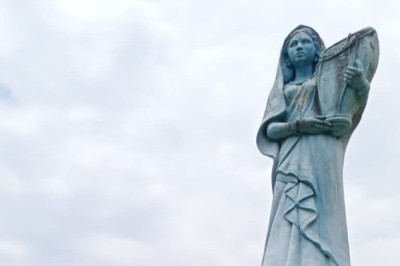
Life & Legacy
Early Life
According to traditional accounts, Sati Radhika was born in 1456 on the full moon day of the Assamese month of Bohag, although some historical traditions mention the month of Bhadra. She belonged to the Kaivarta community, one of the indigenous communities of Assam known for fishing, agriculture, and river-based livelihoods.
From an early age, Radhika was known for her simplicity, honesty, compassion, and spiritual nature. Unlike many historical personalities remembered for political achievements, she earned respect through her character, devotion, and willingness to serve society without expecting recognition.
Family and Married Life
Sati Radhika was married to Purnananda and was also known by the name Yogamaya. Historical traditions describe their married life as peaceful, devoted, and guided by religious values.
She is remembered as an ideal Assamese woman whose life reflected sincerity, discipline, compassion, and dedication to both her family and the welfare of society. Her reputation for purity and moral conduct gradually spread throughout the region.
Association with Srimanta Sankardeva
Sati Radhika lived during the lifetime of Mahapurush Srimanta Sankardeva, the great saint, philosopher, social reformer, and founder of the Neo-Vaishnavite movement in Assam.
During that period, severe flooding from the Tembuwani Jan stream repeatedly damaged agricultural fields and settlements around Barpeta and nearby regions. Local leaders and villagers searched for a lasting solution to protect the people from annual floods.
According to Assamese tradition, Sankardeva declared that the embankment could only succeed through the efforts of a truly virtuous woman whose honesty, devotion, and purity were unquestionable.
The Story of the Shantijan Embankment
Many respected families and noble women came forward, but none were able to complete the sacred task associated with the construction of the embankment.
Sati Radhika courageously stepped forward despite belonging to an ordinary family. Carrying water in a traditional bamboo vessel, she performed the ritual requested by Sankardeva before soil was placed to strengthen the embankment.
According to traditional accounts, the first attempt was unsuccessful because Radhika honestly confessed a small mistake she believed had affected her spiritual purity. Sankardeva appreciated her truthfulness instead of criticizing her. After receiving his blessings, she repeated the ritual with complete faith, and the embankment was successfully completed.
The embankment later became known as Shantijan, while Radhika earned the affectionate title of Shantikanya, meaning "Daughter of Peace." Her residence also came to be known as Radhika Shanti's House, which continues to hold cultural importance in Assamese tradition.
Contribution to Assamese Society
Although Sati Radhika never held political authority, her contribution to society remains deeply respected. Her willingness to place the welfare of the community above personal recognition represents one of the finest examples of public service in Assamese history.
Her life teaches the importance of honesty, humility, social responsibility, faith, and compassion. She demonstrated that ordinary individuals can create extraordinary change through selfless dedication.
Today, she is remembered as an example of moral courage rather than physical strength, making her story unique among the famous women of Assam.
Cultural Legacy
The memory of Sati Radhika survives through Assamese folk songs, Malitas, religious performances, and oral storytelling traditions. One of the best-known folk narratives is the Sati Radhikar Malita, which continues to be performed during religious gatherings and cultural festivals, especially during Madhavdeva's Kirtan celebrations in Sualkuchi.
Her story has been passed from one generation to another, ensuring that her values remain alive in Assamese society. She is regarded as an important cultural figure whose life highlights the role of women in preserving social harmony and community welfare.
In recent years, places associated with her memory, including Sati Radhika Shanti Udyan, have further strengthened public awareness of her remarkable contribution to Assam's cultural heritage.
Achievements
- Remembered as one of the most respected women in Assamese cultural history.
- Honoured with the title Shantikanya for her contribution to society.
- Played a significant role in the successful construction of the historic Shantijan embankment.
- Recognized as an inspiring follower of Srimanta Sankardeva.
- Became a symbol of honesty, purity, sacrifice, and selfless service.
- Her life continues to inspire Assamese society through folklore and religious traditions.
- Featured in Guru Charit and various traditional Assamese narratives.
- Remembered through the famous folk ballad Sati Radhikar Malita.
- Continues to be honoured during religious and cultural programs across Assam.
- Serves as an enduring symbol of women's contribution to Assamese heritage.
Awards and Recognition
Sati Radhika lived during the fifteenth century, and there is no historical evidence of formal awards or state honours during her lifetime. However, her recognition continues through Assamese religious traditions, folk literature, cultural performances, historical discussions, and public remembrance. Her contribution is preserved as an important part of Assam's spiritual and cultural heritage.
Death
The exact date, year, and circumstances of Sati Radhika's death are not recorded in available historical sources. However, her legacy continues to live through Assamese religious traditions, folklore, and cultural memory. She remains one of the most respected women associated with the early Neo-Vaishnavite movement in Assam.
FAQs on Sati Radhika
1. Who was Sati Radhika?
Sati Radhika was a respected woman from the Kaivarta community who became famous for her devotion, honesty, and contribution to Assamese society during the time of Srimanta Sankardeva.
2. Why is Sati Radhika famous in Assam?
She is remembered for helping in the construction of the historic Shantijan embankment and for becoming a symbol of purity, selfless service, and social harmony.
3. Who was the husband of Sati Radhika?
According to traditional accounts, Sati Radhika was married to Purnananda.
4. What is the meaning of Shantikanya?
Shantikanya means "Daughter of Peace," a title traditionally associated with Sati Radhika for her contribution to society.
5. What was Sati Radhika's connection with Srimanta Sankardeva?
She was a devoted follower of Srimanta Sankardeva and is remembered in Assamese traditions associated with his teachings.
6. What is the Shantijan embankment?
It is a historic embankment associated with Sati Radhika's act of devotion and public service to protect people from flooding.
7. Which community did Sati Radhika belong to?
She belonged to the Kaivarta community of Assam.
8. Is Sati Radhika mentioned in Assamese literature?
Yes. Her story appears in Guru Charit, Assamese folklore, Malitas, and various traditional cultural narratives.
9. Did Sati Radhika receive any awards?
There are no historical records of formal awards, but she continues to receive immense cultural and religious respect throughout Assam.
10. Why is Sati Radhika important in Assamese history?
She represents honesty, faith, compassion, sacrifice, and the important role of ordinary women in preserving Assam's social and cultural heritage.