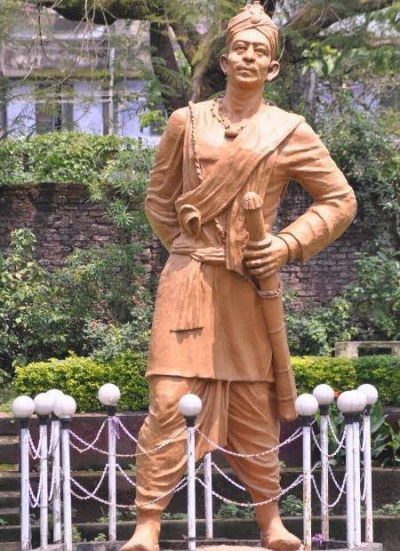
Life & Legacy
Early Life
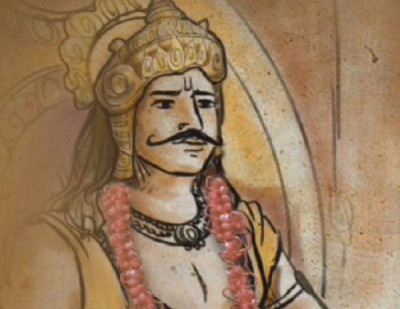
The exact date of Sarbananda Singha's birth is not clearly documented in historical records. He was born into the Buruk Chutia (Matak) community and was the son of Merutnandan. He later became a devoted follower of the Mayamara Vaishnavite tradition under the guidance of Aniruddha Deva. His religious upbringing, combined with the social challenges faced by his community, greatly influenced his leadership and his commitment to justice and equality.
Rise During the Moamoria Rebellion
Sarbananda Singha rose to prominence during the Moamoria Rebellion, one of the largest socio-political movements in Assam against the weakening Ahom administration. The rebellion represented the grievances of the Matak, Moran and other indigenous communities who opposed the exploitative Paik system and social discrimination. Through his determination and military leadership, Sarbananda Singha united his followers and became one of the most respected leaders of the movement.
His leadership eventually earned recognition from both his supporters and the Ahom administration. He was accepted as the ruler of an autonomous Matak territory, laying the foundation for an independent political identity for the Matak people.
Founder of the Matak Kingdom
Sarbananda Singha established the Matak Kingdom with its capital at Bengmara, present-day Tinsukia district. His reign marked an important chapter in Assam's regional history. Under his administration, the kingdom developed a structured governance system that emphasized local participation, agricultural development, and public welfare.
One of his notable reforms was reducing the burden of the Paik labour system that had become oppressive during the later Ahom period. He encouraged farming, strengthened local administration, and promoted fair governance. Several roads, water reservoirs, and public utility works were constructed during his reign, improving communication and supporting agriculture in the region.
Major Contributions and Achievements
Sarbananda Singha made several lasting contributions to the history of Assam:
- Founded the Matak Kingdom in Upper Assam.
- Established Bengmara as the capital of the kingdom.
- Played a leading role in the Moamoria Rebellion.
- Strengthened the political identity of the Matak community.
- Reduced the impact of the exploitative Paik labour system.
- Encouraged agriculture, irrigation, and local trade.
- Constructed important roads and public ponds for community welfare.
- Supported Mayamara Vaishnavite institutions and religious harmony.
- Issued gold and silver coins representing the kingdom's sovereignty.
- Promoted local administration based on community participation.
Administration and Legacy
Sarbananda Singha was respected as a capable administrator who combined military strength with effective governance. His rule provided stability to eastern Assam during a period of political uncertainty. His efforts to protect indigenous communities and establish autonomous governance continue to be appreciated by historians studying Assam's regional history.
Today, he is remembered as one of the pioneers of indigenous self-rule in Assam. His contribution to preserving the identity of the Matak people and strengthening regional administration has earned him a permanent place in the state's historical heritage. Government institutions and community organizations regularly commemorate his legacy through memorial events and cultural programmes.
Awards and Recognition
As a ruler of the pre-colonial era, Sarbananda Singha did not receive modern civilian awards. However, his recognition includes:
- Revered as the founder of the Matak Kingdom.
- Honoured by the Matak community as a legendary ruler.
- Remembered as an important leader in Assam's history.
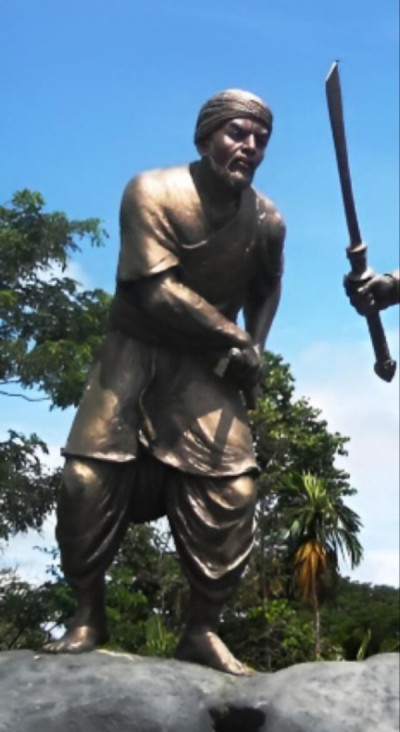
- Memorials, statues and commemorative programmes have been organized in his honour.
- His contributions are included in historical studies related to the Moamoria Rebellion and the Matak Kingdom.
Death
Historical sources differ regarding the exact year of his death, but he is believed to have died in the early nineteenth century after establishing the Matak Kingdom. Following his death, his eldest son Matibor Borsenapoti succeeded him as the ruler. Although the kingdom later came under British control, Sarbananda Singha's legacy as the founder of the Matak Kingdom remains an important part of Assam's political and cultural history.
FAQs about Sarbananda Singha