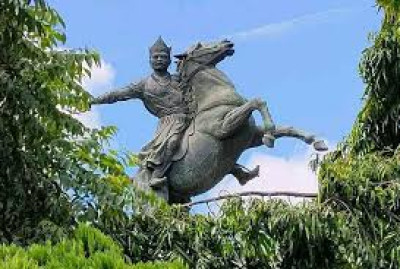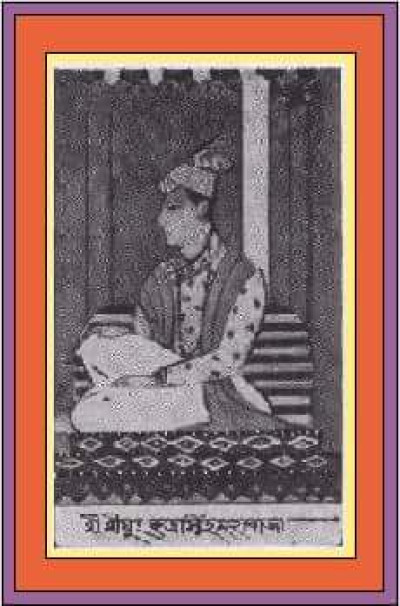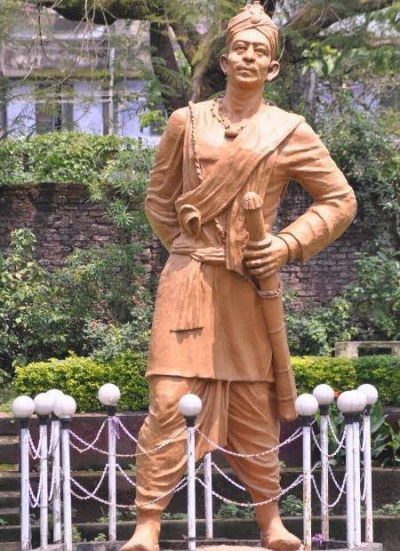
Life & Legacy
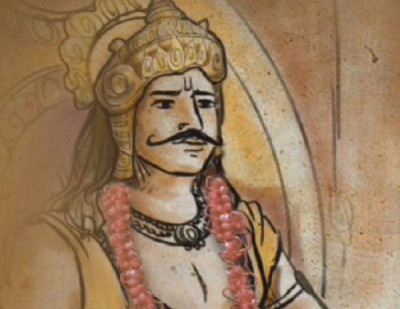
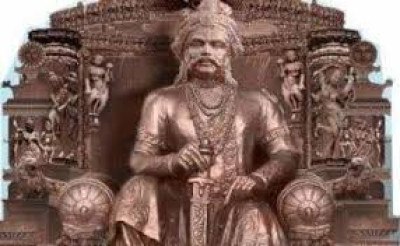
Prithu, also referred to in some historical sources as Raja Prithu or Prithu Rae, ruled Kamarupa during a politically turbulent period. The kingdom of Kamarupa covered a large part of present-day Assam and served as an important political, cultural and religious centre of Northeast India. Blessed with fertile plains, mighty rivers, dense forests and strategic trade routes, Kamarupa had long remained an independent regional power. During Prithu's reign, however, expansionist forces from Bengal and northern India posed a serious threat to its sovereignty.
Very little authentic information is available regarding Maharaja Prithu's childhood and formal education. Historical records from this period are limited, and much of his early life remains uncertain. It is generally believed that he belonged to the ruling elite of Kamarupa and possessed extensive knowledge of administration, warfare and diplomacy. His ability to unite local chiefs and organize a disciplined defence suggests that he received military training and practical experience in governance before ascending the throne.
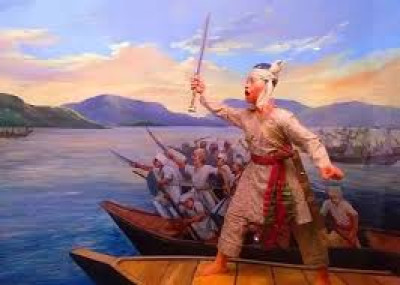
The most defining event of Maharaja Prithu's reign was the attempted invasion of the Kamarupa region by Muhammad Bakhtiyar Khalji around 1205-1206 CE. Bakhtiyar Khalji had already established his authority over Bihar and Bengal and sought to expand his influence further by launching a military expedition towards Tibet. Since the route to Tibet passed through the strategically important kingdom of Kamarupa, the invasion posed a direct threat to the independence of Assam.
Instead of engaging in an immediate open battlefield confrontation, Maharaja Prithu reportedly adopted a carefully planned defensive strategy. Understanding the difficult geography of the Brahmaputra Valley, he allowed the invading army to move deeper into unfamiliar territory. The dense forests, heavy rainfall, mountain passes and numerous rivers gradually exhausted the invading forces, weakening their supplies and communication. When the opportunity arrived, Prithu's soldiers launched coordinated attacks from multiple directions, using their superior knowledge of the terrain to overwhelm the enemy.
The campaign proved disastrous for Bakhtiyar Khalji. His army suffered enormous losses during both the advance and retreat. Historical accounts describe that only a small number of soldiers managed to escape. The defeat effectively ended Khalji's ambitious campaign toward Tibet and prevented foreign domination over Kamarupa. This military success remains one of the earliest recorded victories by an indigenous ruler of Northeast India against a major invading force.
The victory of Maharaja Prithu carried significance far beyond the battlefield. By defending Kamarupa, he preserved the political independence of the Brahmaputra Valley during a period when many kingdoms across northern India were falling under external control. His resistance helped maintain the distinct cultural traditions, religious practices and administrative institutions of the region. For many historians and scholars, this achievement represents one of the most important defensive victories in medieval Assamese history.
Apart from his military accomplishments, Maharaja Prithu is believed to have maintained an efficient administration that focused on internal stability and regional security. Protecting trade routes, strengthening frontier defences and maintaining law and order were among the important responsibilities of his government. His leadership helped ensure that Kamarupa remained a stable kingdom despite continuous political uncertainty in neighbouring regions.
Many regional traditions also portray Maharaja Prithu as a ruler who followed the principles of justice and ethical governance. Accounts suggest that he treated prisoners humanely and upheld the ideals of righteous warfare. Although some of these traditions cannot be fully verified through contemporary evidence, they continue to contribute to his image as a just and respected king in Assamese historical memory.
Several historical sources, including the Persian chronicle Tabaqat-i-Nasiri, the Kanai Barasi Bowa rock inscription near North Guwahati and later regional chronicles, have contributed to the discussion surrounding Maharaja Prithu's identity. While historians differ on certain interpretations and chronology, many modern researchers consider him the ruler who successfully resisted Bakhtiyar Khalji's forces. These ongoing scholarly debates have further increased public interest in his life and achievements.
The final years of Maharaja Prithu's reign were marked by continued military challenges from neighbouring powers. Historical traditions indicate that another campaign from Bengal reached Kamarupa during the late phase of his rule. Some accounts suggest that Nasiruddin Mahmud, associated with the Delhi Sultanate, launched an invasion around 1228 CE. The available historical evidence regarding this conflict remains limited, and scholars differ on several details. According to regional traditions, Maharaja Prithu fought bravely until the very end of his life, placing the honour and independence of his kingdom above personal safety. While the exact circumstances of his death continue to be debated, he is remembered as a ruler who never compromised the sovereignty of his land.
Although medieval historical records concerning Maharaja Prithu are relatively scarce, his legacy has survived through inscriptions, regional chronicles, folklore and the collective memory of the people of Assam. One of the most significant historical references connected with his reign is the Kanai Barasi Bowa rock inscription near North Guwahati, which records the destruction of invading Turkic forces in the early thirteenth century. While the inscription does not explicitly mention Prithu by name, many historians associate it with the successful defence of Kamarupa during his reign.
Over the centuries, Maharaja Prithu has come to symbolize courage, patriotism and the determination to defend one's homeland against overwhelming odds. His resistance delayed the eastward expansion of powerful invading forces and ensured that the Brahmaputra Valley continued to preserve its own political institutions, religious traditions and cultural identity. His achievements also demonstrated that the rulers of Northeast India possessed both military capability and strategic vision equal to any contemporary kingdom.
Modern historical research has brought renewed attention to Maharaja Prithu's contribution to Indian history. Scholars studying the history of medieval Assam increasingly recognize his importance in defending the northeastern frontier during one of the most critical periods of regional history. Public discussions, academic research and historical publications have helped introduce his story to newer generations who were previously unfamiliar with his achievements.
His contribution is particularly significant because it highlights the role of regional rulers whose accomplishments were often overlooked in mainstream historical narratives. The successful defence of Kamarupa remains one of the earliest examples of organized resistance against foreign military expansion in Northeast India. This achievement continues to inspire historians, students and people interested in the history of Assam.
Today, Maharaja Prithu is honoured as one of the greatest warrior kings of Assam. Roads, public infrastructure and educational discussions increasingly commemorate his contribution to preserving the identity of the region. His life reminds people that courage, strategic planning and strong leadership can protect a civilization even during periods of great uncertainty.
Major Achievements
- Successfully defended the Kingdom of Kamarupa against the invading army of Muhammad Bakhtiyar Khalji around 1205-1206 CE.
- Protected the political independence of the Brahmaputra Valley during a critical period of medieval history.
- Applied effective military strategies by using the geography of Assam to weaken invading forces.
- Strengthened the defence and security of the Kamarupa kingdom.
- Preserved the cultural and political identity of ancient Assam.
- Became one of the earliest recorded defenders of Northeast India against foreign military expansion.
- Inspired future generations through his bravery, leadership and patriotism.
- Continues to be recognised as an important historical figure in Assam through research, public commemorations and regional history.
Positions Held
- Maharaja (King) of Kamarupa
- Supreme Military Commander of the Kingdom of Kamarupa
- Defender of the Northeastern Frontier of Ancient India
Awards and Recognition
Maharaja Prithu did not receive modern awards or honours during his lifetime, as he lived during the medieval period. However, his contributions continue to receive recognition through:
- Recognition as one of Assam's greatest warrior kings.
- Commemoration in Assamese historical literature and regional folklore.
- Historical association with the Kanai Barasi Bowa inscription.
- Public infrastructure and institutions named in his honour in modern Assam.
- Continued recognition by historians for defending Kamarupa against foreign invasion.
Death
The exact details of Maharaja Prithu's death remain uncertain due to limited contemporary historical records. Several regional traditions suggest that he died during or shortly after later military conflicts in the early thirteenth century while defending his kingdom. Regardless of the differing historical interpretations, Maharaja Prithu is remembered as a fearless ruler whose unwavering commitment to protecting Kamarupa secured his place among the greatest heroes in the history of Assam.
FAQs about Maharaja Prithu
1. Who was Maharaja Prithu?
Maharaja Prithu was a medieval ruler of the Kingdom of Kamarupa in present-day Assam, best known for defending the region against the invading army of Muhammad Bakhtiyar Khalji.
2. Why is Maharaja Prithu famous in Assam?
He is remembered for his successful military resistance against Bakhtiyar Khalji's invasion, helping preserve the independence and cultural identity of ancient Assam.
3. Which kingdom did Maharaja Prithu rule?
Maharaja Prithu ruled the Kingdom of Kamarupa, one of the oldest and most influential kingdoms in Northeast India.
4. When did Maharaja Prithu defeat Bakhtiyar Khalji?
Historical accounts generally associate the victory with the failed Tibet campaign of Bakhtiyar Khalji around 1205-1206 CE.
5. What military strategy did Maharaja Prithu use?
He used the difficult terrain of Assam, disrupted enemy supply lines, and launched well-planned attacks that weakened and defeated the invading army.
6. What is the Kanai Barasi Bowa inscription?
It is a historic rock inscription near North Guwahati that records the destruction of invading Turkic forces during the early thirteenth century and is often linked with Maharaja Prithu's victory.
7. Are there historical debates about Maharaja Prithu?
Yes. Historians continue to debate certain aspects of his identity and reign, although many regional scholars associate him with the ruler who defeated Bakhtiyar Khalji.
8. Did Maharaja Prithu receive any awards?
No. Since he lived during the medieval period, there were no modern awards. However, he is widely honoured today as one of Assam's greatest warrior kings.
9. How did Maharaja Prithu die?
The exact circumstances remain uncertain. Regional traditions suggest he died during later military conflicts while defending his kingdom.
10. Why is Maharaja Prithu important in the history of Assam?
Maharaja Prithu is regarded as one of the earliest defenders of Assam whose military leadership helped protect Kamarupa from foreign invasion and preserved the region's political and cultural independence.