In Depth
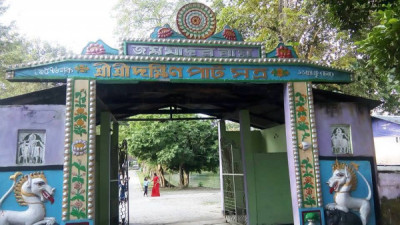
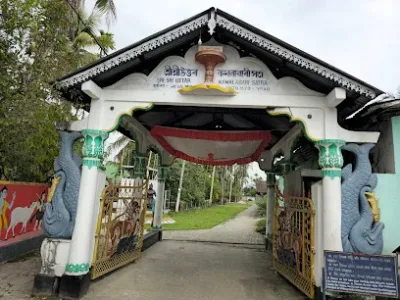
A visit to Kamalabari Satra offers an opportunity to understand how the teachings of the Vaishnavite saints shaped the cultural identity of Assam. Its legacy extends beyond religious activities to include artistic training, community traditions and the preservation of classical performance practices.
History and Origin of Kamalabari Satra
Kamalabari Satra is traditionally credited to Badala Padma Ata, also known as Padma Ata or Bedulapadma Ata. He was an influential religious teacher associated with the Neo-Vaishnavite movement of Srimanta Sankardev and Madhavdev. Traditional accounts describe him as having served as a swordsman before dedicating his life to religious activities and spreading Vaishnavite teachings in Upper Assam.
According to one historical account, Padma Ata established the satra in 1595 on land belonging to his disciple Purusottama Barua in Majuli. The establishment is associated with the Shukla Ekadashi day in the Assamese month of Aaghun. The name Kamalabari is generally understood as a combination of 'Kamala', meaning orange, and 'Bari', meaning garden. It is believed to refer to an orange orchard that existed at the original site.
Over the centuries, Kamalabari Satra developed into a recognised centre of devotional practice, classical music, dance and literary learning. Its history has also been shaped by the changing geography of Majuli. Riverbank erosion along the Brahmaputra caused serious damage to settlements and religious institutions. Accounts of the satra's history report that the original site was lost to river erosion in 1972, after which the community had to establish its institution in a new location.
Branches of Kamalabari Satra
As the institution expanded, the Kamalabari tradition became associated with several branches. These include Purana Kamalabari Satra, Natun Kamalabari Satra and Uttar Kamalabari Satra. References also mention a Madhya Majuli Kamalabari Satra and a Kamalabari-linked institution at Titabor near Jorhat.
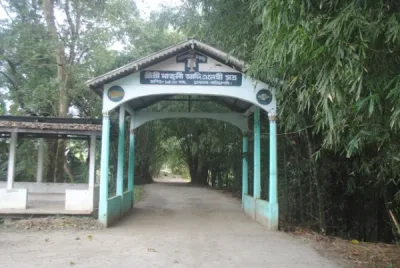
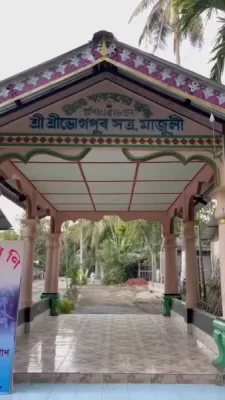
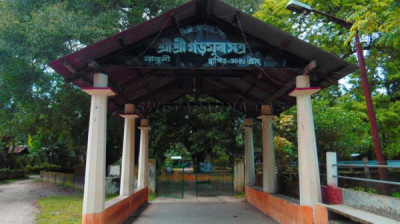
The names and locations of the branches can be confusing because of historical relocation and the effects of river erosion. Visitors should confirm the precise branch and its current location before travelling. Uttar Kamalabari Satra is listed in visitor references at Majuli College Road, Garamur Phutuki Chapori, Majuli, Assam 785106.
Religious Beliefs and Monastic Life
Kamalabari Satra follows the principles of Eka Sarana Nama Dharma, a devotional tradition centred on Lord Krishna and the teachings of Srimanta Sankardev. Prayer, the recitation of sacred texts, devotional singing and community worship are central to its religious life.
The Kamalabari tradition is associated with the Nika Sanghati and the Keol-Yug or celibate monastic way of life. The resident monks, known as bhakats, devote themselves to religious study, discipline, prayer and the practice of traditional arts. The satra environment has helped pass knowledge from experienced teachers to younger generations, keeping many forms of Assamese cultural expression alive.
Sattriya Dance and Traditional Training
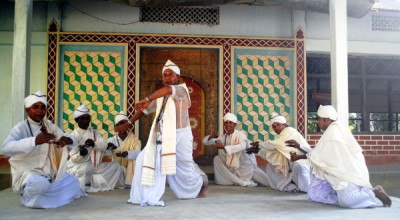
Kamalabari Satra is particularly respected for its contribution to Sattriya dance. Developed within Assam's satra institutions, Sattriya combines devotional storytelling with expressive movements, rhythm, music and carefully structured dance techniques. It received recognition as one of India's eight classical dance forms in 2000.
Training includes several traditional dance forms, such as Chali Naach, Sutradhari Naach, Gosai Praveshar Naach, Gopi Praveshar Naach, Jhumura, Behar or Bahar Nritya, Nadu-Bhangi and Dasavatar Naach. These forms draw on religious narratives and the performance traditions developed within the satras.
An important foundation of Sattriya training is Mati-Akhora. The term refers to physical exercises and movement practices performed on the ground. These exercises develop balance, flexibility, strength and body control, preparing performers for the movements and postures used in Sattriya dance.
Ankiya Bhaona and Gayan-Bayan
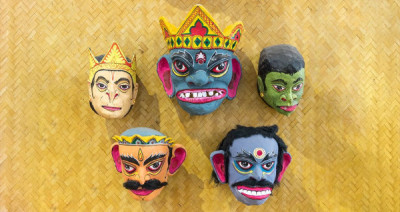
Ankiya Bhaona is a traditional form of Assamese devotional theatre developed through the Neo-Vaishnavite movement initiated by Srimanta Sankardev. Its performances present stories from religious texts, particularly narratives connected with Lord Krishna and Lord Vishnu. Music, dance, dialogue, costumes and stage presentation work together to communicate devotional teachings to audiences.
A traditional Bhaona performance includes several stages. Gayan-Bayan, the combination of devotional singing and percussion, forms an important musical introduction. The performance may then feature the Sutradhar, who introduces the story and guides the audience through the drama. The concluding Muktimangal Bhatima brings the performance to a devotional close.
The plays traditionally use Brajavali, a literary language associated with the Vaishnavite dramatic tradition. Their songs and verses are organised around distinct melodies and rhythmic patterns. The tradition demonstrates how theatre, music and dance developed together within Assam's satras.
What to See and Experience at Kamalabari Satra
Namghar: The Namghar is the principal congregational prayer space where devotees gather for naam prasanga, naam kirtan and other religious observances. Visitors can learn about the community-centred style of worship followed in Assamese satras.
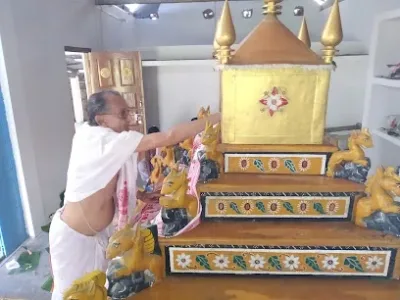
Monikut: The Monikut is the sacred inner area associated with worship. Access may be restricted during rituals or according to the institution's rules.
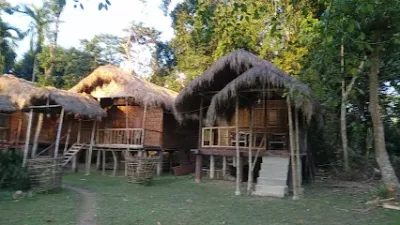
Bhakats' Living Quarters: The residential huts, traditionally called hutis, provide an insight into the disciplined daily life of the monks, who combine devotional practice with study and artistic training.
Sattriya Dance and Music: Learn about the dance forms, Borgeet compositions, Gayan-Bayan performances and traditional instruments preserved through the Kamalabari tradition. Live performances depend on the institution's schedule and should be confirmed in advance.
Traditional Theatre: Ankiya Bhaona is an important part of the satra's wider cultural legacy. Visitors interested in Assamese theatre can explore its storytelling methods, musical arrangements, costumes and devotional themes.
Manuscripts and Cultural Objects: Satra institutions are associated with the preservation of religious manuscripts, traditional instruments and cultural objects. Ask the authorities about access to any collections, as a public museum or regular display should not be assumed.
Festivals and Religious Celebrations
Daily devotional sessions are part of the satra's religious routine. Major occasions associated with the wider Kamalabari tradition include Raas Mahotsav, Janmashtami and commemorations of Srimanta Sankardev and Madhavdev.
Raas Mahotsav is one of Majuli's best-known cultural celebrations. Through devotional drama, dance and music, performers present episodes from the life of Lord Krishna. November is a popular period for visitors interested in Raas celebrations across the island, although dates and programmes vary each year.
Best Time to Visit Kamalabari Satra
October to March is generally a comfortable period to explore Majuli. The weather is usually more suitable for sightseeing and village visits, while November offers the opportunity to experience the island's Raas celebrations. During the monsoon, heavy rainfall, flooding and changes in river conditions can affect ferry operations and local travel.
How to Reach Kamalabari Satra from Guwahati
The usual journey from Guwahati involves travelling to Jorhat, reaching Nimati Ghat and taking a ferry across the Brahmaputra to Majuli. From the arrival point, local transport can take visitors to the Kamalabari area.
By Air: Jorhat Airport (JRH) is a convenient regional airport. From there, hire a taxi or use local transport to reach Nimati Ghat. Lilabari Airport near North Lakhimpur is another regional option, but check the onward road and ferry connections before choosing this route.
By Train: Travel to Jorhat Town Railway Station and continue by taxi or shared transport to Nimati Ghat.
By Road: The road journey from Guwahati to Jorhat generally takes around 7–9 hours, depending on traffic and road conditions. Buses, shared vehicles and private taxis are available on this route. From Jorhat, continue to Nimati Ghat.
By Ferry: Ferries connect Nimati Ghat with Majuli. Depending on the service, visitors may arrive at Kamalabari Ghat or Aphalamukh. Departure times and operating arrangements can change with river conditions, so confirm the current schedule before travelling.
Local Transport: From the ferry terminal, use a local taxi, auto-rickshaw or other available transport to reach the required satra. Confirm whether you are visiting the original Kamalabari location or one of its branches.
Where to Stay Near Kamalabari Satra
Kamalabari Satra is an active religious institution, not a conventional hotel. Visitors seeking basic accommodation can enquire about guest-house facilities associated with the satra tradition. Uttar Kamalabari Satra Guest House is listed at Garamur Phutuki Chapori, Majuli, Assam 785106. Contact the institution before travelling to check whether rooms are available and whether visitors can stay.
Older visitor reports mention basic rooms without attached bathrooms at around Rs. 200 per night, while historical estimates for satra guest-house accommodation have ranged from approximately Rs. 100 to Rs. 750 depending on the facility. These are older reported figures, not confirmed current tariffs. Homestays and local guest houses in and around Kamalabari and Garamur are alternatives for travellers who prefer more facilities. Booking ahead is advisable during festivals and the main tourist season.
Kamalabari is a convenient base for exploring several of Majuli's important Satras, while Garamur offers additional local accommodation choices.
Whom to Contact for a Visit
The following details are included in available visitor references. Contact numbers and email addresses may change, so verify them before making travel or accommodation arrangements.
Uttar Kamalabari Satra: Majuli College Road, Garamur Phutuki Chapori, Majuli, Assam 785106. Phone: +91 99546 60588.
Assam Tourism, Majuli: Phone: +91 81330 89993. Email: assamtourism.majuli@gmail.com.
Visit Majuli: Phone: +91 92095 10723. Email: bookings@visitmajuli.com.
Majuli Tourism: Phone: +91 94356 57282.
District Administration, Majuli: Phone: 03775 274424. Email: dc-majuli@gov.in.
Inland Water Transport, Jorhat: Helpline: 1800 889 4717. Check whether the helpline is currently operational before relying on it for ferry information.
Visitor Tips
Dress modestly and maintain a respectful atmosphere inside the satra. Follow instructions from monks and staff, particularly around the Namghar and other prayer areas. Ask permission before photographing people, religious spaces or objects. Do not assume that dance or Bhaona performances are held daily; contact the institution if you want to attend a particular programme.
Majuli has several satras and branches with similar names. Confirm the exact destination before starting from the ferry terminal. Allow enough time for the river crossing and check ferry services in advance. A visit to Kamalabari Satra is a valuable way to discover the religious, literary and performing arts traditions that form an important part of Assam's cultural heritage.
Quick Information Table
Information | Details |
|---|---|
Name | Kamalabari Satra |
Location | Upper Katoni, Majuli, Assam |
PIN Code | 785106 |
District | Majuli |
Island | Majuli River Island |
Founder | Badala Padma Ata |
Traditional Establishment Year | 1595 |
Religious Tradition | Eka Sarana Nama Dharma |
Sanghati | Nika Sanghati |
Monastic Tradition | Keol-Yug |
Famous For | Sattriya Dance, Ankiya Bhaona and Gayan-Bayan |
Major Branches | Purana, Natun and Uttar Kamalabari Satra |
Major Festival | Raas Mahotsav |
Best Time to Visit | October to March |
Nearest Airport | Jorhat Airport |
Nearest Railway Station | Jorhat Town Railway Station |
Nearest Ferry Ghat | Nimati Ghat, Jorhat |
Accommodation | Satra guest houses, homestays and local guest houses |
Contact Number | +91 99546 60588 (Uttar Kamalabari Satra listing) |
Frequently Asked Questions (FAQs)
1. Where is Kamalabari Satra located in Assam?
Kamalabari Satra is located on Majuli Island in the Brahmaputra River in Assam. It is an important religious and cultural institution known for preserving Assamese Neo-Vaishnavite traditions.
2. Who founded Kamalabari Satra?
Kamalabari Satra is traditionally credited to Badala Padma Ata, also known as Padma Ata or Bedulapadma Ata. He was a religious teacher associated with the Neo-Vaishnavite movement of Srimanta Sankardev and Madhavdev.
3. When was Kamalabari Satra established?
According to a traditional historical account, Kamalabari Satra was established in 1595 in the Assamese month of Aaghun. Other historical references give different dates for its branches and later developments.
4. What is the meaning of Kamalabari?
Kamalabari is commonly understood as a combination of the Assamese words 'Kamala', meaning orange, and 'Bari', meaning garden. The name is traditionally associated with an orange orchard at the original site.
5. Why is Kamalabari Satra famous?
Kamalabari Satra is famous for its contribution to Assamese culture, particularly Sattriya classical dance, Borgeet, Gayan-Bayan, Ankiya Bhaona and traditional religious learning.
6. What are the main branches of Kamalabari Satra?
The branches associated with the Kamalabari tradition include Purana Kamalabari Satra, Natun Kamalabari Satra and Uttar Kamalabari Satra. Other references also mention Madhya Majuli and a Kamalabari-linked institution at Titabor. Confirm the current location of the particular branch before visiting.
7. How can I reach Kamalabari Satra from Guwahati?
Travel from Guwahati to Jorhat by road, train or air. From Jorhat, reach Nimati Ghat and take a ferry across the Brahmaputra to Majuli. Continue by local transport to Kamalabari Satra.
8. What is the best time to visit Kamalabari Satra?
October to March is generally the best time to visit because of the more comfortable weather. November is particularly suitable for visitors interested in experiencing Raas Mahotsav celebrations across Majuli.
9. Can tourists stay at Kamalabari Satra?
Visitors can enquire about basic guest-house accommodation associated with the satra tradition, including Uttar Kamalabari Satra Guest House. Rooms, facilities and tariffs should be confirmed directly. Homestays and guest houses are also available in Majuli.
10. Whom should I contact before visiting Kamalabari Satra?
For Uttar Kamalabari Satra, the listed phone number is +91 99546 60588. Visitors can also contact Visit Majuli at +91 92095 10723 or Assam Tourism, Majuli, at +91 81330 89993 for travel-related guidance. Confirm the numbers before making arrangements.