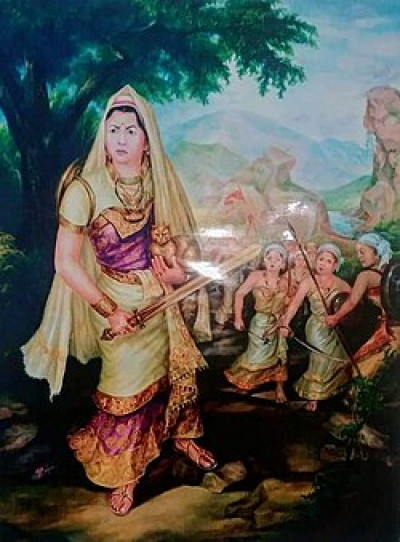
Life & Legacy
Born in 1510, Bir Chilarai was the third son of Maharaja Biswa Singha, the founder of the Koch dynasty, and Queen Padmavati. He was the younger brother of Maharaja Nara Narayan, who later became the ruler of the Kamata (Koch) Kingdom. Together, the two brothers transformed the Koch Kingdom into one of the most powerful kingdoms of medieval Northeast India.
Early Life
Bir Chilarai spent his childhood in the royal family, where he received training in leadership, warfare and administration from an early age. His birth name was Shukladhwaj, which reflected his fair complexion and auspicious birth on a full moon day. As a prince of the Koch dynasty, he developed exceptional physical strength, discipline and strategic thinking during his formative years.
Unlike many princes of his time, Chilarai combined military excellence with wisdom and compassion. His fearless nature and determination later helped him become one of the most successful commanders in the history of Assam.
Education
To receive higher education, Bir Chilarai and his elder brother Malla Dev, later known as Maharaja Nara Narayan, travelled to Varanasi, one of the leading centres of learning in India during that period.
There, they studied a wide range of subjects including:
- Sanskrit
- Literature
- Grammar
- Law
- Astrology
- Philosophy
- Political Science
- Military Strategy
The education he received at Varanasi greatly enhanced his administrative abilities and military planning. His knowledge of politics and diplomacy later proved invaluable in expanding and strengthening the Koch Kingdom.
Rise as Commander-in-Chief
After Maharaja Nara Narayan ascended the throne, Bir Chilarai was appointed Commander-in-Chief of the Koch Army. He also served as an important administrator and adviser to the king.
His remarkable speed in executing military operations became legendary. Historical accounts describe how his cavalry attacked enemy forces with the speed of a flying kite, earning him the title "Chilarai." His military discipline, intelligence and tactical brilliance enabled him to defeat several powerful kingdoms without unnecessary destruction.
He believed that military victory should establish peace rather than oppression. Even defeated rulers who surrendered were treated with dignity and allowed to continue governing their territories under the authority of the Koch Kingdom.
Military Campaigns and Victories
Bir Chilarai led numerous successful military expeditions that established the Koch Kingdom as one of the dominant powers of Northeast India.
Victory over the Ahom Kingdom
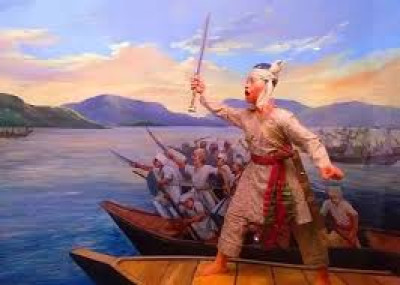
One of his most remarkable campaigns took place in 1563, when he led the Koch army against the Ahom Kingdom. Using both land and naval forces, Chilarai launched a well-planned offensive and successfully captured the Ahom capital at Garhgaon.
His rapid military movements surprised the Ahom army and forced the Ahom king to retreat. Although peace was later restored through negotiations, the campaign demonstrated Chilarai's exceptional leadership and tactical brilliance.
Campaign against the Kachari Kingdom
Bir Chilarai also defeated the Kachari Kingdom centred around present-day Dimapur. His victory strengthened Koch influence across the Brahmaputra Valley and expanded the kingdom's territorial control.
Manipur Expedition
Historical records state that the King of Manipur chose to surrender without engaging in a prolonged battle after witnessing the military strength of the Koch army. The kingdom accepted Koch supremacy and agreed to pay tribute, further increasing the prestige of Bir Chilarai and Maharaja Nara Narayan.
Victory over the Jaintia Kingdom
The Jaintia Kingdom resisted Koch expansion and fought against Bir Chilarai's army. After a fierce battle, the Koch forces emerged victorious. Following the defeat, the successor to the Jaintia throne accepted Koch authority and agreed to maintain peaceful relations through tribute.
Expedition to Tripura
Bir Chilarai successfully led an expedition into the Kingdom of Tripura. The campaign demonstrated his ability to organise large-scale military operations and further extended the influence of the Koch Kingdom across the region.
Sylhet Campaign
His campaign into Sylhet showcased his fearless leadership and military planning. After defeating the opposing forces, the Koch Kingdom gained significant wealth, elephants, horses and political influence. This victory further established Chilarai as one of the greatest military commanders of medieval India.
Administrator and Statesman
Beyond the battlefield, Bir Chilarai was a capable administrator and trusted adviser to Maharaja Nara Narayan. He played an important role in strengthening the governance of the Koch Kingdom and maintaining political stability across newly acquired territories.
Instead of ruling conquered regions through fear, he promoted diplomacy, respect and cooperation. Many defeated rulers were allowed to retain their kingdoms after accepting Koch authority, ensuring long-term peace and administrative efficiency.
Patron of Religion and Assamese Culture
Bir Chilarai was not only a fearless warrior but also a generous patron of religion, education and culture. He extended strong support to Mahapurush Srimanta Sankardeva, whose Neo-Vaishnavite movement was transforming Assamese society during the sixteenth century.
His royal protection enabled Sankardeva to continue spreading Ekasarana Dharma across Assam despite opposition from orthodox groups. Chilarai deeply respected the saint's philosophy of equality, devotion and social harmony.
Following the destruction of the Kamakhya Temple during the invasion led by Kalapahar, Bir Chilarai and Maharaja Nara Narayan played a significant role in rebuilding and restoring this important centre of Hindu worship.
His encouragement of religion, literature and cultural development greatly contributed to the growth of Assamese civilisation alongside the military expansion of the Koch Kingdom.
Conflict with the Bengal Sultanate
One of the most challenging periods in Bir Chilarai's military career came during the Koch Kingdom's campaign against the Bengal Sultanate. Around 1568, Maharaja Nara Narayan launched an expedition towards Gaur, then ruled by the Afghan Sultan Sulaiman Khan Karrani. During this campaign, Bir Chilarai confronted the Sultanate's famous general Kalapahar.
Although Chilarai displayed exceptional courage, he was captured during the conflict. Following the invasion, Kalapahar's forces destroyed several important temples, including the revered Kamakhya Temple in Nilachal Hills. This temporary setback affected the Koch Kingdom's expansion, but it did not diminish Chilarai's reputation as one of the greatest military leaders of his time.
After regaining strength, Bir Chilarai and Maharaja Nara Narayan successfully restored the Kamakhya Temple and continued supporting religious and cultural institutions throughout the kingdom.
Alliance with the Mughal Empire
Later, the Mughal Emperor Akbar sought military cooperation from the Koch Kingdom against the Afghan rulers of Bengal. Bir Chilarai once again demonstrated his remarkable military leadership by joining this campaign.
During the expedition, he captured Ghoraghat and secured several strategic territories. His victories further enhanced the prestige of the Koch Kingdom and established friendly relations with the Mughal Empire. His campaigns reflected not only military strength but also diplomatic wisdom, enabling the Koch Kingdom to become one of the most influential powers in Northeast India.
Military Leadership
Bir Chilarai is remembered as one of the finest military strategists in Indian history. His campaigns were characterised by speed, discipline, careful planning and minimal destruction of civilian life.
Some remarkable qualities of his leadership include:
- Brilliant battlefield strategy.
- Extremely fast cavalry movement.
- Effective use of both land and naval forces.
- Respectful treatment of surrendered rulers.
- Protection of civilians during military campaigns.
- Strong administrative and diplomatic skills.
- Loyalty to Maharaja Nara Narayan and the Koch Kingdom.
These qualities earned him admiration from allies as well as opponents and established his reputation as one of Assam's greatest warriors.
Major Achievements
Bir Chilarai's achievements significantly shaped the political history of Assam and Northeast India.
His major achievements include:
- Commander-in-Chief of the Koch Kingdom.
- Younger brother and chief military adviser of Maharaja Nara Narayan.
- Expanded the Koch Kingdom across large parts of Northeast India.
- Successfully captured the Ahom capital Garhgaon.
- Defeated or brought under tribute the kingdoms of Kachari, Manipur, Jaintia, Tripura and Sylhet.
- Strengthened diplomatic relations with neighbouring kingdoms.
- Played an important role in rebuilding the Kamakhya Temple.
- Protected and supported the religious movement of Srimanta Sankardeva.
- Promoted peace by allowing defeated rulers to retain their kingdoms after accepting Koch authority.
- Became one of the greatest military heroes in Assamese history.
- Inspired the establishment of Bir Chilarai Divas and the Bir Chilarai Award in modern Assam.
Awards and Recognition
Although formal awards were not prevalent during the sixteenth century, Bir Chilarai's extraordinary contributions have been honoured by the Government of Assam and various cultural organisations.
Some of the most notable recognitions include:
- His birth anniversary is celebrated annually as Bir Chilarai Divas across Assam.
- The Government of Assam instituted the prestigious Bir Chilarai Award in 2005 to honour outstanding acts of bravery and service.
- Roads, educational institutions, cultural centres and public buildings have been named after him.
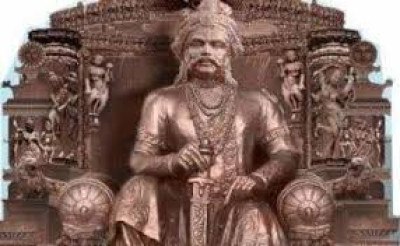
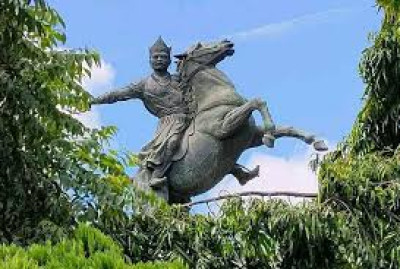
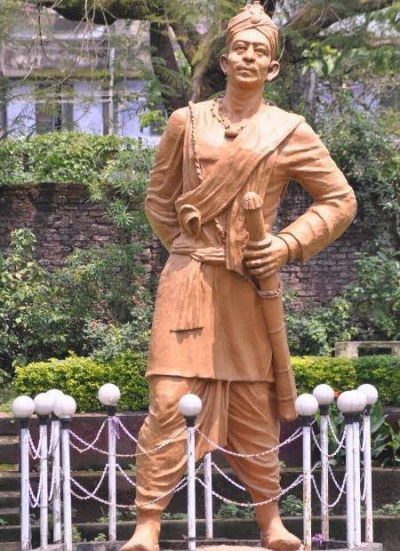
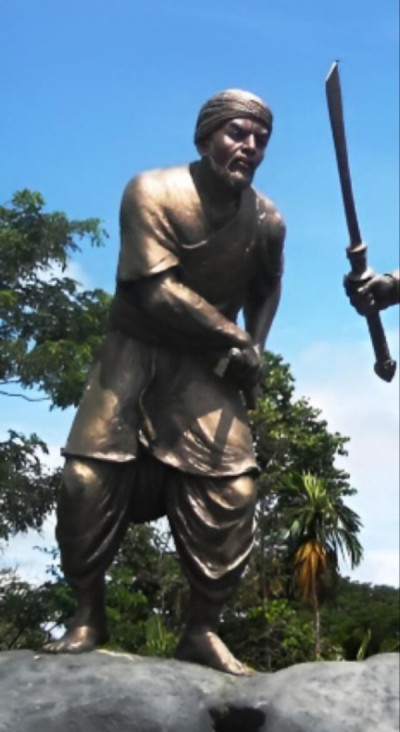
- Statues and memorials commemorating Bir Chilarai have been established in different parts of Assam.
- His life is included in educational curricula and historical studies related to Assam and the Koch Kingdom.
Bir Chilarai Divas
Bir Chilarai Divas is observed every year in Assam on the Magh Purnima (full moon day of the Hindu month of Magh) to commemorate the birth anniversary of the legendary Koch general.
The occasion is celebrated with:
- Cultural programmes.
- Historical seminars.
- Processions and public meetings.
- Educational competitions.
- Floral tributes to Bir Chilarai.
- Award ceremonies recognising bravery and public service.
The celebration highlights his contribution to Assam's military history, cultural heritage and regional unity.
Death
During his later military campaign in Bengal, Bir Chilarai contracted smallpox while leading his army. He passed away on the banks of the River Ganga in 1571 (some historical sources mention 1577). His death marked the end of one of the most remarkable military careers in the history of Northeast India.
Following his death, Maharaja Nara Narayan divided the Koch Kingdom into Koch Bihar and Koch Hajo, with Chilarai's son Raghudev Narayan becoming the ruler of Koch Hajo.
Legacy
Bir Chilarai's legacy continues to inspire generations across Assam and Northeast India. His extraordinary military achievements, visionary leadership and commitment to protecting culture and religion have secured him a permanent place in Indian history.
He is remembered not only as a fearless warrior but also as a compassionate administrator who respected defeated enemies, encouraged diplomacy and supported spiritual reform. His patronage of Srimanta Sankardeva played a crucial role in the growth of Assamese culture and Neo-Vaishnavism.
Today, historians regard Bir Chilarai as one of the greatest military commanders produced by medieval India. His courage, patriotism and leadership continue to serve as an inspiration for students, researchers, military professionals and every Assamese citizen.
FAQs on Bir Chilarai
1. Who was Bir Chilarai?
Bir Chilarai, also known as Shukladhwaj, was the legendary commander-in-chief of the Koch Kingdom during the 16th century. He was the younger brother of Maharaja Nara Narayan and is remembered as one of the greatest military leaders in the history of Assam and Northeast India. His extraordinary speed in warfare earned him the title "Chilarai," meaning "swift as a kite."
2. What was the real name of Bir Chilarai?
The real name of Bir Chilarai was Shukladhwaj. He was born into the Koch royal family as the third son of Maharaja Biswa Singha. The title "Chilarai" was later bestowed upon him because of his lightning-fast military attacks, which resembled the swift flight of a kite.
3. Why is Bir Chilarai famous in Assam?
Bir Chilarai is famous for his remarkable military leadership, strategic brilliance and successful campaigns that expanded the Koch Kingdom across large parts of Northeast India. He also played a significant role in protecting Assamese culture, supporting Srimanta Sankardeva and rebuilding the Kamakhya Temple.
4. Who were the parents of Bir Chilarai?
Bir Chilarai was born to Maharaja Biswa Singha, the founder of the Koch Dynasty, and Queen Padmavati. He belonged to the royal Koch family and was the younger brother of Maharaja Nara Narayan.
5. What were the major achievements of Bir Chilarai?
Bir Chilarai successfully led military expeditions against the Ahom, Kachari, Jaintia, Manipur, Tripura and Sylhet kingdoms. He expanded the Koch Kingdom, strengthened diplomatic relations with neighbouring states, protected the Neo-Vaishnavite movement of Srimanta Sankardeva and became one of the greatest military heroes in Assamese history.
6. Why was Shukladhwaj called Bir Chilarai?
Shukladhwaj received the title "Bir Chilarai" because of his exceptionally swift military tactics. His cavalry moved so quickly during battles that people compared his attacks to the rapid flight of a kite (Chil), making "Chilarai" a symbol of speed, courage and military excellence.
7. When is Bir Chilarai Divas celebrated?
Bir Chilarai Divas is celebrated every year on Magh Purnima, the full moon day of the Hindu month of Magh. The day commemorates the birth anniversary of the great Koch general and honours his contribution to the history, culture and unity of Assam.
8. What is the Bir Chilarai Award?
The Bir Chilarai Award is a prestigious honour instituted by the Government of Assam to recognise exceptional acts of bravery, courage and distinguished public service. The award commemorates the fearless spirit and outstanding leadership of Bir Chilarai.
9. How did Bir Chilarai die?
Historical records indicate that Bir Chilarai contracted smallpox during one of his military campaigns in Bengal. He passed away around 1571 (some historical sources mention 1577) on the banks of the River Ganga while leading the Koch army.
10. What is the legacy of Bir Chilarai?
Bir Chilarai is remembered as one of the greatest military commanders in Indian history. His victories, administrative wisdom, support for religion and culture, and unwavering loyalty to the Koch Kingdom continue to inspire generations. His life remains a symbol of courage, patriotism, leadership and the rich historical heritage of Assam.