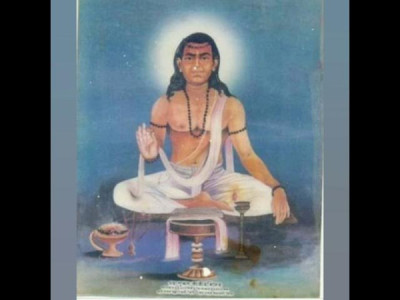
Life & Legacy
Early Life
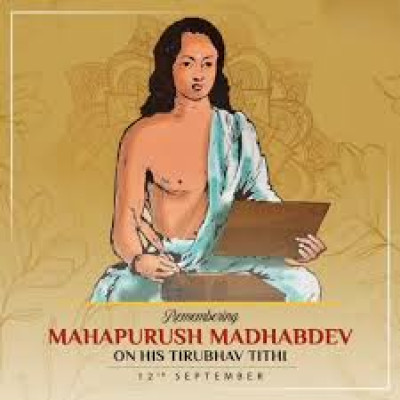
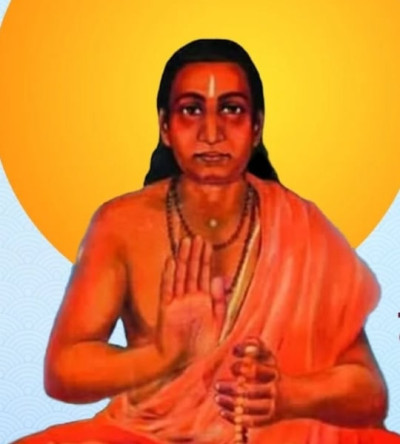
Mahapurush Srimanta Madhabdev was born around May or June in 1489 at Letekupukhuri near present-day Narayanpur in Assam, although some historians have suggested a slightly later birth year based on historical evidence. He was born to Govindagiri Bhuyan and Manorama Devi in a respected Bhuyan family known for its administrative service and scholarship.
His childhood was marked by frequent migrations because of political conflicts and warfare in the region. His family lived in several places, including Banduka, Bardowa, Habung, and Narayanpur. Despite these challenges, Madhabdev developed an exceptional interest in learning from an early age and became known for his intelligence, discipline, and deep understanding of religious philosophy.
The difficult circumstances of his early life helped shape his compassionate outlook, determination, and spiritual curiosity, qualities that later defined his remarkable contribution to Assamese society.
Education
Madhabdev received his early education under the guidance of Rajendra Adhyapak, an accomplished scholar of the time. He studied Sanskrit grammar, logic, philosophy, Puranas, Tantric literature, and classical religious scriptures. His education made him a highly respected scholar long before he became associated with the Neo-Vaishnavite movement.
During his youth, Madhabdev was a devoted follower of the Shakta tradition and possessed extensive knowledge of Hindu philosophy. His ability to engage in theological debates earned him recognition among scholars of his time. His strong educational background later enabled him to explain the principles of Ekasarana Dharma with remarkable clarity through literature, devotional songs, and public discourses.
Transformation to Ekasarana Dharma
The most significant turning point in Madhabdev's life came after a theological discussion with Mahapurush Srimanta Sankardev. At that time, Madhabdev intended to perform an animal sacrifice according to Shakta customs for the recovery of his ailing mother. However, his brother-in-law Ramadasa, who had already become a follower of Sankardev, persuaded him to meet the great saint.
Confident in his own knowledge, Madhabdev challenged Sankardev to a religious debate. The discussion continued for several hours, during which Sankardev explained the philosophy of pure devotion to one Supreme God through the teachings of the Bhagavata Purana. His simple yet profound interpretation of devotion, equality, compassion, and surrender deeply influenced Madhabdev.
Recognising the spiritual depth of Sankardev's teachings, Madhabdev accepted him as his Guru and embraced Ekasarana Dharma. He renounced worldly ambitions, cancelled his planned marriage, and dedicated his entire life to serving humanity through devotion, literature, and social reform. This transformation became one of the most significant events in the history of the Assamese Bhakti movement.
Spiritual Journey
After accepting Sankardev as his spiritual guide, Madhabdev devoted himself completely to spreading the principles of Ekasarana Dharma. He travelled extensively across Assam alongside his Guru, helping establish Namghars and Satras that became centres of worship, education, cultural activities, and community harmony.
His unwavering loyalty earned him the title of Sankardev's closest disciple and spiritual companion. Sankardev recognised Madhabdev's exceptional wisdom, literary talent, and leadership abilities, eventually appointing him as the principal successor of the Neo-Vaishnavite movement before his passing in 1568.
Following Sankardev's death, Madhabdev continued to strengthen the movement despite facing political opposition and religious resistance. Through peaceful preaching, devotional music, dramatic performances, and literary works, he united people from different castes, tribes, and social backgrounds under a common philosophy based on devotion, equality, moral values, and social harmony.
His leadership ensured that the ideals of Ekasarana Dharma spread throughout Assam and neighbouring regions, making it one of the most influential religious and cultural movements in the history of Northeast India.
Literary Works
Mahapurush Srimanta Madhabdev was one of the greatest literary figures in Assamese history. His devotional writings, songs and dramatic compositions became the foundation of Neo-Vaishnavite literature in Assam. His works are respected not only for their spiritual message but also for their contribution to the growth of the Assamese language and culture. Through simple yet powerful language, he made religious teachings accessible to ordinary people.
His most famous works include:
- Namghosa (Naam Ghosa) - His greatest literary masterpiece consisting of devotional verses dedicated to Lord Krishna. It remains one of the holiest books in Assamese Vaishnavism and is regularly recited in Namghars and Satras across Assam.
- Bhakti Ratnavali - A devotional text explaining the principles of Ekasarana Dharma and the importance of unwavering devotion to Lord Krishna.
- Naam Maalika - A collection of sacred names and devotional teachings promoting faith and spiritual discipline.
- Janma Rahasya - A philosophical work describing creation, the universe and divine truth.
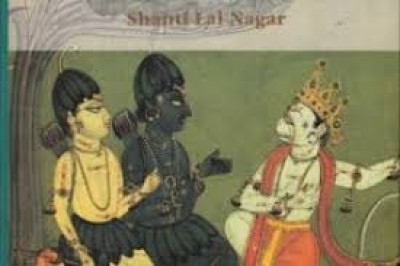
- Adi Kanda (Assamese rendering of Valmiki Ramayana) - Madhabdev translated and adapted portions of the Ramayana into Assamese, making the epic easier for common people to understand.
- Guru Bhatima - A devotional composition praising his Guru, Srimanta Sankardev, and expressing gratitude for his spiritual guidance.
- Dhyana Varnana - He completed the missing chapter of Kirtan Ghosa after Sankardev's passing, preserving the continuity of the sacred text.
Apart from books, Madhabdev composed around 191 Borgeets, which are among the finest devotional songs in Assamese literature. These songs continue to be performed in Namghars, Satras and religious festivals throughout Assam.
He also enriched Assamese drama by writing several devotional plays and Jumuras. His dramatic works include:
- Arjun Bhanjan (Dadhimathan)
- Chordhara
- Pimpara Guchowa
- Bhumi Letowa
- Bhojan Bihar
These literary creations continue to influence Assamese literature, music, theatre and devotional traditions even after more than four centuries.
Contributions to Assamese Society and Culture
The contribution of Mahapurush Srimanta Madhabdev extends far beyond religion. He played a major role in building the cultural identity of Assam through literature, music, theatre, education and social reform.
His major contributions include:
- Strengthened and expanded Ekasarana Dharma after Sankardev's death.
- Established several Satras and Namghars that became centres of education, devotion and community life.
- Promoted equality by rejecting discrimination based on caste and social status.
- Encouraged devotional singing through Borgeets.
- Developed Assamese dramatic traditions through Ankia Naat and Jumura plays.
- Helped preserve and enrich the Assamese language.
- Guided thousands of disciples throughout Assam and neighbouring regions.
- Spread values of compassion, honesty, discipline and devotion.
- Inspired generations of scholars, artists and spiritual leaders.
- Created one of the strongest cultural and religious movements in Assamese history.
One of his most enduring contributions is the establishment of Dhekiakhowa Bornamghar near Jorhat in 1528. The sacred lamp lit during its establishment is believed to have remained continuously burning for centuries, symbolising eternal devotion and spiritual enlightenment.
The institutions founded and inspired by Madhabdev continue to serve as centres of religious practice, cultural preservation and social harmony.
Religious Philosophy
Madhabdev believed that true devotion comes from complete surrender to one Supreme God, Lord Krishna. His teachings focused on simplicity rather than elaborate rituals. He encouraged people to develop qualities such as humility, kindness, truthfulness, forgiveness and compassion.
The main principles of his philosophy include:
- Devotion to one Supreme God.
- Equality among all human beings.
- Community worship through Namghars.
- Moral living and self-discipline.
- Service to humanity.
- Avoidance of unnecessary rituals and animal sacrifices.
- Promotion of peace, harmony and mutual respect.
These teachings transformed Assamese society and continue to remain relevant in modern times.
Awards and Recognition
Since Mahapurush Srimanta Madhabdev lived during the fifteenth and sixteenth centuries, there were no formal national awards or modern honours during his lifetime. However, his recognition has continued to grow over the centuries.
Some of the greatest recognitions include:
- Revered as one of the greatest saints of Assam.
- Regarded as the spiritual successor of Srimanta Sankardev.
- Honoured as one of the principal architects of Assamese Neo-Vaishnavism.
- His literary works are included in academic and religious studies.
- Namghosa is regarded as one of the most sacred devotional texts in Assam.
- His Borgeets remain an integral part of Assamese classical devotional music.
- Numerous Satras, Namghars, educational institutions and cultural organisations are named in his honour.
- His birth anniversary (Abirbhav Tithi) is celebrated throughout Assam with religious and cultural programmes.
- His contributions are recognised as an invaluable part of Assam's spiritual and literary heritage.
- He is remembered as one of the greatest cultural icons in Assamese history.
Death
Mahapurush Srimanta Madhabdev spent the final years of his life spreading the teachings of Ekasarana Dharma and strengthening the Vaishnavite institutions established across Assam and neighbouring regions. Even in his later years, he continued composing devotional literature, guiding disciples and promoting social harmony through faith and cultural activities.
He passed away in 1596 at Bhela Satra in present-day Cooch Behar, West Bengal. Although he left the physical world, his spiritual teachings, literary works and religious institutions continued to flourish under his followers. His passing marked the end of an extraordinary life dedicated entirely to devotion, literature and public welfare, but his influence remains deeply rooted in Assamese society.
Legacy
More than four centuries after his death, Mahapurush Srimanta Madhabdev continues to inspire millions of devotees, scholars and cultural enthusiasts. His contributions helped transform Assamese society by promoting equality, devotion, education and cultural unity. Along with Srimanta Sankardev, he is regarded as one of the principal architects of Assam's religious and cultural identity.
His works such as Namghosa, Bhakti Ratnavali and the Borgeets remain an inseparable part of daily worship in Namghars and Satras across Assam. Religious institutions established under his guidance continue to serve as centres of spiritual learning, social unity and preservation of Assamese traditions.
His teachings continue to encourage people to live with honesty, compassion, humility and devotion. Because of his lasting impact on religion, literature, music and society, Mahapurush Srimanta Madhabdev is remembered as one of the greatest saints and cultural icons in the history of Assam.
FAQs on Mahapurush Srimanta Madhabdev
1. Who was Mahapurush Srimanta Madhabdev?
Mahapurush Srimanta Madhabdev was a renowned Assamese saint, poet, playwright, composer and the foremost disciple of Srimanta Sankardev. He became the spiritual leader of Ekasarana Dharma after his Guru's death.
2. When was Mahapurush Srimanta Madhabdev born?
Traditional accounts mention that he was born in 1489 at Letekupukhuri in present-day Lakhimpur district of Assam, although some historians have proposed slightly different dates.
3. Why is Mahapurush Srimanta Madhabdev famous?
He is famous for spreading Ekasarana Dharma, writing Namghosa, composing Borgeets, establishing Satras and Namghars, and making remarkable contributions to Assamese literature and culture.
4. Who was the Guru of Mahapurush Srimanta Madhabdev?
His spiritual Guru was Mahapurush Srimanta Sankardev, the founder of the Neo-Vaishnavite movement in Assam.
5. Which is the most famous book written by Mahapurush Srimanta Madhabdev?
His most celebrated work is Namghosa, one of the most sacred devotional books in Assamese Vaishnavism.
6. What are the major literary works of Mahapurush Srimanta Madhabdev?
His major works include Namghosa, Bhakti Ratnavali, Naam Maalika, Janma Rahasya, Guru Bhatima, Dhyana Varnana, Adi Kanda and around 191 Borgeets along with several devotional plays.
7. Did Mahapurush Srimanta Madhabdev marry?
No. After accepting Srimanta Sankardev as his Guru, he chose a life of complete spiritual dedication and never married.
8. Where did Mahapurush Srimanta Madhabdev establish important religious institutions?
He established and strengthened several Satras and Namghars across Assam, including institutions associated with Barpeta and Dhekiakhowa, which remain important centres of worship today.
9. When did Mahapurush Srimanta Madhabdev die?
He passed away in 1596 at Bhela Satra in present-day Cooch Behar, leaving behind an enduring spiritual and cultural legacy.
10. Why is Mahapurush Srimanta Madhabdev important in Assam's history?
He preserved and expanded the Neo-Vaishnavite movement, enriched Assamese literature and music, promoted equality and social harmony, and became one of the greatest spiritual leaders in Assam's history.