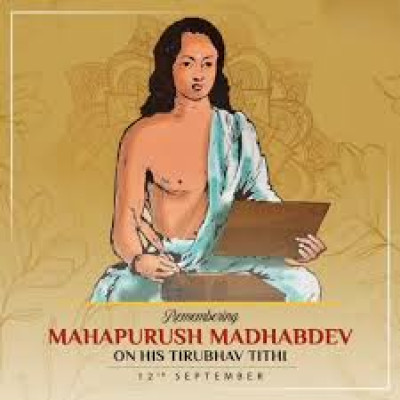
Life & Legacy
Early Life and Family
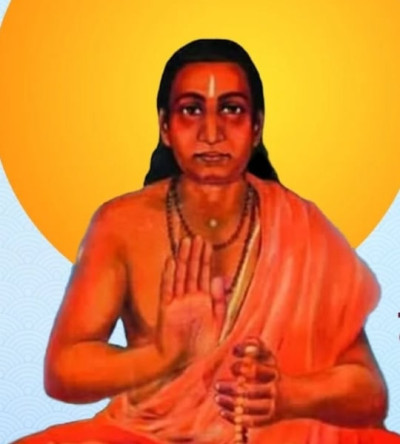
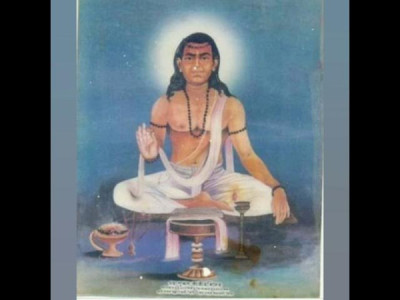
Aniruddhadev was born in 1553 at Vishnubalikunchi near present-day Narayanpur in Lakhimpur district of Assam. His father was Gondagiri Bhuyan, while his mother Anjali Devi was closely related to Srimanta Sankardeva's family. Growing up in a spiritually inclined environment, he developed a strong interest in religion, literature and devotional music from an early age. Inspired by the ideals of Neo-Vaishnavism, he later became a devoted disciple of Gopaldeva, one of the prominent followers of Madhavdeva.
Religious Education
To deepen his spiritual knowledge, Aniruddhadev stayed at Barpeta under the guidance of Gopaldeva for more than three years. During this period, he received extensive training in the philosophy of Ekasarana Nam Dharma, devotional practices, scriptures, music and religious literature. After completing his education, he returned to his native region and dedicated his life to preaching the message of equality, devotion and service to humanity.
Establishment of Mayamara Satra
In 1601, Aniruddhadev established his first satra at Vishnubalikunchi. Due to repeated attacks from neighbouring hill tribes, he later shifted the institution to Naharati near the Marnai River in present-day Lakhimpur district. As the number of followers increased, he eventually founded the famous Mayamara Satra in Majuli, which became one of the most influential Vaishnavite centres in Assam.
Unlike many religious institutions of the time, the Mayamara Satra welcomed people from every social background. Members of tribal communities including Moran, Chutia, Kachari, Ahom, Borahi and several marginalized occupational groups accepted his teachings. His emphasis on equality and human dignity made the institution unique in Assamese religious history.
Social Reformer and Spiritual Leader
Aniruddhadev believed that devotion to God should never be restricted by caste, birth or social status. He accepted followers from communities that had often been excluded from mainstream religious practices and treated every devotee with equal respect. His humanitarian outlook strengthened social unity and helped spread Neo-Vaishnavism among thousands of people in Upper Assam.
Although some conservative groups opposed his progressive ideas, Aniruddhadev remained committed to his mission. His peaceful approach and dedication eventually earned respect from both common people and the Ahom rulers, allowing him to continue his religious work without interruption.
Literary Contributions
Apart from being a spiritual leader, Aniruddhadev was an accomplished scholar and writer. He translated the Fifth Book of the Bhagavata Purana into Assamese verse, making sacred literature accessible to ordinary people. His writings enriched Assamese literature while strengthening the religious foundation of Neo-Vaishnavism.
His important literary works include:
- Bhakti Mangal Ghosa
- Puranjan Upakhyan
- Translation of the Fifth Skandha of the Bhagavata Purana
- Nij Shastra
- Around 182 devotional songs composed with prescribed ragas
These works remain valuable religious and literary resources and continue to be studied by scholars and devotees.
Teachings and Philosophy
Aniruddhadev's philosophy centred on devotion to Lord Krishna through Ekasarana Nam Dharma. He strongly advocated the four fundamental principles of Assamese Vaishnavism - Deva (God), Guru (Spiritual Teacher), Nama (Chanting the Divine Name) and Bhakat (Devotee). According to him, sincere devotion, humility, equality and association with true devotees were the paths to spiritual liberation. His teachings promoted harmony, compassion and moral values, making them relevant even in modern society.
Legacy and Influence
The disciples of Aniruddhadev later became known as the Mayamariyas, whose religious movement significantly influenced the social and historical development of Assam. His teachings contributed to the preservation of Assamese culture, literature and devotional traditions while encouraging social integration among different communities.
His contribution continues to be honoured across Assam. The Government of Assam named the Shri Shri Aniruddhadeva Sports University at Chabua, Dibrugarh, after him in recognition of his lasting legacy. His life remains a symbol of equality, spirituality, scholarship and service to humanity.
Death
Aniruddhadev passed away in the first week of December 1626 at approximately 73 years of age. Although centuries have passed since his death, his religious philosophy, literary works and humanitarian ideals continue to influence Assamese society. He is remembered as one of the greatest Vaishnavite saints and social reformers in the history of Assam.
Major Literary Works
- Bhakti Mangal Ghosa
- Puranjan Upakhyan
- Nij Shastra
- Assamese translation of the Fifth Skandha of the Bhagavata Purana
- Approximately 182 devotional songs (Borgeet-style compositions)
Major Contributions
- Founder of the Mayamara Satra
- Prominent disciple of Gopaldeva
- One of the leading Vaishnavite saints of post-Sankardeva Assam
- Spread Ekasarana Nam Dharma across Upper Assam
- Promoted equality irrespective of caste or community
- Initiated marginalized communities into Neo-Vaishnavism
- Strengthened Assamese religious literature
- Composed important devotional works and songs
- Inspired social harmony through inclusive spiritual teachings
- Left a lasting influence on Assamese culture, religion and literature
FAQs about Aniruddhadev
1. Who was Aniruddhadev?
Aniruddhadev was a renowned Vaishnavite saint, religious reformer, scholar and founder of the Mayamara Satra in Assam. He played a significant role in spreading Ekasarana Nam Dharma during the post-Srimanta Sankardeva period.
2. When was Aniruddhadev born?
Aniruddhadev was born in 1553 at Vishnubalikunchi near present-day Narayanpur in Lakhimpur district of Assam.
3. Who was the guru of Aniruddhadev?
Aniruddhadev was a disciple of Gopaldeva, one of the most respected followers of Madhavdeva and an important Vaishnavite preceptor.
4. What is Aniruddhadev famous for?
He is best known for founding the Mayamara Satra, promoting Neo-Vaishnavism, preaching equality among all communities, translating religious texts into Assamese and composing important devotional literature.
5. What is the Mayamara Satra?
The Mayamara Satra is a Vaishnavite religious institution established by Aniruddhadev. It became an important centre for spreading devotion, social equality and Assamese spiritual traditions.
6. Which books were written by Aniruddhadev?
His major works include Bhakti Mangal Ghosa, Puranjan Upakhyan, Nij Shastra, the Assamese translation of the Fifth Skandha of the Bhagavata Purana, and around 182 devotional songs.
7. What were the teachings of Aniruddhadev?
Aniruddhadev taught devotion to Lord Krishna through Ekasarana Nam Dharma. He emphasized the four principles of Deva, Guru, Nama and Bhakat while promoting equality, compassion, humility and social harmony.
8. Why is Aniruddhadev important in Assamese history?
He made Neo-Vaishnavism accessible to marginalized communities, strengthened Assamese literature, promoted social reform and established one of the most influential satras in Assam.
9. When did Aniruddhadev die?
Aniruddhadev passed away in the first week of December 1626 at approximately 73 years of age.
10. Which university in Assam is named after Aniruddhadev?
The Government of Assam established Shri Shri Aniruddhadeva Sports University at Chabua, Dibrugarh, in his honour for his remarkable contribution to Assam's religious and cultural heritage.