Life & Legacy
Early Life
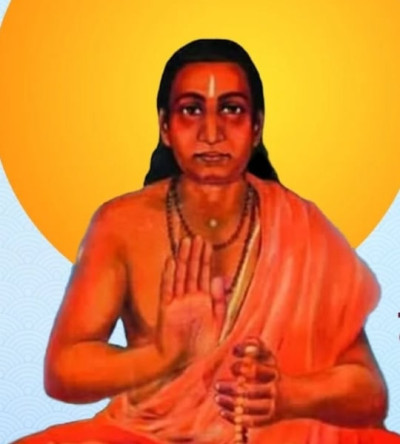
Sri Gopaldev was born around 1540 in Nazira near present-day Sivasagar district of Assam. His father was Kameswar Bhuyan, and his mother was Bajrangi (also known as Brojangi). After the death of his father, the family moved to Bhabanipur in present-day Barpeta district. Because of his long association with Bhabanipur, he became widely known as Bhabanipuria Gopal Ata.
Education
Gopaldev received his early education under a learned Brahmin scholar in Bhabanipur. From childhood, he showed remarkable intelligence and developed a deep interest in Sanskrit scriptures, religious philosophy, and Assamese literature. His study of sacred texts helped him become an accomplished scholar, preacher, and writer who could explain complex spiritual concepts in simple language.
Association with Srimanta Sankardev and Madhavdev
Although Gopaldev deeply admired Srimanta Sankardev, historical accounts suggest that he could not receive formal initiation directly from him before Sankardev's passing. Later, he became a devoted disciple of Sri Madhavdev, who recognized his exceptional knowledge, devotion, and leadership qualities. Madhavdev entrusted him with the responsibility of spreading Ekasarana Naam Dharma throughout Assam.
Gopaldev travelled extensively, delivering religious discourses, organizing Naam-Prasanga, and encouraging people to follow a simple path of devotion centered on Lord Krishna. His teachings emphasized faith, moral living, humility, and service to humanity.
Founder of Kal Sanghati
One of Gopaldev's greatest achievements was the establishment of the Kal Sanghati (Kala Samhati), one of the four major branches of Assam's Ekasarana Dharma. The Kal Sanghati welcomed people from different castes and social backgrounds, making the movement more inclusive and accessible.
Under his leadership, numerous Namghars and Sattras became important centres of religious learning, devotional music, social unity, and cultural preservation. His followers continued expanding the movement across different parts of Assam, ensuring that the teachings of Sankardev and Madhavdev reached future generations.
Literary Contributions
Sri Gopaldev was an accomplished Assamese poet and dramatist. His literary works promoted devotion while preserving the Assamese language and culture. His devotional dramas and songs were regularly performed in Bhaona and religious gatherings.
Some of his well-known literary works include:
- Janmajatra
- Nandutsav
- Uddhabjan (Gopi-Uddhab Sambad)
- Sitar Patal Proves
- Numerous devotional songs (Geets)
- Ghosas and religious compositions
His daughter Padmapriya is traditionally regarded as one of the earliest known female poets of Assam, reflecting the literary environment that flourished within his family.
Major Contributions and Achievements
- One of the foremost preachers of Neo-Vaishnavism in Assam.
- Founder of the Kal Sanghati branch of Ekasarana Naam Dharma.
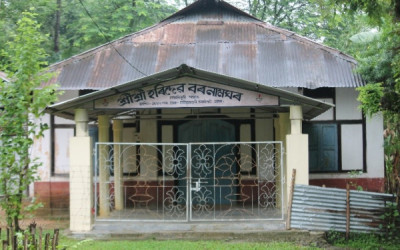
- Established Kaljhar Sattra, an important Vaishnavite institution.
- Spread Bhakti philosophy throughout Upper and Central Assam.
- Promoted equality, devotion, compassion, and moral discipline.
- Strengthened Assamese devotional literature through plays and songs.
- Inspired the growth of Bhaona, Naam-Prasanga, and Sattra culture.
- Trained disciples who established numerous Sattras across Assam.
- Helped preserve Assamese religious traditions and cultural identity.
- Encouraged the use of Assamese as a language of spiritual education.
Awards and Recognition
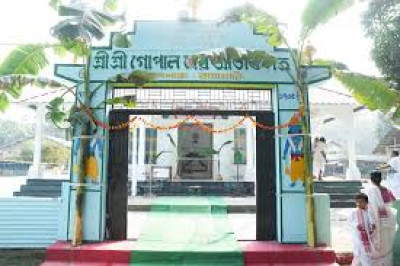
Although formal awards did not exist during his lifetime, Sri Gopaldev received immense respect as one of Assam's greatest Vaishnavite saints. He earned the title "Kathar Sagar" for his extraordinary ability to explain religious philosophy through engaging stories and sermons. His birth anniversary, known as Gopaldev Tithi, is observed every year in Namghars and Sattras across Assam, and the Government of Assam recognizes the occasion with a restricted holiday.
Books and Literary Works
The major works associated with Sri Gopaldev include:
- Janmajatra
- Nandutsav
- Uddhabjan (Gopi-Uddhab Sambad)
- Sitar Patal Proves
- Devotional Geets
- Ghosas
- Various Vaishnavite religious compositions
Death
Sri Gopaldev passed away around 1611 at Kaljhar Sattra in present-day Bajali district, Assam. His followers continued his mission by expanding the Kal Sanghati across the state. Today, hundreds of Namghars and Sattras associated with his tradition preserve his teachings and continue to inspire devotees.
Legacy
Sri Gopaldev occupies a distinguished place in the religious and cultural history of Assam. His unwavering devotion to Lord Krishna, commitment to social equality, and contributions to Assamese literature made him one of the most respected saints of the Bhakti movement. His teachings continue to influence religious practices, devotional music, Sattra traditions, and Assamese cultural identity, ensuring that his legacy remains alive across generations.
FAQs on Sri Gopaldev
1. Who was Sri Gopaldev?
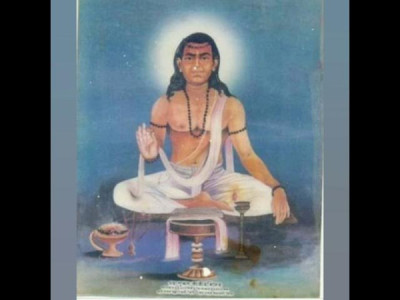
Sri Gopaldev, also known as Gopal Ata, was a renowned Assamese Vaishnavite saint, poet, dramatist, and religious reformer who played an important role in spreading Ekasarana Naam Dharma.
2. When was Sri Gopaldev born?
Sri Gopaldev was born around the year 1540 in Nazira in present-day Sivasagar district of Assam.
3. Who were the parents of Sri Gopaldev?
His father was Kameswar Bhuyan, and his mother was Bajrangi (Brojangi).
4. Why is Sri Gopaldev called Bhabanipuria Gopal Ata?
He became known as Bhabanipuria Gopal Ata because his family later settled in Bhabanipur, where he spent much of his life preaching Vaishnavism.
5. What is Kal Sanghati?
Kal Sanghati is one of the four principal branches of Assam's Ekasarana Dharma founded by Sri Gopaldev to spread devotion, equality, and spiritual discipline.
6. What are the major literary works of Sri Gopaldev?
His famous works include Janmajatra, Nandutsav, Uddhabjan, Sitar Patal Proves, devotional songs, and several religious compositions.
7. What were the major contributions of Sri Gopaldev?
He strengthened the Neo-Vaishnavite movement, established Kaljhar Sattra, promoted Assamese literature, encouraged social equality, and expanded Sattra culture throughout Assam.
8. When did Sri Gopaldev die?
Sri Gopaldev passed away around 1611 at Kaljhar Sattra in present-day Bajali district, Assam.
9. Why is Gopaldev Tithi celebrated?
Gopaldev Tithi is observed every year to honour his life, teachings, literary contributions, and spiritual service to Assamese society.
10. Why is Sri Gopaldev important in Assam's history?
Sri Gopaldev is remembered as one of the greatest Vaishnavite saints whose teachings, literary works, and religious institutions significantly shaped Assam's spiritual, cultural, and literary heritage.