In Depth
History of Bongal Pukhuri, Jorhat
Bongal Pukhuri is closely associated with one of the most turbulent chapters in the history of Assam. Its story is connected with the political instability, external invasions and internal conflicts that affected the Ahom kingdom during the early 19th century. Historical accounts describe a period when repeated invasions created widespread fear, displacement and social disruption across Assam.
According to historical narratives, the first Manipuri invasion, referred to in some Assamese accounts as the invasion by the 'Man', caused severe disturbance to everyday life. The conflict affected ordinary villagers as well as members of the nobility and administration. Accounts describe widespread looting, destruction of religious institutions and homes, displacement of families, and the capture of thousands of Assamese women and girls. The resulting instability contributed to an atmosphere of fear, suspicion and political uncertainty.
During this difficult period, Badan Chandra Barphukan, a powerful official of the Ahom administration, became the subject of intense opposition. Historical accounts and later narratives accused him of facilitating outside intervention for his own political interests. As the suffering of the population increased, resentment against him also grew. Several influential members of the Ahom establishment reportedly became involved in plans to remove him.
One prominent figure associated with the conspiracy was Rajmao Numali Konwari, the mother of Ahom King Chandrakanta Singha. She is also remembered in Jorhat's heritage history for her association with the excavation of Rajmao Pukhuri, now known as Bishnusagar. According to historical accounts, Rajmao gathered information about Badan and searched for someone capable of carrying out the assassination.
Rup Singh Bangal, a Subedar associated with the Ahom military forces, was eventually selected for the task. The term 'Bangal' was historically used in Assam to refer to people considered outsiders, and the name became associated with Rup Singh in accounts of the incident.
According to the account presented by writer and historian Prashanta Jyoti Khaund in his book Itihase Gorka Bangal Pukhuri, Badan Chandra Barphukan had a large residential estate around the present-day Na-Ali and Club Road area of Jorhat. A pond located toward the southwestern part of the estate is traditionally identified with the present Bongal Pukhuri.
The historical narrative further states that Badan wore protective amulets and removed them while bathing. Rup Singh is said to have used this opportunity to approach him when he was bathing in the pond. According to the account, Badan had kept his sword nearby, but Rup Singh seized it and killed him before he could defend himself.
The exact date of the assassination is not consistent across available accounts. Khaund's book reportedly places the incident in August 1818, while an inscription associated with the site has been reported to mention February 1818. This difference is worth noting when discussing the history of Bongal Pukhuri.
Following the assassination, local tradition says that Rup Singh washed the sword in the pond before leaving the area. The pond later became associated with the money reportedly awarded to him for the killing. According to the traditional account, Rup Singh used this reward money to excavate or re-excavate the pond near present-day Na-Ali.
The story of Bongal Pukhuri therefore combines documented historical figures and events with local traditions that have been passed down through generations. Its association with Badan Chandra Barphukan's assassination gave the pond a distinctive place in the historical memory of Jorhat. The belief that its water was connected with the aftermath of the killing also led local people to traditionally avoid using it for drinking, household purposes or fishing.
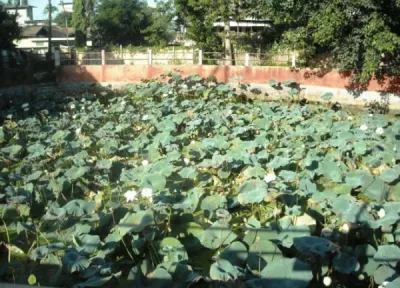
Today, Bongal Pukhuri remains an important historical landmark in Jorhat. Surrounded by an increasingly developed urban environment, the pond serves as a reminder of the political struggles of the Ahom period and the difficult years surrounding foreign invasions and internal conflicts in Assam. Preserving this historic water body is important not only for its physical heritage value but also for the stories and traditions associated with Jorhat's past.
For visitors interested in Assam history, Ahom heritage and lesser-known historical places in Jorhat, Bongal Pukhuri offers an opportunity to explore a site where local tradition, historical events and urban heritage intersect. Its story also highlights the importance of preserving historic ponds and cultural landmarks as Jorhat continues to develop.