Life & Legacy
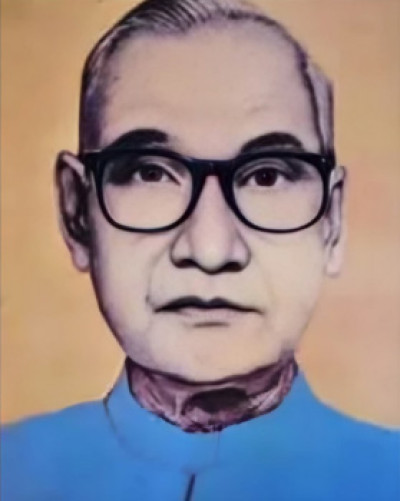
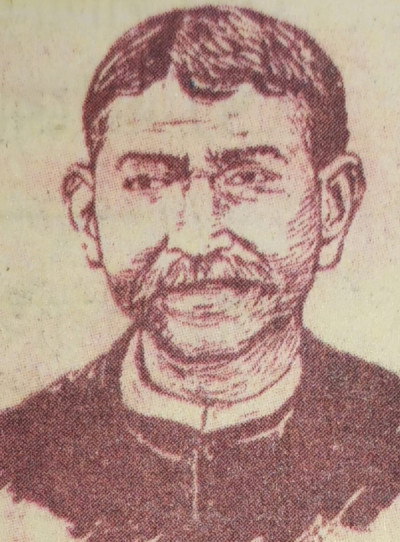
Anandaram Dhekial Phukan Biography
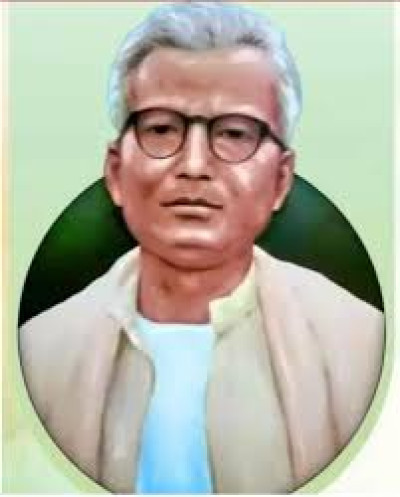
At a time when Assamese language and identity faced serious challenges under colonial administration, Anandaram Dhekial Phukan emerged as a courageous scholar who firmly believed that a community could prosper only by preserving its own language, literature and culture. His ideas went far beyond literature. He advocated modern education, social progress, administrative reforms and linguistic equality while encouraging Assamese society to embrace knowledge without abandoning its cultural roots.
Despite living for only three decades, Anandaram Dhekial Phukan produced several influential literary works that transformed Assamese prose and inspired future generations of scholars, writers and reformers. His vision helped lay the intellectual foundation upon which modern Assamese literature, journalism and education would later flourish.
Today, he is remembered as one of Assam's greatest literary pioneers, an educationist, language reformer and visionary thinker whose contributions continue to influence Assamese society even after more than a century.
Early Life of Anandaram Dhekial Phukan
Anandaram Dhekial Phukan was born on 24 September 1829 in Guwahati, Assam, into the distinguished Dhekial Phukan family, which was well known for its contributions to administration, education and public service. He inherited a strong tradition of scholarship and patriotism from his family, particularly from his father Haliram Dhekial Phukan, an eminent historian, administrator and social reformer.
His father played a crucial role in nurturing Anandaram's intellectual curiosity. Growing up in an environment where literature, history and public affairs were frequently discussed, Anandaram developed a deep interest in learning from an early age. The values of honesty, discipline, public service and cultural pride became an integral part of his personality.
The period during which he was born was marked by significant political and social changes in Assam following British rule. These changing circumstances deeply influenced his thinking and later inspired him to dedicate his life to safeguarding the Assamese language and cultural identity.
Even as a child, Anandaram displayed exceptional intelligence, remarkable memory and an eagerness to acquire knowledge. His teachers recognised his academic abilities and encouraged him to pursue higher education.
Family Background and Inspiration
The Dhekial Phukan family occupied an important position in Assamese society. Anandaram's father, Haliram Dhekial Phukan, is regarded as one of the earliest historians of Assam. His writings on Assamese history and society inspired many later scholars and helped preserve valuable historical records.
Haliram strongly believed that education was the key to social development. He also advocated progressive ideas that were uncommon during his time, including the importance of women's education and intellectual advancement.
These ideals profoundly shaped Anandaram's outlook on life. He inherited not only a love for literature but also a deep sense of responsibility towards society. Throughout his life, he viewed education and language as powerful instruments for improving the lives of ordinary people.
His family encouraged him to study both traditional Indian knowledge and modern Western education. This balanced approach enabled him to appreciate global ideas while remaining firmly rooted in Assamese culture.
Education and Academic Excellence
Anandaram Dhekial Phukan began his education in Guwahati before attracting the attention of British Commissioner Francis Jenkins, who recognised his extraordinary academic potential. With official support, he was sent to the prestigious Hindu College in Calcutta, one of the leading educational institutions of nineteenth-century India.
His years in Calcutta proved transformative. There, he studied English literature, history, philosophy and liberal arts while interacting with scholars and intellectuals from different parts of the country. Exposure to modern educational methods broadened his understanding of governance, science, economics and social reform.
After completing his studies, Anandaram returned to Assam and continued his education independently. He received advanced instruction in English under experienced teachers while also studying Sanskrit and Urdu. His multilingual education enabled him to compare different literary traditions and strengthened his understanding of language, grammar and translation.
This diverse educational background later became one of his greatest strengths. It allowed him to defend Assamese as an independent language using scholarly evidence rather than emotional arguments, earning him respect among both Indian and British intellectuals.
Beginning of His Literary Journey
Anandaram Dhekial Phukan began writing during his teenage years. Even his earliest works reflected unusual maturity, clarity of thought and concern for the welfare of Assamese society. Unlike many writers of his generation, he believed that literature should not merely entertain readers but also educate, inspire and encourage social progress.
His writings covered a wide range of subjects, including language, education, governance, history, morality and economic development. He possessed the rare ability to explain complex ideas in clear and accessible Assamese, making his works valuable to both scholars and ordinary readers.
One of his earliest published essays introduced Assamese readers to life and society in England. Rather than simply describing a foreign country, he encouraged people to learn from modern scientific thinking, organised administration and educational development while preserving their own cultural values.
This balanced perspective distinguished Anandaram from many contemporary intellectuals. He welcomed useful ideas from abroad but firmly believed that Assam should progress through the strength of its own language and identity.
A Visionary for Modern Assam
Long before linguistic rights became a major public issue, Anandaram Dhekial Phukan recognised that the future of Assam depended upon the survival of its language. He believed that every society must preserve its mother tongue while embracing modern education and scientific knowledge.
His vision extended beyond literature. He advocated educational reform, improved administration, economic development and greater public awareness. He encouraged Assamese people to develop self-confidence, value education and actively participate in building a progressive society.
This combination of cultural pride and intellectual openness made Anandaram Dhekial Phukan one of the earliest modern thinkers in Assam. His ideas would later inspire numerous scholars, writers and reformers who continued the movement for Assamese language and literature.
The remarkable journey that began during his childhood would eventually make him one of the most influential literary pioneers in the history of Assam and an enduring symbol of the Assamese renaissance.
Government Service and Public Career
After completing his education, Anandaram Dhekial Phukan entered government service in 1847, where he held several important administrative positions under the British administration. His professional career reflected not only his intelligence and administrative abilities but also his commitment to public welfare.
Over the years, he served as the Dewan to the King of Bijni, later worked as a Munsif (Judicial Officer) and subsequently became a Junior Assistant Commissioner. These responsibilities allowed him to gain first-hand knowledge of Assam's administrative system, education, economy and social conditions.
Despite occupying respected government positions, Anandaram never allowed official duties to diminish his dedication to literature and social reform. He consistently used his knowledge and experience to advocate better education, efficient governance and the protection of Assamese language and culture.
His career demonstrated that public administration and intellectual leadership could work together for the progress of society. He believed that educated administrators had a responsibility to improve the lives of ordinary citizens while preserving their cultural identity.
The Orunodoi Era and the Assamese Literary Renaissance
Anandaram Dhekial Phukan emerged as one of the brightest intellectuals of the Orunodoi Era, a period regarded as the beginning of modern Assamese literature and journalism.
The publication of Orunodoi, the first Assamese monthly magazine, opened new opportunities for writers, scholars and educators to discuss literature, science, education, history and public affairs in the Assamese language. Anandaram became one of its most influential contributors and used the magazine to spread progressive ideas among Assamese readers.
Working alongside distinguished personalities such as Nathan Brown, Miles Bronson, Gunabhiram Barua and Hemchandra Barua, he helped strengthen the literary movement that eventually restored Assamese to its rightful place as an independent language.
His articles combined modern knowledge with deep respect for Assamese traditions. Rather than rejecting traditional values, he encouraged society to adopt scientific thinking, educational reform and social progress while preserving its cultural heritage.
The Orunodoi movement became one of the most significant milestones in Assam's intellectual history, and Anandaram Dhekial Phukan remains one of its foremost pioneers.
Englandor Biwaran - Introducing a Wider World
One of Anandaram Dhekial Phukan's earliest and most influential works was Englandor Biwaran (Description of England), published in 1847.
This remarkable work introduced Assamese readers to the society, education, governance, industries and scientific progress of England. At a time when very few people in Assam had access to such knowledge, the book served as an important window to the modern world.
However, Anandaram's objective was not to encourage blind imitation of Western society. Instead, he urged Assamese people to observe the importance of education, discipline, public institutions and scientific development while preserving their own traditions and cultural values.
The work demonstrated his progressive outlook and his belief that societies become stronger by learning from others without losing their own identity.
Asomiya Lorar Mitra - A Landmark in Assamese Literature
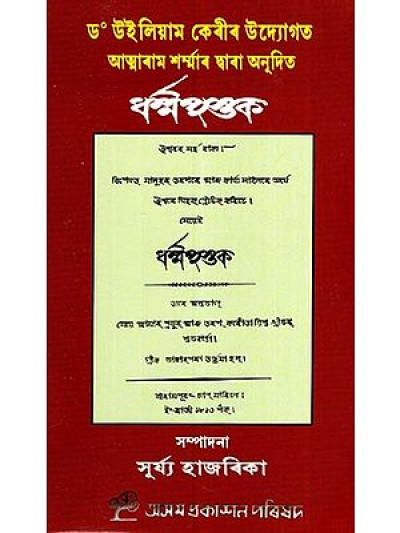
Among Anandaram Dhekial Phukan's greatest literary achievements is Asomiya Lorar Mitra (Friend of Assamese Children), published in 1849.
This two-volume work, comprising nearly four hundred pages, is widely regarded as one of the earliest masterpieces of modern Assamese prose and children's literature.
Rather than merely entertaining young readers, the book aimed to educate them about morality, discipline, science, geography, history and everyday life through clear and simple language. It encouraged curiosity, logical thinking and character development among children.
At a time when educational resources in Assamese were extremely limited, Asomiya Lorar Mitra became an invaluable contribution to the development of vernacular education. It also demonstrated Anandaram's belief that quality education should be available in one's mother tongue.
Even today, literary historians regard the book as a milestone in the evolution of Assamese educational literature.
A Few Remarks on the Assamese Language
Perhaps Anandaram Dhekial Phukan's most influential scholarly contribution was A Few Remarks on the Assamese Language, published in 1855.
Written in English, this important work presented detailed linguistic evidence proving that Assamese was an independent language rather than a dialect of Bengali.
During British rule, Bengali had been imposed as the official language in Assam because many colonial administrators mistakenly believed Assamese lacked an independent literary tradition. Anandaram challenged this misconception through careful research, historical references and grammatical analysis.
He explained that Assamese possessed its own vocabulary, pronunciation, grammar and literary heritage. His arguments demonstrated that the language deserved equal recognition in education, administration and public life.
This publication became one of the earliest scholarly defences of Assamese linguistic identity and later influenced efforts to restore Assamese as the official language of the region.
Champion of the Assamese Language
One of Anandaram Dhekial Phukan's greatest achievements was his unwavering commitment to protecting the Assamese language during a period of cultural uncertainty.
He firmly believed that language formed the foundation of a community's identity. Without preserving its mother tongue, no society could maintain its literature, history or cultural traditions.
He strongly opposed the continued use of Bengali as the medium of instruction in Assamese schools. According to Anandaram, children learned most effectively in their native language, and education should strengthen rather than weaken local culture.
His writings repeatedly highlighted the importance of developing textbooks, literature and educational materials in Assamese. He encouraged scholars to write original works instead of depending entirely upon translations from other languages.
His vision eventually inspired future generations of writers and language activists who successfully restored Assamese to its rightful place in education and public administration.
Educational Reforms and Social Vision
Education occupied a central place in Anandaram Dhekial Phukan's philosophy of social progress. He believed that an educated society would naturally become more prosperous, enlightened and united.
He encouraged scientific thinking, practical learning and moral education while emphasising that instruction should be delivered through the mother tongue. He believed that students could understand complex subjects more effectively when taught in Assamese.
His educational philosophy also promoted equality and social responsibility. He advocated wider access to education and encouraged parents to recognise its importance for both boys and girls.
These ideas were remarkably progressive for nineteenth-century Assam and reflected his deep concern for the future of society.
Defender of Assamese Identity
Beyond literature and education, Anandaram Dhekial Phukan became a symbol of Assamese cultural identity.
He recognised that preserving language meant preserving history, traditions, customs and collective memory. His writings encouraged people to remain proud of their heritage while embracing modern knowledge and global ideas.
Through books, essays, educational advocacy and public service, he demonstrated that cultural pride and intellectual progress could exist together. His balanced approach continues to inspire scholars, educators and policymakers across Assam.
Although his life was tragically short, the movement he helped initiate transformed the future of Assamese literature and language. His fearless defence of Assamese identity remains one of his greatest contributions to the history of Assam.
Legacy and Lasting Influence
Although Anandaram Dhekial Phukan lived for only about three decades, his influence on Assamese language, literature and education has remained timeless. His writings, scholarly research and reformist ideas laid the intellectual foundation for the Assamese renaissance and inspired generations of writers, teachers, journalists and social reformers.
At a time when Assamese identity faced serious challenges, Anandaram fearlessly defended the dignity of the Assamese language. He understood that language was not merely a means of communication but also the foundation of a community's culture, history and collective identity. His efforts ensured that future generations inherited a language that could flourish in education, literature and public administration.
Many renowned Assamese scholars, including Hemchandra Barua, Gunabhiram Barua and later literary figures, benefited from the path that Anandaram Dhekial Phukan helped create. His ideas encouraged intellectual freedom, scientific thinking, modern education and social awareness, making him one of the earliest architects of modern Assam.
Even today, researchers and historians continue to study his writings because they remain relevant to discussions on language preservation, educational reform and cultural identity.
Why is Anandaram Dhekial Phukan regarded as the Pioneer of Modern Assamese Literature?
Anandaram Dhekial Phukan occupies a unique position in Assamese literary history because he introduced modern thinking into Assamese prose while maintaining respect for the state's cultural traditions.
Before his time, Assamese literature had limited modern prose intended for education and public awareness. Through his essays, educational books and scholarly works, he demonstrated that Assamese could successfully express complex subjects such as history, governance, science, economics and language studies.
His writing style was logical, informative and easy to understand, making knowledge accessible to ordinary readers. Instead of writing only for scholars, he believed that literature should educate society and encourage public participation in national development.
His commitment to producing quality educational materials in Assamese transformed the language into an effective medium for modern learning. This achievement earned him the recognition as one of the principal pioneers of modern Assamese literature.
Contributions to Education and Society
Education remained the central pillar of Anandaram Dhekial Phukan's vision for Assam's future. He strongly believed that a society could progress only when its people received quality education in their own mother tongue.
He encouraged the preparation of textbooks in Assamese, promoted literacy among young learners and advocated educational reforms that combined traditional knowledge with modern scientific thinking.
Beyond education, he emphasised social responsibility, moral values, public welfare and economic development. His writings encouraged people to think critically, work honestly and contribute to society with integrity.
He also highlighted the importance of preserving Assamese customs and traditions while remaining open to useful ideas from around the world. His balanced philosophy continues to inspire educators and policymakers even today.
Recognition and Memorials
Although Anandaram Dhekial Phukan passed away at a very young age, his contributions have been widely recognised by educational institutions, literary organisations and the Government of Assam.
His life and works are included in school and university curricula, allowing students to understand the importance of Assamese language, literature and cultural heritage. Numerous seminars, literary discussions and academic conferences continue to examine his contributions to the development of modern Assamese society.
Several institutions, roads and educational establishments have also been named in his honour, reflecting the respect he commands across Assam.
His writings remain valuable references for students of Assamese literature, linguistics and history, ensuring that his legacy continues to inspire future generations.
Interesting Facts About Anandaram Dhekial Phukan
- Anandaram Dhekial Phukan was born on 24 September 1829 in Guwahati, Assam.
- He belonged to the distinguished Dhekial Phukan family, known for its contributions to administration and scholarship.
- He studied at the prestigious Hindu College, Calcutta, one of India's leading educational institutions of the nineteenth century.
- He was fluent in Assamese, English, Sanskrit and Urdu.
- He worked as Dewan of the King of Bijni, Munsif and Junior Assistant Commissioner.
- His book Asomiya Lorar Mitra is regarded as one of the earliest milestones of modern Assamese prose.
- His work Englandor Biwaran introduced Assamese readers to European society and modern education.
- Through A Few Remarks on the Assamese Language, he strongly defended Assamese as an independent language.
- He began compiling Assamese-English and English-Assamese dictionaries, although they remained incomplete.
- Despite his short life, he became one of the greatest pioneers of modern Assamese literature and language reform.
Death
Anandaram Dhekial Phukan passed away on 16 June 1859, at the age of only 29 years. His untimely death was a great loss to Assamese literature and society because he had already demonstrated exceptional intellectual ability and visionary leadership at such a young age.
Although his life ended prematurely, his writings and ideas continued to influence future generations of scholars, educators and literary figures. His work ensured that Assamese language and literature would continue to grow despite the many challenges of the nineteenth century.
Conclusion
Anandaram Dhekial Phukan was far more than a writer or government official. He was a visionary educationist, language reformer, literary pioneer and cultural leader whose ideas transformed the intellectual history of Assam.
Through works such as Englandor Biwaran, Asomiya Lorar Mitra and A Few Remarks on the Assamese Language, he established Assamese as a language capable of expressing modern knowledge while preserving its rich cultural heritage. His courageous efforts to defend Assamese identity during a difficult period earned him a permanent place among the greatest personalities in the history of Assam.
Today, Anandaram Dhekial Phukan continues to inspire students, writers, teachers, researchers and language enthusiasts. His life reminds us that determination, education and love for one's mother tongue can shape the future of an entire society. His extraordinary contributions remain an enduring source of pride for Assam and for India.
FAQs on Anandaram Dhekial Phukan
1. Who was Anandaram Dhekial Phukan?
Anandaram Dhekial Phukan was a pioneering Assamese writer, educationist, language reformer and government official who played a major role in the development of modern Assamese literature.
2. When was Anandaram Dhekial Phukan born?
He was born on 24 September 1829 in Guwahati, Assam.
3. Why is Anandaram Dhekial Phukan famous?
He is famous for promoting the Assamese language, contributing to modern Assamese literature and advocating education in the mother tongue.
4. What are the major books written by Anandaram Dhekial Phukan?
His best-known works include Englandor Biwaran, Asomiya Lorar Mitra and A Few Remarks on the Assamese Language.
5. What was Anandaram Dhekial Phukan's contribution to the Assamese language?
He strongly defended Assamese as an independent language and worked to restore its importance in education and administration.
6. What was the Orunodoi Era?
The Orunodoi Era was a period of literary and intellectual revival in Assam during the nineteenth century, in which Anandaram Dhekial Phukan played a leading role.
7. What government positions did Anandaram Dhekial Phukan hold?
He served as Dewan of the King of Bijni, Munsif and Junior Assistant Commissioner.
8. When did Anandaram Dhekial Phukan die?
He passed away on 16 June 1859 at the age of 29.
9. Why is Anandaram Dhekial Phukan regarded as the pioneer of modern Assamese literature?
He introduced modern prose, educational literature and scholarly research that helped shape the future of Assamese language and literature.
10. What is the legacy of Anandaram Dhekial Phukan?
His legacy lives on through Assamese literature, language studies, educational reforms and his lasting contribution to preserving Assamese cultural identity.