Life & Legacy
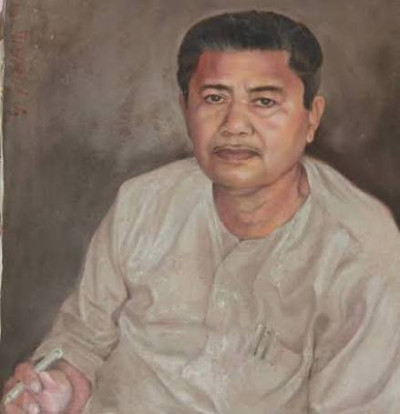
Dr. Bhupen Hazarika: The Bard of the Brahmaputra and the Voice of Humanity
Born on 8 September 1926 in Sadiya, Assam, Dr. Bhupen Hazarika combined traditional Assamese folk music with universal themes of humanity, equality and peace. Through his powerful baritone voice and meaningful lyrics, he gave Assam a distinct identity on the national and international stage. His music celebrated ordinary people, highlighted social issues and promoted brotherhood among different communities.
Throughout his remarkable career spanning more than six decades, Dr. Bhupen Hazarika composed thousands of songs, directed numerous films, wrote books and poems, and inspired social change through art. His extraordinary achievements earned him several of India's highest civilian honours, including the Bharat Ratna, Padma Vibhushan, Padma Bhushan, Padma Shri and the prestigious Dadasaheb Phalke Award.
Even years after his passing, his songs continue to resonate with audiences across India, Bangladesh and beyond. His legacy remains deeply rooted in Assamese culture while reaching audiences throughout the world.
Early Life and Family Background
Dr. Bhupen Hazarika was born on 8 September 1926 in Sadiya, located in present-day Tinsukia district of Assam. He was the eldest among ten children born to Nilakanta Hazarika and Shantipriya Hazarika. His father worked in government service, while his mother possessed a deep appreciation for traditional Assamese music and folk songs.
His mother's influence played a crucial role in nurturing his musical talent. From a very young age, Bhupen Hazarika listened to lullabies, devotional songs and folk melodies that became the foundation of his musical journey. These early experiences shaped his understanding of Assamese culture and inspired him to preserve its rich musical heritage throughout his life.
As his father's job required frequent transfers, the family lived in several towns across Assam, including Guwahati, Dhubri and Tezpur. This exposure allowed the young Bhupen Hazarika to experience the diverse cultures, dialects and traditions of Assam. These experiences later reflected in his songs, which beautifully portrayed the lives of ordinary people from different regions of Northeast India.
His exceptional talent became evident during childhood. At only ten years of age, he attracted the attention of legendary Assamese cultural icons Jyotiprasad Agarwala and Bishnu Prasad Rabha after performing a Borgeet at a public gathering. Their encouragement became a turning point in his life and introduced him to the world of music, theatre and cinema.
Soon afterwards, he recorded his first song in Kolkata and later sang in the historic Assamese film Indramalati while still a child. This early exposure to filmmaking and music laid the foundation for an extraordinary career that would redefine Assamese cinema.
Education and Academic Excellence
Dr. Bhupen Hazarika was not only an exceptional artist but also an accomplished scholar. He completed his schooling at several institutions, including Sonaram High School in Guwahati, Dhubri Government High School and Tezpur Government High School, where he passed his matriculation examination in 1940.
He pursued his Intermediate Arts from Cotton College, one of Assam's oldest and most prestigious educational institutions. His interest in politics, literature and society led him to Banaras Hindu University, where he completed both his Bachelor's degree in 1944 and Master's degree in Political Science in 1946.
His academic journey continued abroad when he received a scholarship to study at Columbia University in New York. There, he earned a Ph.D. in Mass Communication with research focused on the use of audio-visual techniques in adult education. During his stay in the United States, he met renowned African-American singer, actor and civil rights activist Paul Robeson.
Paul Robeson's philosophy that music should serve society deeply influenced Bhupen Hazarika. Inspired by Robeson's belief that songs can become instruments of social transformation, Hazarika developed a unique style of songwriting that combined artistic excellence with meaningful social messages. This influence remained visible throughout his career.
His education gave him a global perspective while strengthening his commitment to preserving Assamese identity. He successfully blended international ideas with local traditions, making his work relevant both regionally and globally.
Beginning of a Legendary Musical Career
Dr. Bhupen Hazarika's professional career began at an exceptionally young age, but it truly flourished after he returned to India from the United States in the early 1950s. Instead of limiting himself to one field, he established himself simultaneously as a singer, lyricist, composer, filmmaker, writer and public intellectual.
One of his greatest strengths was his ability to write, compose and sing his own songs. His distinctive voice carried deep emotion, allowing listeners to connect with the meaning behind every lyric. Unlike many musicians of his era, Bhupen Hazarika viewed music as a medium for education, social awareness and cultural preservation.
He composed songs that addressed poverty, equality, communal harmony, environmental conservation, human dignity and the struggles of common people. At the same time, he celebrated the natural beauty of Assam, the Brahmaputra River, its villages and its cultural diversity.
His compositions were not limited to Assamese. He also wrote and performed songs in Hindi, Bengali and several other Indian languages, helping introduce Assamese music and culture to audiences across the country.
Among his most celebrated songs are:
- Manuhe Manuhor Babe
- Bistirno Parore
- Moi Eti Jajabor
- Ganga Mor Maa
- Buku Hom Hom Kore
- Shillongore Godhuli
- Sagar Sangamat
- Gupute Gupute Kiman Khelim
Each of these songs continues to inspire listeners because of its timeless themes and emotional depth. Many are still performed at cultural programmes, educational institutions and public events throughout Assam and India.
Contribution to Assamese Music
Before Dr. Bhupen Hazarika, Assamese music largely remained confined within the region. Through his extraordinary creativity and dedication, he introduced Assamese folk traditions to national and international audiences.
He skilfully blended traditional Assamese instruments and folk melodies with modern orchestration without compromising their authenticity. His songs reflected the hopes, dreams and struggles of ordinary people while maintaining artistic excellence.
One of his most remarkable achievements was preserving the cultural identity of Assam during a period of rapid social change. He believed that music should unite people regardless of language, religion or social background. This philosophy made his work universally relevant and continues to inspire musicians today.
His music also became a bridge between Northeast India and the rest of the country. Millions of listeners who had never visited Assam came to appreciate its culture through his unforgettable songs.
Contribution to Assamese Cinema
Dr. Bhupen Hazarika occupies a unique place in the history of Assamese cinema. His contribution went far beyond composing memorable songs. He believed that cinema was one of the most effective mediums for educating society, preserving culture and bringing meaningful social change. Through his films, he portrayed the traditions, emotions, struggles and aspirations of ordinary people, helping Assamese cinema gain recognition across India.
During his long career, he worked as a music director, lyricist, playback singer, scriptwriter, producer and film director. His ability to handle multiple aspects of filmmaking made him one of the most versatile personalities in Indian cinema.
Some of the most notable Assamese films associated with Dr. Bhupen Hazarika include Shakuntala, Pratidhwani, Loti Ghoti, Era Bator Sur, Chik Mik Bijuli and several others. Each film reflected his commitment to realistic storytelling, cultural values and meaningful entertainment.
His musical genius also reached Hindi and Bengali cinema. He composed unforgettable music for acclaimed films such as Rudaali, Daman, Ek Pal, Saaz, Darmiyaan and Chingaari. These films introduced audiences across India to his distinctive musical style and poetic expression.
Unlike commercial composers who focused primarily on entertainment, Dr. Hazarika used cinema to communicate messages of peace, equality, compassion and human dignity. His films continue to be studied for their artistic excellence and social relevance.
Musical Style and Philosophy
One of the defining characteristics of Dr. Bhupen Hazarika's music was its simplicity combined with profound meaning. His songs spoke directly to people's hearts while addressing important social issues.
His compositions drew inspiration from:
- Assamese folk music
- Bihu traditions
- Tribal musical heritage
- River songs of the Brahmaputra
- Baul and Bengali folk traditions
- International folk music
- African-American spiritual music
He believed that music should not merely entertain but also inspire people to build a better society.
Many of his songs focused on themes such as:
- Humanity
- Brotherhood
- Social justice
- Equality
- Love for nature
- Patriotism
- Peace
- Cultural harmony
- Human rights
- Hope and resilience
Perhaps no song represents his philosophy better than "Manuhe Manuhor Babe", which teaches that human beings should live with kindness, compassion and mutual respect. Even today, the song remains one of the most cherished musical compositions in Assam.
Similarly, "Bistirno Parore" uses the mighty Brahmaputra River as a metaphor to question social inequality and human suffering. The song continues to inspire listeners because of its timeless message.
Contribution to Literature
Apart from being a legendary musician, Dr. Bhupen Hazarika was also an accomplished poet, writer and journalist.
He wrote numerous poems, essays and articles that explored Assamese society, politics, culture and human values. His literary works reflected the same depth found in his music, combining simple language with powerful emotions.
His autobiography, Moi Eti Jajabor (I Am a Wanderer), offers valuable insights into his life, artistic journey and philosophy. The book remains an important source for understanding his experiences as a musician, filmmaker and public intellectual.
His writings continue to inspire students, researchers and lovers of Assamese literature.
Political and Public Life
Dr. Bhupen Hazarika also participated in public life and politics. Between 1967 and 1972, he served as an Independent Member of the Assam Legislative Assembly representing the Naoboicha constituency.
During his tenure, he worked to strengthen Assam's cultural infrastructure and advocated greater support for cinema, music and the performing arts.
One of his most significant contributions during this period was helping establish India's first state-owned film studio in Guwahati. This initiative created new opportunities for Assamese filmmakers and strengthened the regional film industry.
Although politics formed only a small part of his career, his commitment to public service remained consistent throughout his life.
National and International Recognition
Dr. Bhupen Hazarika's artistic brilliance earned admiration far beyond India.
His songs became immensely popular in Bangladesh, where audiences appreciated their universal themes of humanity and freedom. His music also reached audiences across Europe, North America and Southeast Asia through international cultural festivals.
Several of his films received recognition at prestigious international film festivals, while his music was celebrated for successfully blending regional traditions with universal values.
He also held important positions in various national cultural organisations, including serving as the Chairman of the Sangeet Natak Akademi. His leadership helped promote Indian performing arts at both national and international levels.
Today, he is widely regarded as one of India's greatest cultural ambassadors.
Awards and Honours
Dr. Bhupen Hazarika received numerous prestigious awards during his lifetime as well as several posthumous honours.
Some of his most significant recognitions include:
- Padma Shri (1977)
- National Film Award for Best Music Direction
- Sangeet Natak Akademi Award
- Dadasaheb Phalke Award
- Padma Bhushan (2001)
- Sangeet Natak Akademi Fellowship
- Asom Ratna
- Friends of Liberation War Honour from Bangladesh
- Padma Vibhushan (Posthumous)
- Bharat Ratna (Posthumous)
Receiving the Bharat Ratna, India's highest civilian honour, in 2019 further established his place among the country's greatest cultural icons.
These awards recognised not only his artistic achievements but also his lifelong dedication to promoting humanity, social harmony and cultural unity.
Bharat Ratna and Birth Centenary Celebrations
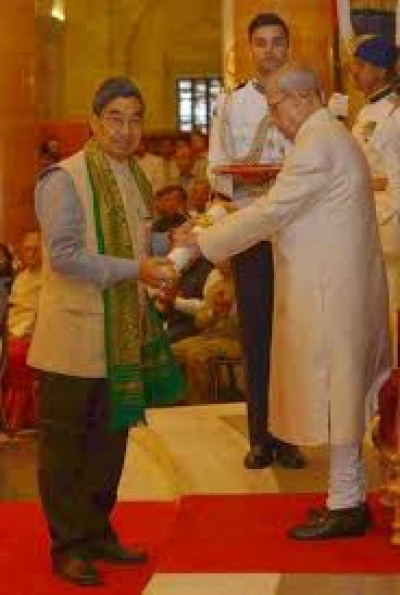
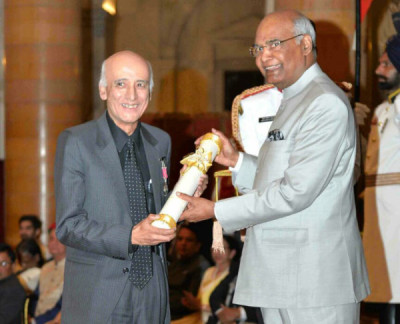
In 2019, Dr. Bhupen Hazarika was posthumously awarded the Bharat Ratna, India's highest civilian award. The honour acknowledged his unparalleled contribution to Indian music, cinema, literature and culture.
As the nation prepares to celebrate his birth centenary in 2026, several initiatives have been announced to honour his legacy.
One of the most significant recognitions is the decision to issue a Rs.100 commemorative coin celebrating his birth centenary. This commemorative coin reflects the immense respect and admiration the country continues to hold for one of its greatest cultural legends.
Various educational institutions, cultural organisations and government bodies are also organising seminars, exhibitions, musical concerts and documentary screenings dedicated to his extraordinary life and achievements.
Final Years and Passing
In his later years, Dr. Bhupen Hazarika continued composing music, mentoring young artists and participating in cultural events despite declining health.
He passed away on 5 November 2011 in Mumbai following multiple organ failure.
His mortal remains were brought to Assam, where hundreds of thousands of admirers gathered to pay their final respects. His funeral became one of the largest public farewells witnessed in the state.
He was cremated with full state honours near Gauhati University on the banks of the Brahmaputra, the river that had inspired many of his greatest songs.
The immense public participation during his funeral reflected the extraordinary affection people had for him.
Legacy of Dr. Bhupen Hazarika
Dr. Bhupen Hazarika's influence extends far beyond music.
He transformed Assamese culture into a global identity, introduced Northeast India to millions of people across the world and demonstrated that art can become a powerful instrument for social change.
His songs continue to be performed in schools, universities, cultural festivals, government functions and international concerts. Every generation discovers new meaning in his timeless lyrics.
Several institutions, roads, museums, auditoriums and landmarks have been named in his honour. The Dr. Bhupen Hazarika Setu, India's longest river bridge, stands as one of the most visible tributes to his enduring legacy.
For the people of Assam, he remains not only a legendary musician but also a symbol of humanity, compassion, creativity and cultural pride.
His life teaches that music has the power to unite people beyond differences of language, religion and nationality. Through his extraordinary work, Dr. Bhupen Hazarika ensured that the voice of Assam would forever echo across the world.
FAQs on Dr. Bhupen Hazarika
1. Who was Dr. Bhupen Hazarika?
Dr. Bhupen Hazarika was a legendary Indian singer, lyricist, composer, poet, filmmaker, author and cultural icon from Assam. Popularly known as the "Bard of the Brahmaputra," he dedicated his life to promoting humanity, social harmony and Assamese culture through music and cinema.
2. Why is Dr. Bhupen Hazarika called the Bard of the Brahmaputra?
He earned the title "Bard of the Brahmaputra" because many of his songs beautifully celebrated the Brahmaputra River, Assam's culture, its people and the universal values of peace, equality and brotherhood.
3. When and where was Dr. Bhupen Hazarika born?
Dr. Bhupen Hazarika was born on 8 September 1926 in Sadiya, located in present-day Tinsukia district of Assam, India.
4. What are the most famous songs of Dr. Bhupen Hazarika?
Some of his most celebrated songs include Manuhe Manuhor Babe, Bistirno Parore, Moi Eti Jajabor, Buku Hom Hom Kore, Shillongore Godhuli, Ganga Mor Maa, and Sagar Sangamat.
5. Which awards did Dr. Bhupen Hazarika receive?
He received numerous prestigious honours, including the Padma Shri, Padma Bhushan, Padma Vibhushan, Dadasaheb Phalke Award, Sangeet Natak Akademi Award, Asom Ratna, and the Bharat Ratna, India's highest civilian award.
6. Why was Dr. Bhupen Hazarika awarded the Bharat Ratna?
He was posthumously awarded the Bharat Ratna in 2019 for his extraordinary contribution to Indian music, cinema, literature, culture and his lifelong efforts to promote humanity and national integration.
7. What was Dr. Bhupen Hazarika's contribution to Assamese cinema?
Dr. Bhupen Hazarika revolutionized Assamese cinema by working as a singer, composer, lyricist, director, producer and writer. His films and music helped introduce Assamese culture to audiences across India and abroad.
8. What is the Dr. Bhupen Hazarika Setu?
The Dr. Bhupen Hazarika Setu, also known as the Dhola-Sadiya Bridge, is India's longest river bridge. It was named in honour of Dr. Bhupen Hazarika to recognize his immense contribution to Assam and the nation.
9. Where is the Bhupen Hazarika Museum located?
The Dr. Bhupen Hazarika Museum is located inside Srimanta Sankardev Kalakshetra in Guwahati, Assam. The museum preserves his personal belongings, manuscripts, awards, photographs and memorabilia.
10. Why is Dr. Bhupen Hazarika still remembered today?
Dr. Bhupen Hazarika is remembered because his songs continue to inspire millions with messages of humanity, equality, peace, compassion and cultural unity. His contribution to music, literature and cinema has made him one of the greatest cultural icons in Indian history.