Life & Legacy
Early Life
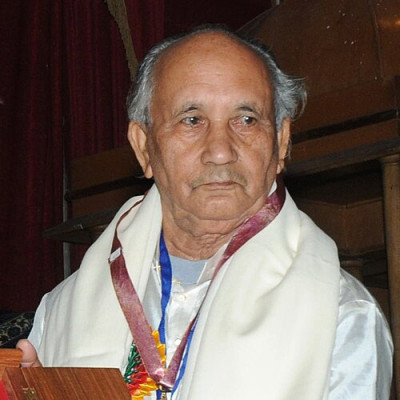
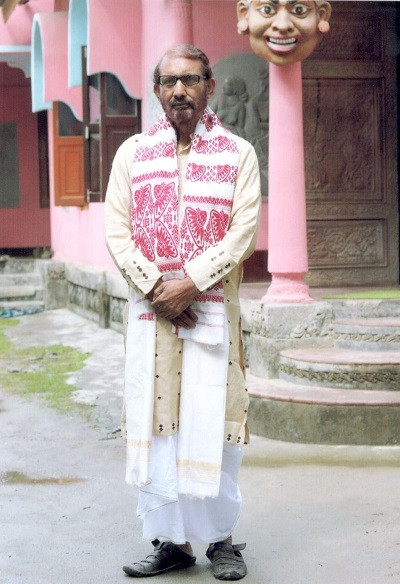
Hem Chandra Goswami was born on 1 March 1958 at Notun Samaguri Satra in Majuli, Assam, a place famous for preserving the Vaishnavite cultural traditions established by Srimanta Sankardeva. Growing up in a Satra environment, he was surrounded by Bhaona, Sattriya culture and traditional mask-making from an early age. His father, Rudrakanta Deva Goswami, was an accomplished Sattriya artist and mask maker who became his first teacher. Under his guidance, Hem Chandra Goswami began learning the intricate techniques of bamboo mask-making when he was only ten years old.
Education
After completing his HSLC examination from a local high school, Hem Chandra Goswami pursued higher studies in Arts and Crafts from the Arts and Crafts Society of Guwahati. His formal education, combined with traditional training received at Samaguri Satra, enabled him to blend classical techniques with creative innovation while maintaining the authenticity of Assamese heritage.
Career and Contribution
For several decades, Hem Chandra Goswami has dedicated his life to preserving the traditional Mukha art of Assam. His handcrafted masks are used in Bhaona performances and depict mythological characters, animals, birds, demons and deities with remarkable realism. These masks are created using natural materials such as split bamboo, clay, cloth, cow dung, natural fibres and eco-friendly colours.
Recognising the need to preserve this endangered art, he established Sukumar Kala Kendra (also known as Sukumar Kala Peeth) at Samaguri Satra in Majuli. Through this institution, he has trained hundreds of students, researchers and artists from India and abroad, ensuring that future generations continue this unique cultural tradition.
His works are displayed in leading museums, universities and cultural institutions across India and several countries including the United Kingdom, the United States, France, Germany, Italy and Israel. In 2015, officials from the British Museum visited Majuli to study the traditional masks represented in the historic Vrindavani Vastra. Several masks created by Hem Chandra Goswami were later preserved and exhibited at the British Museum during the exhibition "Krishna in the Garden of Assam."
Apart from creating masks, he has delivered lectures and demonstrations at institutions including Dibrugarh University, Tezpur University, Visva-Bharati University, Vivekananda Kendra and the Indira Gandhi National Centre for the Arts, helping promote Assamese cultural heritage at the national level.
Achievements
Major achievements of Hem Chandra Goswami include:
- Revived and preserved the traditional bamboo mask-making art of Majuli.
- Established Sukumar Kala Kendra to train future generations.
- Promoted Assamese Mukha Shilpa internationally.
- Delivered lectures and workshops across India.
- Created museum-quality masks displayed in India and abroad.
- Helped popularise Bhaona mask-making on global cultural platforms.
- Recognised as one of the finest traditional artists of Assam.
Awards and Recognition
Hem Chandra Goswami has received numerous prestigious honours, including:
- Padma Shri (2023), India's fourth-highest civilian award for contribution to Art.
- Achiever Award in Excellence in Art by Pratidin Time (2022).
- Sangeet Natak Akademi Award (2019).
- Luitporia Lifetime Achievement Award (2018).
- Honorary Doctorate (D.Litt. Honoris Causa) from Gauhati University (2017).
- Damodara Deva National Award (2014).
- LaMezo Da Anand Award (2012).
Positions Held
- Traditional Mask Making Artist
- Sattriya Artist
- Founder and Mentor of Sukumar Kala Kendra
- Cultural Ambassador of Assamese Mask Making Tradition
- Trainer and Lecturer on Mukha Shilpa
Legacy
Hem Chandra Goswami has become a symbol of Assam's cultural identity through his lifelong dedication to preserving Mukha Shilpa. His efforts have transformed a traditional Satra art into an internationally recognised cultural heritage. By training young artists and showcasing Assamese craftsmanship across the world, he has ensured that this centuries-old tradition continues to flourish. His contribution remains invaluable in promoting the artistic legacy of Majuli and preserving one of India's most distinctive folk art traditions.
FAQs about Hem Chandra Goswami