Life & Legacy
Early Life
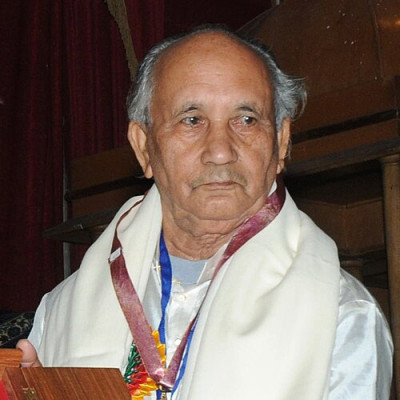
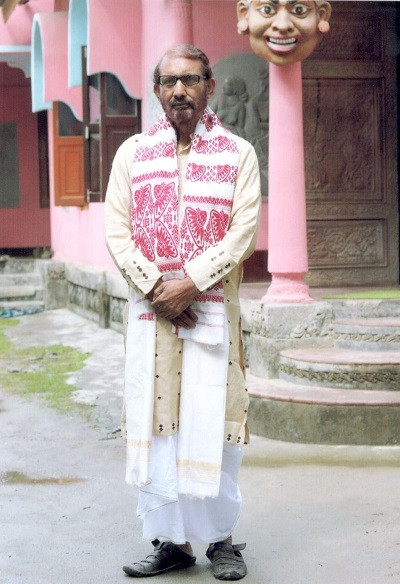
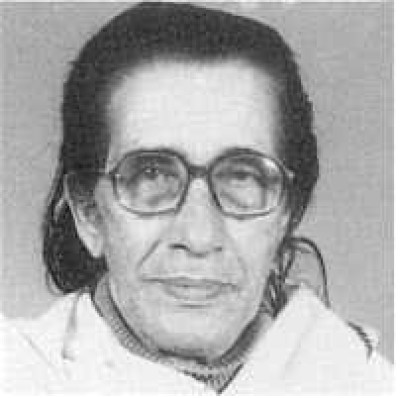
Kosha Kanta Deva Goswami was born in 1931 at Chamaguri Satra in Majuli, Assam, one of the most renowned Vaishnavite monasteries in the state. He belonged to a family deeply rooted in Sattriya culture and religious traditions. From an early age, he was introduced to mask-making, devotional music, dance and theatrical performances under the guidance of his father, Rosheswar Deva Goswami, who was an accomplished artist and spiritual leader.
Growing up in the cultural atmosphere of the Satra helped him develop exceptional skills in traditional Assamese performing arts while nurturing a lifelong commitment to preserving the heritage established by Srimanta Sankardeva.
Education and Traditional Training
Kosha Kanta Deva Goswami received his traditional education within the Satra, where he mastered Mukha Shilpa, Sattriya music, percussion, dance and Bhaona performance. His training combined religious teachings with practical artistic skills, enabling him to become an expert in both spiritual leadership and traditional craftsmanship.
Career and Contribution
Throughout his life, Kosha Kanta Deva Goswami dedicated himself to preserving the ancient mask-making tradition of Majuli. His handcrafted masks, created using split bamboo, clay, cloth, cow dung and natural colours, became widely admired for their artistic expression, durability and realistic appearance. These masks were primarily designed for Bhaona, the classical Assamese theatrical tradition depicting stories from Hindu mythology.
Apart from creating masks, he served as the Satradhikar of Chamaguri Satra, where he guided religious, cultural and artistic activities. Under his leadership, the Satra became an important centre for preserving traditional Assamese performing arts.
He actively conducted workshops, demonstrations and seminars across eastern India to introduce the heritage of Assamese mask-making to students, researchers and cultural enthusiasts. His efforts significantly increased awareness of Mukha Shilpa beyond Assam and encouraged the younger generation to learn the art.
Many well-known mask artists, including members of his own family and numerous disciples from India and abroad, received training under his guidance. His legacy continues through the artists of Notun Samaguri Satra, who continue teaching this traditional craft.
Major Achievements
- Preserved and promoted the traditional Mukha Shilpa of Majuli.
- Served as Satradhikar of Chamaguri Satra.
- Trained numerous students and traditional artists.
- Popularised Assamese mask-making through workshops and seminars.
- Strengthened the cultural identity of Bhaona and Sattriya traditions.
- Inspired future generations of Assamese craftsmen and performers.
Awards and Recognition
Kosha Kanta Deva Goswami received several honours for his outstanding contribution to Assamese traditional arts, including:
- Sangeet Natak Akademi Award (2003) for excellence in traditional mask-making for Bhaona.
- First Prize in Craftsmanship by the National Council of Educational Research and Training (NCERT), New Delhi (1981).
- Recognition from several cultural and literary organisations for preserving the heritage of Assamese mask-making.
- Honoured by various institutions for promoting Sattriya culture and traditional performing arts.
Positions Held
- Satradhikar of Chamaguri Satra, Majuli.
- Traditional Mask Making Master.
- Sattriya Cultural Leader.
- Teacher and Mentor of Mukha Shilpa.
- Workshop Instructor on Assamese Traditional Arts.
Death
Kosha Kanta Deva Goswami passed away in 2003 after dedicating his entire life to preserving Assam's traditional mask-making heritage. His passing was a significant loss to the cultural community, but his artistic legacy continues through his disciples and family members.
Legacy
Kosha Kanta Deva Goswami is remembered as one of the pioneers who safeguarded the ancient Mukha Shilpa tradition during a period when many traditional art forms faced decline. His devotion ensured that the mask-making culture of Majuli received national recognition and remained relevant for future generations. Today, his students and family members continue his mission by training artists from India and abroad, making Chamaguri Satra an internationally recognised centre for traditional Assamese mask-making.
FAQs about Kosha Kanta Deva Goswami