Life & Legacy
Early Life and Education
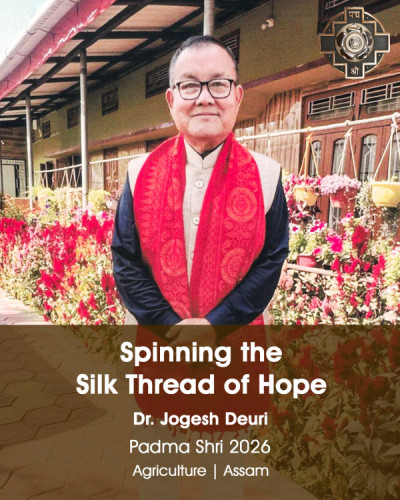
Jogesh Deuri was born on 1 May 1961 in Daranggiri, located in the Dudhnai subdivision of Goalpara district, Assam. Growing up in a region closely connected with agriculture and traditional weaving, he developed an early interest in silk cultivation and rural development.
He completed his schooling at Koklabari High School and later pursued higher education at Gauhati University. He further earned a Doctor of Philosophy (PhD) from the University of Science and Technology Meghalaya (USTM). His research focused on sericulture practices and sustainable livelihood opportunities among indigenous communities in Assam.
Career
Jogesh Deuri dedicated more than three decades to the Sericulture Department of Assam and served in several important administrative positions, including Director of Sericulture under the Bodoland Territorial Council (BTC). Throughout his career, he worked to improve traditional silk farming by introducing scientific methods, better infrastructure, and sustainable production techniques.
One of his most significant achievements was establishing the Integrated Bodoland Silk Park in Kokrajhar. The project brought together cocoon production, spinning, weaving, processing, printing, and marketing facilities under one integrated system. This initiative greatly strengthened the silk value chain and created new employment opportunities for rural communities.
Dr. Deuri was instrumental in expanding Eri silk cultivation across more than 1,600 villages in Assam, encouraging thousands of farmers, especially women, to adopt sericulture as a reliable source of income. His efforts significantly improved rural livelihoods while preserving Assam's indigenous silk traditions.
In 2013, under his leadership and with support from the Central Silk Board, the world's first Wild Muga Silk Sanctuary was established near the Koklong forest area close to Manas National Park. The sanctuary was created to conserve wild Muga silkworms while promoting sustainable silk production and biodiversity conservation.
He also introduced the annual observance of Eri Day in 2019 to raise awareness about the cultural, economic, and environmental importance of Eri silk. His guiding philosophy, "Eri is our future and Muga is our hope," became widely associated with Assam's silk development movement.
Even after retiring from government service in 2021, Dr. Deuri continued contributing as a researcher, speaker, mentor, and advisor, helping strengthen India's sericulture sector through knowledge sharing and innovation.
Major Achievements
- Played a leading role in modernizing Assam's Eri, Muga, and Pat silk industries.
- Established the Integrated Bodoland Silk Park in Kokrajhar.
- Expanded Eri silk cultivation across more than 1,600 villages.
- Helped create the world's first Wild Muga Silk Sanctuary near Manas National Park.
- Promoted scientific and sustainable sericulture practices.
- Encouraged large-scale participation of women in silk farming.
- Introduced Eri Day to popularize indigenous silk.
- Represented Assam's sericulture achievements at national and international forums.
- Contributed significantly to rural employment and self-reliance through silk-based livelihoods.
Awards and Recognition
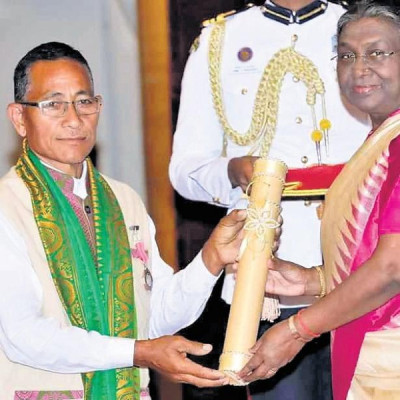
- Padma Shri (2026), Government of India
- Assam Gaurav Award (2023), Government of Assam
- Special Felicitation by the Tribal Affairs Department, Assam (2025)
- Numerous recognitions from agricultural, textile, and sericulture organizations for outstanding contributions to silk development and rural empowerment.
Positions Held
- Director of Sericulture, Bodoland Territorial Council (BTC)
- Senior Officer, Sericulture Department, Government of Assam
- Researcher and Advisor in Sericulture Development
- Speaker and Resource Person at national and international conferences on silk cultivation
Books and Publications
Dr. Jogesh Deuri has contributed research papers, technical articles, policy documents, and presentations related to sericulture and rural development. However, no widely published standalone book authored solely by him has been officially documented in public records.
Legacy
Jogesh Deuri is regarded as one of the most influential figures in Assam's modern sericulture movement. His work has transformed traditional silk farming into a sustainable livelihood for thousands of rural families while preserving the state's unique silk heritage. His innovations in Eri and Muga silk production, commitment to scientific research, and dedication to rural development continue to inspire future generations of farmers, researchers, and policymakers across India.
FAQs about Jogesh Deuri
1. Who is Jogesh Deuri?
Jogesh Deuri is a renowned sericulturist, researcher, and Padma Shri awardee from Assam known for his contributions to Eri, Muga, and Pat silk development.
2. Why is Jogesh Deuri famous?
He is famous for modernizing Assam's sericulture sector, promoting sustainable silk farming, and establishing the Integrated Bodoland Silk Park.
3. When was Jogesh Deuri born?
He was born on 1 May 1961 in Daranggiri, Goalpara district, Assam.
4. Which award did Jogesh Deuri receive from the Government of India?
He received the Padma Shri in 2026 for his outstanding contribution to agriculture and sericulture.
5. What is the Integrated Bodoland Silk Park?
It is a comprehensive silk production and processing facility established under Jogesh Deuri's leadership to strengthen Assam's silk industry.
6. What is the Wild Muga Silk Sanctuary?
It is the world's first Wild Muga Silk Sanctuary, created near Manas National Park to conserve wild Muga silkworms and promote sustainable silk production.
7. Which silk varieties did Jogesh Deuri promote?
He worked extensively to develop Eri silk, Muga silk, and Pat silk across Assam.
8. What is Jogesh Deuri's educational qualification?
He completed his education at Gauhati University and earned a PhD from the University of Science and Technology Meghalaya (USTM).
9. Did Jogesh Deuri receive the Assam Gaurav Award?
Yes. He received the Assam Gaurav Award from the Government of Assam in 2023.
10. Is Jogesh Deuri still alive?
Yes. According to the latest available public information, he continues to contribute to sericulture and rural development through advisory and educational initiatives.