Assam is widely known for its tea gardens, wildlife sanctuaries, rivers and historic towns, but some of the most distinctive travel experiences are found beyond its major tourist centres. The villages and rural settlements of Assam offer an opportunity to experience traditional weaving, indigenous cultures, river-island life, Buddhist heritage, farming communities, wildlife landscapes and local craftsmanship.
From the silk-weaving lanes of Sualkuchi and the cultural landscape of Majuli to the Tai-Phake heritage of Namphake and the folklore of Mayong, these destinations reveal a different side of Assam.
This guide covers some of the best villages and rural destinations in Assam for travellers interested in culture, nature, heritage, handicrafts, community tourism and peaceful countryside experiences.
- Sualkuchi - The Silk and Weaving Village of Assam
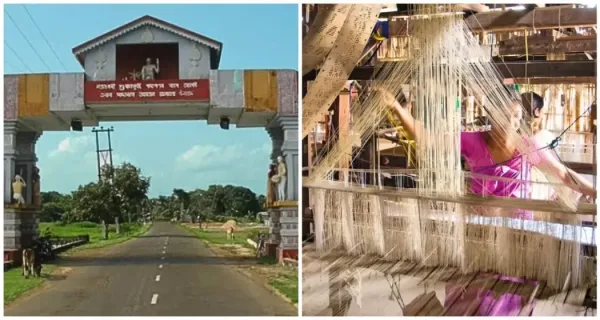
Sualkuchi, located in Kamrup district on the northern bank of the Brahmaputra, is one of Assam's best-known craft and cultural destinations. It is particularly famous for its traditional silk weaving and the production of Muga, Pat and Eri silk.
The village has a long association with handloom weaving. Visitors can explore weaving households and workshops to see artisans working on traditional looms and producing Mekhela Chadors, Gamosas and other Assamese textiles.
Sualkuchi was recognised as a Best Tourism Village in the 2024 national competition under the Craft category, highlighting its importance as a living centre of traditional craftsmanship.
What to experience in Sualkuchi:
- Traditional Muga, Pat and Eri silk weaving
- Handloom workshops
- Assamese textiles and Mekhela Chadors
- Local temples and satras
- Vastra Udyan and textile-related attractions
- Rural scenery along the Brahmaputra
Sualkuchi is suitable for travellers who want to combine cultural sightseeing with shopping for authentic Assamese handloom products. Assam Tourism also describes it as one of the world's significant weaving villages and recommends a day-long visit.
- Mayong - The Village of Folklore and Mystical Traditions
Mayong in Morigaon district is one of Assam's most unusual rural destinations. Situated close to Pobitora Wildlife Sanctuary and near the Brahmaputra, the area is associated with generations of stories about magic, traditional healing, occult practices and folklore.
The stories surrounding Mayong form part of its cultural identity, although traditional claims about supernatural powers should be understood as folklore rather than established scientific fact.
The Mayong Village Museum and related cultural collections provide an opportunity to learn about old manuscripts, artefacts, archaeological remains and traditions associated with the area. Assam Tourism notes that Mayong has a community museum containing ancient literature and relics.
The location can also be combined with a visit to Pobitora Wildlife Sanctuary, making Mayong an interesting choice for travellers who want both cultural exploration and wildlife experiences.
Things to experience:
- Mayong Village Museum and Research Centre
- Local folklore and traditional stories
- Archaeological and cultural relics
- Traditional healing traditions
- Nearby Pobitora Wildlife Sanctuary
- Majuli Island Villages - Assam's Cultural Heartland
Majuli is one of the most distinctive rural destinations in Assam. The river island is renowned for its Satras, traditional arts, Neo-Vaishnavite culture, mask-making, pottery and indigenous communities.
Rather than being a single village, Majuli is a large cultural landscape containing numerous villages and settlements. Travellers can explore rural communities, agricultural areas, traditional houses, pottery centres and Satras across the island.
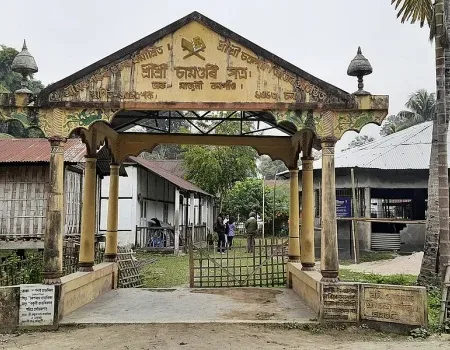
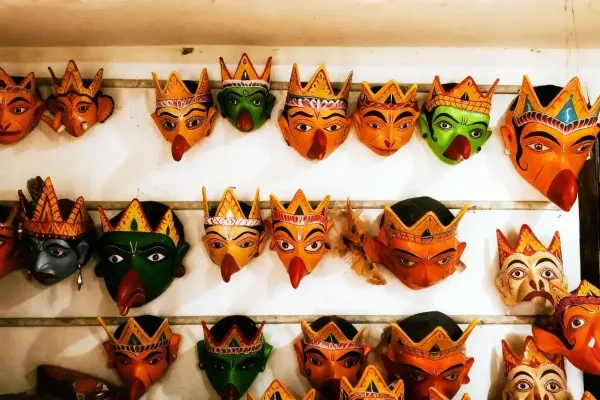
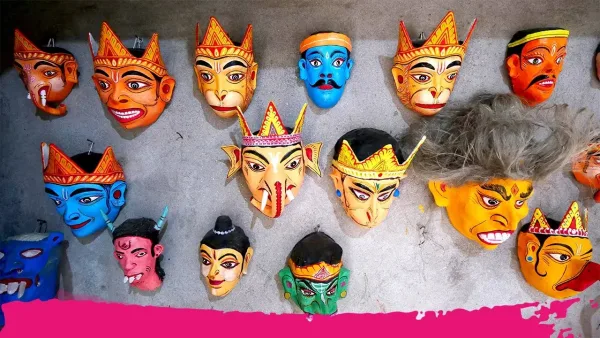
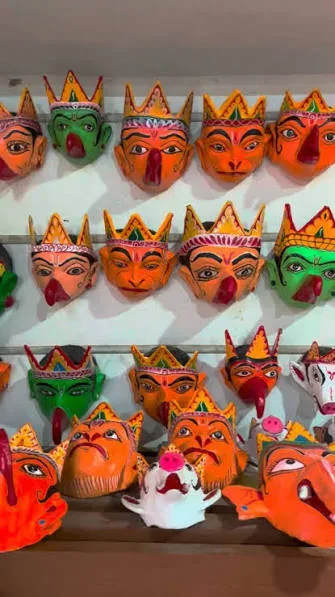
Samaguri, also known as Chamaguri Satra, is particularly famous for its traditional mask-making tradition. Artisans create masks used in Bhaona and other cultural performances.
Salmora is another important cultural stop, known for traditional pottery.
Assam Tourism lists several important Satras and Salmora Pottery Village among the places to experience in Majuli. The tourism department also highlights the island's rural and tribal lifestyle, bamboo cottages and homestays.
What to explore in Majuli:
- Samaguri or Chamaguri Satra
- Salmora Pottery Village
- Auniati Satra
- Kamalabari and Uttar Kamalabari Satra
- Dakhinpat Satra
- Garamur Satra
- Traditional Mishing villages
- Mask-making and pottery
- Wetlands and rural landscapes
Majuli is particularly attractive to travellers looking for a slower cultural journey rather than conventional sightseeing.
- Namphake - The Tai-Phake Cultural Village
Namphake village in the Dibrugarh region offers a remarkable experience of Tai-Phake heritage. The village is home to the Tai-Phake community, which has preserved its distinctive language, Buddhist traditions, architecture and cultural practices.
One of its principal attractions is the Namphake Buddhist Monastery, an important Theravada Buddhist centre. Assam Tourism describes Namphake as a living cultural village and notes the presence of around 150 Tai-Phake families preserving their identity and traditions.
Traditional houses raised on bamboo stilts, peaceful surroundings and Buddhist cultural practices give Namphake a character that is quite different from many other destinations in Assam.
Visitors can explore:
- Namphake Buddhist Monastery
- Tai-Phake traditional houses
- Buddhist cultural practices
- Local food and community traditions
- Peaceful village surroundings
- Nearby natural attractions
The village is particularly suitable for travellers interested in ethnic heritage, Buddhism and rural cultural tourism.
- Shikdamakha - A Scenic Tiwa Village
Shikdamakha in the Umswai Valley of West Karbi Anglong is associated with the Tiwa community and is known for its rural setting, greenery and traditional bamboo architecture.
The area is suited to travellers looking for a quieter alternative to Assam's heavily visited tourist destinations. The surrounding valley provides opportunities for walking, nature observation and experiencing indigenous village life.
Traditional bamboo structures and community-oriented village life are among the features that make this area interesting for rural tourism.
Travellers visiting Shikdamakha should remember that this is primarily a community environment rather than a conventional commercial tourist attraction. A local guide or community contact can make the experience more meaningful.
- Biswanath Ghat - Best Tourism Village and Riverside Heritage
Biswanath Ghat in Biswanath district is an important riverside destination with religious and cultural significance.
The area is known for its cluster of temples and its location beside the Brahmaputra. It is also popularly associated with the name "Gupta Kashi" because of its religious heritage.
Biswanath Ghat received national recognition as a Best Tourism Village in the 2023 competition, where it was listed among Assam's Bronze awardees.
The destination combines:
- Riverside scenery
- Historic temples
- Religious heritage
- Boat and river experiences
- Rural surroundings
- Local community life
The Ministry of Tourism has also supported tourism infrastructure associated with Biswanath Ghat, including river-cruise embarkation and disembarkation infrastructure.
- Nishangram - A Quiet Garo Community Village
Nishangram in Goalpara district is known for its Garo community and peaceful rural surroundings.
The village is often highlighted in discussions about clean and community-oriented rural destinations in Assam. Its appeal comes from its simple village environment, indigenous traditions and relatively quiet setting.
Travellers interested in community tourism can use a visit to learn about local customs, traditional food, agricultural life and the cultural practices of the Garo community.
As with other indigenous villages, visitors should approach the community respectfully and seek permission before photographing people or private spaces.
- Sasoni Merbeel - Wetlands, Birdwatching and Rural Tourism
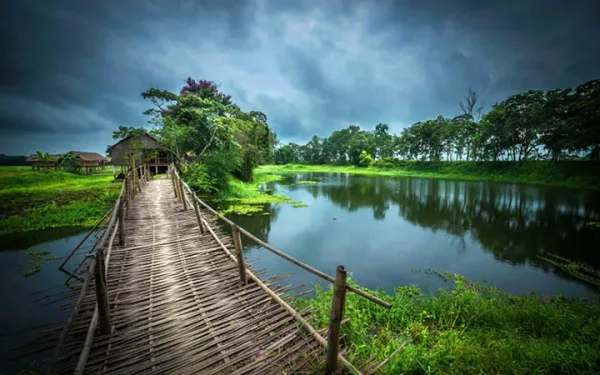
Sasoni Merbeel, near Naharkatia in eastern Assam, is a rural eco-tourism destination associated with a scenic wetland environment.
Merbeel is suitable for travellers interested in birdwatching, nature photography and peaceful countryside experiences. The surrounding landscape combines water bodies, vegetation and village communities.
Assam Tourism publications have identified Sasoni Merbeel as an eco-tourism project near Naharkatia and included it among rural tourism and accommodation-related destinations.
Things to enjoy:
- Wetland scenery
- Birdwatching
- Nature photography
- Village walks
- Local community experiences
- Rural homestay-style tourism
The destination can also be combined with a wider Upper Assam itinerary covering Naharkatia, Dibrugarh and nearby cultural attractions.
- Umswai Valley - Hills, Streams and Indigenous Village Life
Umswai Valley in West Karbi Anglong offers a combination of hills, streams, forests and indigenous cultural experiences.
The valley is particularly suited to travellers who prefer nature and community-based tourism over busy tourist centres.
Shikdamakha village is one of the settlements associated with this rural landscape. The area is also known for bamboo-based traditional architecture and nearby natural attractions.
Visitors can explore the valley through guided walks, village visits and nature-based activities. Because some areas are relatively remote, planning transport and local assistance in advance is advisable.
- Jimiri Gaon - Rural Life Near Chandubi
Jimiri Gaon is a rural settlement in the wider Chandubi region southwest of Guwahati.
The surrounding landscape is characterised by forests, hills, agricultural areas and the scenic Chandubi Lake region.
A visit to this part of Assam is suitable for travellers who want to experience rural landscapes without travelling deep into the state's more remote districts.
Chandubi Lake itself is an important nature and eco-tourism attraction, and the nearby villages provide an opportunity to see agricultural and community life away from the major urban centres.
- Kaliveti - Forest-Fringed Rural Assam
Kaliveti is a lesser-known rural destination associated with the forested and hilly landscape of Assam.
Its appeal is primarily for travellers searching for quieter places, nature walks, small waterfalls and offbeat experiences rather than large tourist attractions.
The surrounding terrain can be explored with local guidance, particularly where trails or seasonal streams are involved.
Because lesser-known rural destinations may have limited tourism infrastructure, visitors should arrange transportation, food and other basic requirements before travelling.
- Panimur Village - Gateway to Panimur Falls
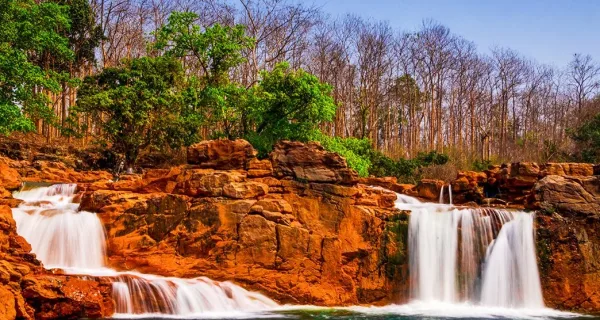
Panimur in Dima Hasao is known for the spectacular waterfalls and rapids of the Kopili River.
The destination is surrounded by green hills and rugged natural landscapes and has become popular for sightseeing, photography, picnics and nature-based travel.
Assam Tourism describes Panimur Falls as a major attraction on the Kopili River and notes its cultural importance to the Dimasa community, including traditional pilgrimage activities during Magh Purnima.
A visit to Panimur Village can therefore combine rural scenery with one of Dima Hasao's most recognisable natural attractions.
What to experience:
- Panimur Falls
- Kopili River
- Hills and forest landscapes
- Nature photography
- Picnic spots
- Local cultural traditions
- Bogamati - Riverbank and Foothill Tourism
Bogamati is located in Baksa district near the Indo-Bhutan border.
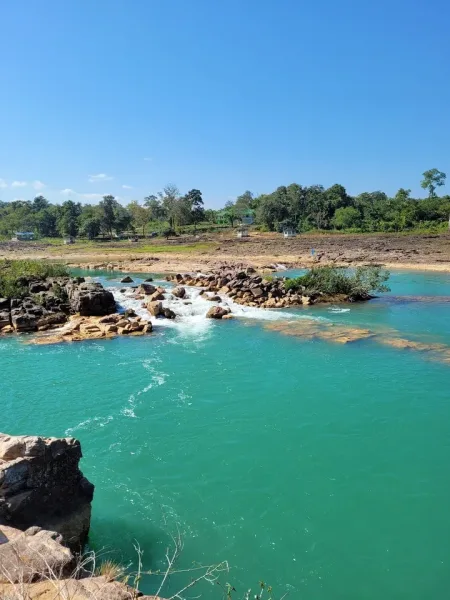
The destination is known for its forested landscape, the Barnadi riverbed and views towards the Bhutan hills. It has traditionally been popular as a picnic and nature destination.
Assam Tourism publications describe Bogamati as a scenic location surrounded by forest and bounded by the Barnadi River, with the Bhutan hills adding to its landscape.
The area is particularly attractive for:
- Nature walks
- Riverside outings
- Photography
- Picnic trips
- Foothill landscapes
- Eco-tourism experiences
October to May is generally a suitable period for visiting according to Assam Tourism's published destination information.
- Majuli's Samaguri Village and Mask-Making Tradition
Among the many cultural settlements of Majuli, the Samaguri area deserves special mention because of its traditional mask-making.
The masks are created for cultural and devotional performances, particularly Bhaona. Artisans use materials such as bamboo, clay, cloth and natural materials to create expressive characters associated with traditional theatre.
The tradition provides visitors with a direct connection to Assam's performing arts rather than simply a museum-style display.
Assam Tourism continues to identify Samaguri or Chamaguri Satra as an important mask-making centre in Majuli.
- Rural Villages Around Majuli's Satras
Majuli's villages are closely connected to its Satras and Neo-Vaishnavite cultural traditions.
Visitors can travel through rural roads and settlements to see traditional houses, agricultural fields, ponds, fishing activities, weaving, pottery and community life.
The island's Satras have historically functioned as important cultural and educational institutions. Assam Tourism notes that the island has numerous Satras and that rural and tribal lifestyle is one of its major visitor experiences.
This makes Majuli particularly valuable for travellers who want to understand how religion, art, agriculture and everyday village life are connected in Assam.
- Traditional Village Experiences Around Sualkuchi
Sualkuchi is more than a shopping destination for Assamese silk.
A visit to its weaving areas allows travellers to see how textile production remains connected to everyday life. Traditional designs are created on handlooms and passed between generations of artisans.
The village's relationship with Muga, Pat and Eri silk also makes it an important destination for understanding Assam's textile heritage.
Assam Tourism notes that visitors can undertake learning-oriented walks through the village and observe weaving and local craftsmanship.
Best Villages in Assam for Different Travel Experiences
Different villages and rural destinations are suited to different types of travellers.
For silk and handloom:
Sualkuchi
For folklore and unusual cultural history:
Mayong
For Satras, mask-making and island culture:
Majuli and Samaguri
For Buddhist and Tai-Phake heritage:
Namphake
For indigenous village experiences:
Shikdamakha and Nishangram
For riverside heritage:
Biswanath Ghat
For wetlands and birdwatching:
Sasoni Merbeel
For waterfalls and mountain scenery:
Panimur
For forests and Bhutan foothills:
Bogamati
For rural nature close to Guwahati:
Jimiri Gaon and the Chandubi region
For quieter offbeat experiences:
Kaliveti and Umswai Valley
Why Visit the Villages of Assam?
Assam's villages provide something that conventional sightseeing often cannot: direct exposure to living communities and traditional ways of life.
A village journey can introduce visitors to:
- Traditional Assamese handloom
- Muga, Pat and Eri silk
- Indigenous communities
- Buddhist heritage
- Neo-Vaishnavite culture
- Traditional mask-making
- Pottery
- Rural agriculture
- Wetland ecosystems
- Forest landscapes
- Local food
- Community-based tourism
- Traditional architecture
These experiences also help travellers understand that Assam's cultural heritage is not confined to museums and monuments. Many traditions remain part of everyday community life.
Best Time to Visit Villages in Assam
The ideal travel period depends on the destination.
October to April is generally comfortable for exploring many rural destinations because the weather is comparatively pleasant and outdoor activities are easier.
Winter is particularly suitable for village walks, cultural sightseeing, birdwatching and nature trips.
Majuli is especially attractive during its major cultural events, including the Raas celebrations, while Namphake offers opportunities to experience Buddhist festivals such as Buddha Purnima. Assam Tourism recommends visiting Majuli throughout the year, with the Raas festival period in November being particularly significant.
During the monsoon, some rural and hilly destinations can become difficult to access because of heavy rain, muddy roads, flooding or landslides. Travellers should check local road conditions before travelling to remote areas.
How to Reach the Villages of Assam
Guwahati is the most convenient starting point for several destinations in Lower and Central Assam.
Sualkuchi, Mayong, Chandubi and Bogamati can be incorporated into road-based itineraries from Guwahati.
For Majuli, travellers generally travel to Jorhat and continue towards Nimati Ghat for the ferry connection to the island. Assam Tourism identifies Nimati Ghat as the principal ferry access point for Majuli.
For Namphake, Dibrugarh and Naharkatia are useful access points.
For Panimur and other destinations in Dima Hasao, road travel from Haflong and other nearby towns is generally required.
Because several destinations in this guide are rural or relatively remote, private vehicles, local taxis or pre-arranged local transport can be more practical than relying entirely on public transport.
Where to Stay in Assam's Villages
Accommodation varies considerably between destinations.
Major rural tourism areas such as Majuli offer homestays, bamboo cottages, guesthouses and other visitor accommodation. Assam Tourism specifically highlights homestays and bamboo cottages in Majuli.
For Mayong, visitors can stay around the Pobitora area, where Assam Tourism lists tourism accommodation and private resorts.
For Namphake and other smaller villages, travellers should check homestay availability before arriving.
In less-developed destinations, it may be more convenient to stay in the nearest town and make a day trip to the village.
Responsible Tourism in Assam's Villages
Village tourism should be approached with respect because these destinations are living communities rather than open-air museums.
Travellers should:
- Ask permission before photographing people.
- Respect religious places and community rules.
- Avoid entering private homes without permission.
- Dress appropriately when visiting religious or conservative communities.
- Avoid damaging traditional structures or cultural objects.
- Buy handicrafts directly from local artisans where possible.
- Avoid littering.
- Use local guides when appropriate.
- Support locally owned homestays and small businesses.
- Follow local instructions around wildlife and environmentally sensitive areas.
Responsible travel can help ensure that tourism supports communities without damaging the traditions and landscapes that attract visitors in the first place.
A Rural Assam Travel Itinerary
Travellers who want to experience several rural destinations can create a multi-day itinerary rather than visiting everything in one trip.
A possible route could include:
Day 1: Guwahati to Sualkuchi
Explore traditional silk weaving, local markets and cultural attractions before returning to Guwahati or staying nearby.
Day 2: Mayong and Pobitora
Visit Mayong's cultural attractions and combine the trip with Pobitora Wildlife Sanctuary.
Day 3: Travel towards Jorhat
Continue towards Jorhat and prepare for the Majuli ferry crossing.
Day 4: Majuli
Explore Satras, villages, pottery and traditional cultural activities.
Day 5: Samaguri and rural Majuli
Experience mask-making and explore more of the island's villages and wetlands.
Day 6: Namphake
Travel towards Naharkatia and visit the Tai-Phake village and Buddhist monastery.
This itinerary can be extended to include Sasoni Merbeel, Dibrugarh and other Upper Assam destinations.
For a Lower Assam-focused journey, Sualkuchi, Biswanath Ghat and Bogamati can instead be combined with other nearby attractions.
Conclusion
The best villages in Assam are not defined by a single type of attraction. Some are famous for handloom and silk, some for indigenous cultures, others for religious heritage, wetlands, forests, waterfalls or distinctive local traditions.
Sualkuchi represents Assam's exceptional weaving heritage, while Mayong preserves a fascinating body of folklore. Majuli provides an extraordinary combination of rural life, Satras, pottery and mask-making. Namphake offers an insight into Tai-Phake Buddhist culture, while Biswanath Ghat combines riverside scenery with religious heritage.
Destinations such as Shikdamakha, Nishangram, Sasoni Merbeel, Jimiri Gaon, Kaliveti, Panimur and Bogamati provide quieter alternatives for travellers interested in nature and community experiences.
Together, these villages demonstrate why rural tourism is an important part of Assam's travel landscape. They allow visitors to see the state beyond its famous national parks and cities and experience the traditions, landscapes and communities that continue to shape Assam's identity.