Detailed Narrative
In Assamese culture, marriage is commonly referred to as 'biya', and it is considered a sacred and socially important institution. Among the Ahom community, this sacred union is celebrated through Chaklang, a traditional ceremony that has been practiced for centuries. The groom is referred to as 'dora' and the bride as 'koyna', and their union symbolizes not just personal commitment but also the bonding of two families and lineages.
The origin of Chaklang is believed to be ancient, with references tracing back to Ahom mythology and early historical narratives. According to traditional beliefs, the custom began with the marriage of Lengdon, a celestial figure, to Nang-Hun-Pha, the daughter of a powerful entity. This legendary union laid the foundation for the Chaklang tradition. Over time, it became an established social custom among the Ahoms and was widely practiced during the reign of Ahom kings.
Historical accounts also highlight the importance of Chaklang in royal ceremonies. For instance, the marriage of Swargadev Rajeswar Singha with Princess Kuranganayani is often cited as an example of Chaklang being practiced at the highest levels of society. These references indicate that the tradition was not only socially accepted but also deeply respected and preserved across generations.
One of the most distinctive features of Chaklang is that it does not follow the typical Vedic rituals commonly seen in many Indian weddings. There is no sacred fire ceremony or saptapadi involved. Instead, the rituals are conducted by Ahom priests, often known as Deodhai or Molung, who guide the couple through a series of symbolic and meaningful practices. These rituals emphasize cultural identity, ancestral respect, and social responsibility.
A key element of the Chaklang ceremony is the creation of a circular ceremonial space, often referred to as a Maral. This space is decorated with intricate patterns made from rice powder and is surrounded by numerous earthen lamps. The circle symbolizes continuity, unity, and the eternal bond between the couple. The use of natural elements in the ceremony reflects the Ahom community's close connection with nature and traditional beliefs.
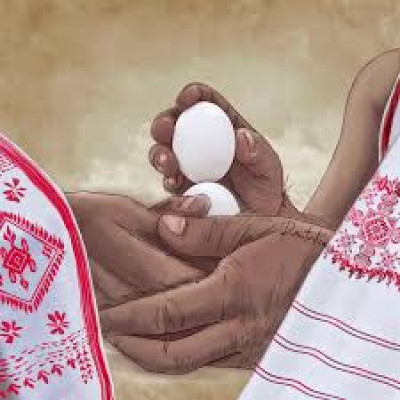
Another important ritual in Chaklang is the exchange of symbolic items between the bride and groom. In some traditions, the bride presents a Hengdang, a traditional sword, to the groom. This gesture represents trust, protection, and the groom's responsibility to safeguard his family. It is a powerful symbol that reflects the values of loyalty and duty within the marriage.
The Chaklang ceremony also includes unique practices such as the exchange of rings hidden in a basket of rice. This playful yet meaningful ritual signifies cooperation, understanding, and mutual support between the couple. The use of rice, a staple food in Assam, highlights prosperity and sustenance as essential elements of married life.
Another significant aspect of the ceremony is the recitation of ancestral histories. The priests often recount the lineage and achievements of both families, reminding the couple of their roots and responsibilities. This practice strengthens the sense of identity and continuity, ensuring that cultural values are passed down through generations.
Pre-wedding rituals are also an important part of Chaklang. These may include ceremonial offerings to deities, purification rituals, and symbolic acts performed near water bodies. Such practices are believed to bring blessings, remove obstacles, and ensure a harmonious married life. The involvement of family members in these rituals further emphasizes the collective nature of the marriage process.
Chaklang is not just a religious or ceremonial event; it is also a social institution that promotes unity and cohesion within the community. It brings together families, relatives, and neighbors, fostering a sense of belonging and shared celebration. The rituals are designed to involve everyone, making the wedding a vibrant and inclusive event.
In modern times, Chaklang continues to be practiced by many Ahom families, although some elements have evolved to suit contemporary lifestyles. While urbanization and modernization have influenced certain aspects, the core values and traditions remain intact. Efforts are being made by cultural organizations and communities to preserve and promote Chaklang as an important part of Assam's heritage.
The legal recognition of Chaklang as a customary marriage system further reinforces its significance. It acknowledges the validity of traditional practices and ensures that cultural diversity is respected within the legal framework. This recognition has helped in preserving the authenticity of Chaklang and encouraging its continued practice.
The beauty of Chaklang lies in its simplicity, symbolism, and deep cultural roots. It is a celebration of love, tradition, and identity that goes beyond material aspects. Every ritual, every gesture, and every element of the ceremony carries meaning, reflecting the wisdom and values of the Ahom community.
In conclusion, Chaklang is more than just a wedding ceremony; it is a living tradition that embodies the spirit of Assamese culture. It connects the past with the present, ensuring that ancestral knowledge and values are preserved for future generations. As Assam continues to evolve, traditions like Chaklang serve as a reminder of the importance of cultural heritage and the need to cherish and protect it.
FAQs on Chaklang marriage