Detailed Narrative
Unlike ordinary fabrics, the Vrindavani Vastra was conceived as a moving visual scripture. Skilled Assamese weavers translated stories from the Bhagavata Purana into complex textile panels using fine silk and advanced weaving techniques that were far ahead of their time. Scenes such as Krishna subduing Kaliya, playing the flute, and interacting with devotees were woven with symbolic motifs, vibrant colors, and rhythmic patterns that conveyed devotion as well as storytelling.
The creation of the Vrindavani Vastra marked a turning point in Assam's Neo-Vaishnavite movement, where art became a medium for spiritual education. These textiles were used in satras and religious spaces to communicate divine narratives to communities, many of whom were not literate. This made the Vastra both a religious artifact and a social instrument of cultural transformation.
Over centuries, fragments of the Vrindavani Vastra traveled beyond Assam through Bhutan and Tibet before reaching Europe. Today, important sections are preserved in institutions such as the British Museum, the Victoria and Albert Museum, and the Guimet Museum. Despite being physically distant, the Vrindavani Vastra continues to symbolize Assam's identity, resilience, and artistic excellence.
In recent years, renewed efforts by cultural institutions and the Assam government have brought global attention back to this textile heritage. The planned exhibition and conservation initiatives aim to reconnect the Vastra with its place of origin while ensuring its preservation for future generations. As a result, Vrindavani Vastra stands today not just as a historical textile, but as a living symbol of Assam's spiritual and artistic legacy.
What Is Vrindavani Vastra?
Vrindavani Vastra is a renowned 16th-century Assamese silk textile that vividly depicts scenes from the divine life of Lord Krishna in Vrindavan. It is regarded as one of the finest masterpieces of Assam's handloom and textile heritage. The Vastra was woven under the direct spiritual and artistic guidance of Mahapurush Srimanta Sankardeva, the great Vaishnavite saint, scholar, and reformer of Assam.
Commissioned by Koch king Naranarayana, the creation of the Vrindavani Vastra involved highly skilled artisans associated with the Sattriya cultural tradition. Originally, the textile comprised at least fifteen individual silk panels, which were later stitched together to form a grand drape measuring nearly nine and a half metres in length. The Vastra reflects exceptional craftsmanship, intricate narrative design, and deep spiritual symbolism, making it a rare achievement in medieval Indian textile history.
Historical Significance of Vrindavani Vastra
The Vrindavani Vastra represents a unique fusion of devotion, literature, performance traditions, and advanced weaving techniques. The influence of Srimanta Sankardeva is clearly visible in the textile's iconography and storytelling structure. The woven panels visually narrate episodes from the Bhagavata Purana, focusing on the transcendental childhood and divine acts of Lord Krishna.
More importantly, the Vastra embodies the philosophy of Ek Saran Naam Dharma, the Neo-Vaishnavite movement that reshaped Assam's religious and cultural landscape. Through visual storytelling, the textile served as a medium for spiritual education among the masses. Therefore, Vrindavani Vastra is not merely a fabric but a visual scripture of Assamese Vaishnavism.
How the Vrindavani Vastra Left Assam?
The Vrindavani Vastra left Assam under uncertain circumstances during the late medieval period. Historical evidence suggests that traders transported the textile across the Himalayan routes to Tibet, from where European collectors later acquired several fragments. A major portion reached the British Museum in 1904, while other sections found their way to museums in Paris, Boston, and Los Angeles.
This dispersion occurred due to political changes, lack of local conservation infrastructure, and limited awareness of heritage preservation at the time. As a result, Assam lost physical access to one of its most valuable cultural artifacts.
Where Is the Vrindavani Vastra Today?
Today, surviving fragments of the Vrindavani Vastra are preserved in leading international museums, including:
-
The British Museum, London
-
Musee Guimet, Paris
-
Museum of Fine Arts, Boston
-
Los Angeles County Museum of Art
These institutions have safeguarded the textile for decades using advanced conservation techniques and controlled environments.
Recent Development: Assam Signs LoI to Bring the Vrindavani Vastra Back
On 17 November 2025, the Government of Assam signed a Letter of Intent (LoI) with the British Museum to bring the Vrindavani Vastra back to Assam on loan. As per the agreement, the British Museum has agreed to send the textile for an 18-month exhibition in 2027.
This development marks a historic milestone for Assam and reflects a renewed commitment to reclaiming, preserving, and showcasing its cultural heritage on home soil.
Why Is the Loan Conditional?
The British Museum follows strict global conservation standards. Therefore, Assam must establish a state-of-the-art, climate-controlled museum to house the Vrindavani Vastra. The facility must ensure stable temperature, regulated humidity, advanced security systems, and professional conservation protocols.
The Government of Assam has already initiated the construction of a specialised museum in Guwahati. This condition highlights the technological and infrastructural gap between global museums and many regional institutions in India.
Why Preservation Matters for Assam?
The temporary return of the Vrindavani Vastra exposes a long-standing challenge in Assam's heritage management. Many museums in the state lack modern preservation technology, resulting in damage to antique textiles, manuscripts, and sculptures over time.
Even the Assam State Museum, the most prominent in the region, faces serious conservation limitations. The development of a new museum can therefore revolutionise heritage preservation in Assam by introducing global standards, encouraging research, and fostering international collaborations.
Symbolism of the Vrindavani Vastra
The Vrindavani Vastra portrays devotional scenes from Lord Krishna's life, highlighting his divine play, spiritual power, and compassion. The woven motifs symbolise:
-
The Bhakti tradition of Assam
-
Literary contributions of Srimanta Sankardeva
-
The richness of Sattriya culture
-
The artistic excellence of Assamese silk weavers
The textile demonstrates how spirituality, art, and community life merged seamlessly in Assamese society.
Vrindavani Vastra and Srimanta Sankardeva
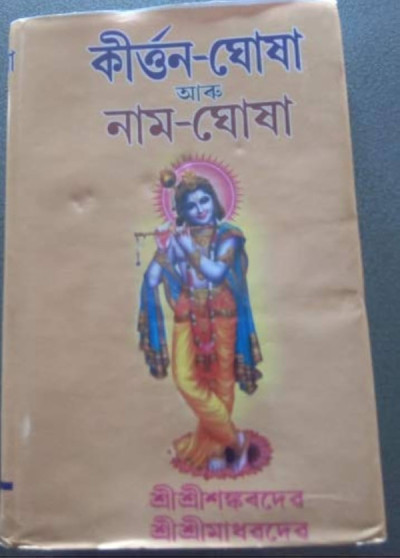
Srimanta Sankardeva was not only a spiritual leader but also a visionary social reformer, poet, dramatist, painter, and philosopher. His literary works, including the Kirtan Ghosa and translations of the Bhagavata, directly influenced the themes of the Vrindavani Vastra.
As a result, the Vastra stands as a visual extension of Sankardeva's teachings, illustrating how art can promote devotion, social harmony, and a shared cultural identity.
Vrindavani Vastra in the Context of the Koch Kingdom
The patronage of Koch king Naranarayana played a crucial role in the cultural development of medieval Assam. His support for art, literature, and Vaishnavite traditions enabled projects like the Vrindavani Vastra to flourish.
This collaboration between royal authority and spiritual leadership shaped the cultural foundations of early modern Assam.
How the New Museum Can Transform Heritage Preservation?
The proposed museum in Guwahati has the potential to transform heritage management in Assam by:
-
Introducing global textile conservation technology
-
Training experts in heritage preservation
-
Promoting cultural tourism
-
Creating academic and research opportunities
-
Encouraging public engagement with heritage
Such an institution can safeguard several endangered artifacts beyond the Vrindavani Vastra.
Why Vrindavani Vastra Still Inspires Assam?
The Vrindavani Vastra connects contemporary Assam with its rich spiritual and artistic past. It reflects Sankardeva's inclusive vision and inspires renewed research into Sattriya art and Vaishnavite traditions.
For younger generations, the Vastra serves as a source of pride and a reminder of Assam's significant contribution to India's civilisational heritage.
Conclusion
The Vrindavani Vastra is not merely an artistic treasure; it is a living symbol of Assam's spiritual strength and cultural identity. Its proposed return marks a defining moment in heritage recognition while simultaneously highlighting the urgent need for improved preservation infrastructure.
For UPSC and APSC aspirants, understanding the Vrindavani Vastra's origins, symbolism, global journey, and conservation challenges is essential. The story of the Vastra teaches a timeless lesson: a civilisation endures not only through progress, but through the values and heritage it chooses to preserve.
FAQs on Vrindavani Vastra
1. What is Vrindavani Vastra?
Vrindavani Vastra is a 16th-century Assamese silk textile that depicts the life and divine acts of Lord Krishna through intricate woven designs.
2. Who created the Vrindavani Vastra?
It was created by Assamese weavers under the spiritual guidance of Mahapurush Srimanta Sankardeva during the Neo-Vaishnavite movement.
3. Why is Vrindavani Vastra important to Assam?
It represents Assam's spiritual philosophy, advanced weaving tradition, and cultural identity on a global platform.
4. What stories are shown in Vrindavani Vastra?
The textile illustrates scenes from Lord Krishna's childhood, including episodes from Vrindavan and Vishnu avatars.
5. Where is Vrindavani Vastra located today?
Fragments are preserved in museums such as the British Museum, Victoria and Albert Museum, and Musee Guimet.
6. What material was used to weave Vrindavani Vastra?
It was woven using fine Assamese silk with complex lampas weaving techniques.
7. Is Vrindavani Vastra a religious object?
Yes, it served as a visual medium for Vaishnavite teachings and devotional storytelling.
8. How did Vrindavani Vastra travel outside India?
It traveled from Assam through Bhutan and Tibet before reaching European collectors and museums.
9. Are there efforts to bring Vrindavani Vastra back to Assam?
Yes, the Assam government and cultural bodies are working toward exhibitions and conservation projects in Assam.
10. Why is Vrindavani Vastra relevant today?
It highlights India's textile heritage, supports cultural preservation, and strengthens Assam's global cultural recognition.