Detailed Narrative
Kirtan Ghosha: A Pillar of Assamese Spiritual and Cultural Identity
At its core, Kirtan Ghosha is a collection of devotional narratives centered on the life, virtues, and divine activities of Lord Krishna. These compositions were not written merely for reading but were intended to be sung collectively. The practice of congregational singing, known as kirtan, allowed people from all sections of society to participate in spiritual expression, breaking barriers of caste, literacy, and social hierarchy.
Language and Literary Significance
The language used in Kirtan Ghosha is Brajavali, a literary blend enriched with Assamese, Maithili, and Sanskrit elements. This linguistic choice made the text both elevated and accessible, allowing it to communicate deep philosophical ideas through poetic beauty. Each kirtan is structured with a ghoxa or refrain, followed by verses called padas, composed in various rhythmic meters. These meters were carefully selected to support musical recitation, ensuring memorability and emotional resonance.
From a literary perspective, Kirtan Ghosha represents a milestone in Assamese literature. It introduced structured devotional poetry that balanced aesthetic elegance with spiritual depth. The imagery used to describe Krishna, nature, devotion, and divine play reflects a refined poetic vision that continues to inspire Assamese writers and scholars.
Religious and Philosophical Importance
Within the Ekasarana tradition, Kirtan Ghosha holds a position of immense importance, second only to the Bhagavat translated by Sankardev. The text emphasizes bhakti or devotion as the sole path to liberation in the age of Kaliyuga. Listening to and singing the names and deeds of Krishna are presented as the most effective spiritual practices.
Rather than promoting ritual complexity, Kirtan Ghosha focuses on inner purity, humility, and surrender to God. This approach played a transformative role in shaping a more inclusive religious culture in Assam, where devotion was valued above social status or ritual authority.
Role in Naamghar and Community Life
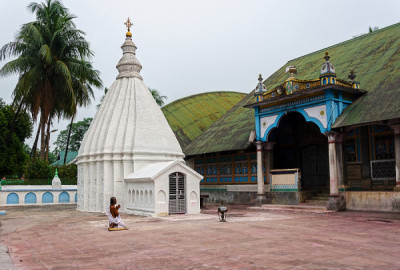
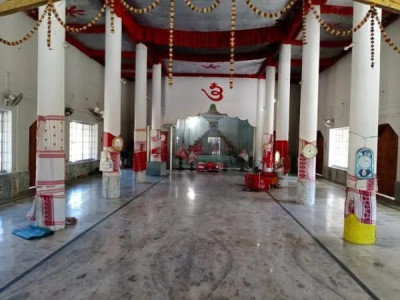
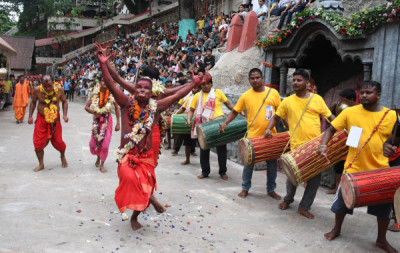
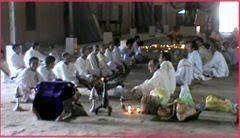
Kirtan Ghosha is inseparable from the Naamghar, the traditional Assamese prayer hall. Even today, daily prayers, festivals, and religious gatherings in Naamghars revolve around the recitation and singing of Kirtan Ghosha. The collective participation fosters a strong sense of unity, reinforcing social harmony and shared cultural values.
Historically, the Naamghar served not only as a religious center but also as a space for education, discussion, and community decision making. Kirtan Ghosha thus contributed to both spiritual life and grassroots democracy in Assamese villages.
Compilation and Preservation
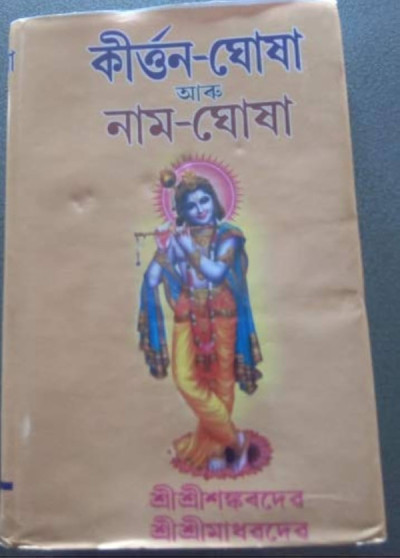
Although Sankardev composed most of the kirtans, they were initially scattered across different regions. Before his passing, he instructed Madhabdev to ensure their preservation. Later, these works were compiled into a single volume by Ramcharan Thakur. Over time, additional kirtans by other revered poets were included in some versions, reflecting the living and evolving nature of the tradition.
The survival of Kirtan Ghosha across centuries highlights its deep emotional and cultural relevance. Despite changes in language, technology, and lifestyle, the text continues to be sung, studied, and revered across Assam and beyond.
Cultural Legacy and Modern Relevance
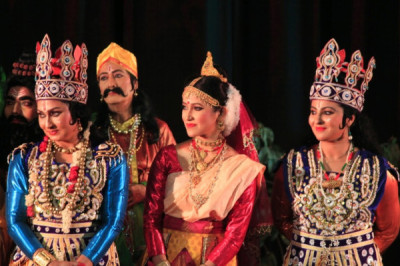
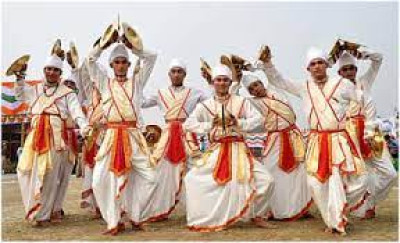
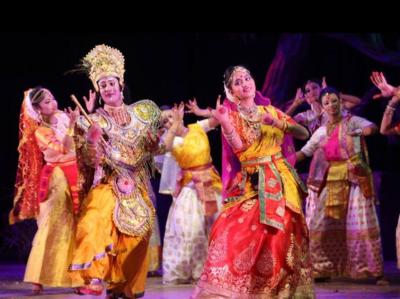
Today, Kirtan Ghosha remains a symbol of Assamese identity. It influences classical music forms like Borgeet, inspires dance and drama, and continues to shape moral values within society. Scholars study it for its insights into medieval Assamese history, linguistics, and religious reform, while devotees see it as a direct pathway to spiritual connection.
In a modern context, Kirtan Ghosha also serves as a reminder of sustainable cultural traditions rooted in simplicity, inclusiveness, and devotion. Its message of unity through shared spiritual expression remains relevant in an increasingly fragmented world.
In essence, Kirtan Ghosha is not just a religious text but a cultural foundation of Assam. It embodies the soul of Assamese devotion, artistic expression, and social harmony, making it one of the most enduring contributions of Assam to the spiritual heritage of India.
FAQs on Kirtan Ghosha
FAQ 1: What is Kirtan Ghosha?
Kirtan Ghosha is a sacred Assamese devotional text composed mainly by Srimanta Sankardev, focusing on the glorification of Lord Krishna through congregational singing.
FAQ 2: Who wrote Kirtan Ghosha?
Most of Kirtan Ghosha was written by Srimanta Sankardev, with a few kirtans composed by Madhabdev and other contemporaries.
FAQ 3: Why is Kirtan Ghosha important in Assamese culture?
It shaped Assamese religious life, literature, music, and community traditions through the Ekasarana Namadharma movement.
FAQ 4: In which language is Kirtan Ghosha written?
Kirtan Ghosha is written in Brajavali, a literary language blending Assamese, Maithili, and Sanskrit.
FAQ 5: What is the role of Kirtan Ghosha in Naamghar?
It is the primary text sung during prayers, festivals, and community gatherings in Naamghars.
FAQ 6: How many kirtans are there in Kirtan Ghosha?
The text contains multiple sections comprising over thirty individual kirtans, depending on the version.
FAQ 7: What is Ekasarana Namadharma?
It is a Vaishnavite faith founded by Sankardev that emphasizes devotion to one supreme God, Krishna.
FAQ 8: Is Kirtan Ghosha still relevant today?
Yes, it continues to be sung daily and studied for its spiritual, cultural, and literary value.
FAQ 9: How did Kirtan Ghosha influence Assamese music?
It laid the foundation for devotional music forms like Borgeet and community kirtan singing.
FAQ 10: Can non-Assamese readers study Kirtan Ghosha?
Yes, translations and explanations are available, making it accessible to readers worldwide.