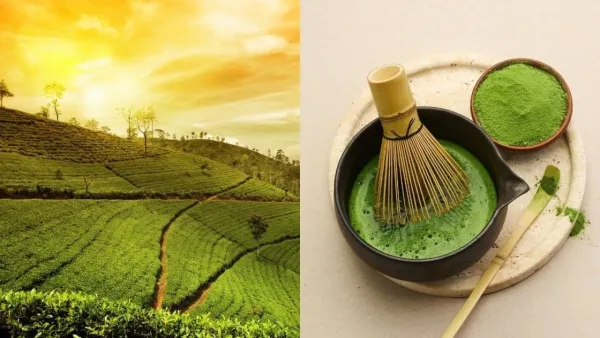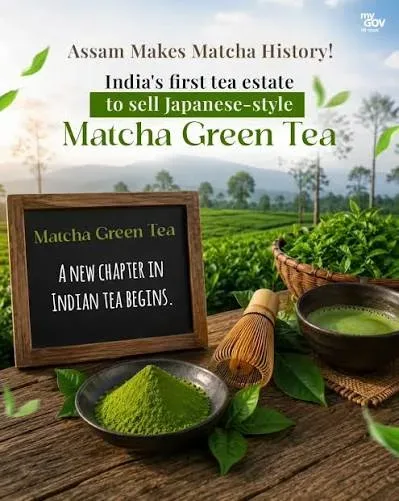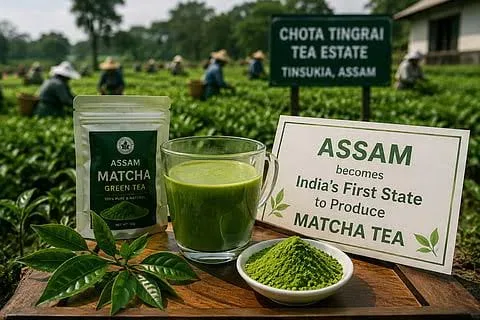
Assam has added a new chapter to its long-standing tea legacy by becoming the first state in India to commercially produce Matcha tea. The milestone was achieved at Chota Tingrai Tea Estate in Tinsukia district, where the first commercial batch of Assam-produced Matcha was prepared and subsequently sold through the Guwahati Tea Auction Centre (GTAC) on July 3, 2026. The development marks Assam's entry into the growing premium Matcha tea segment and represents an important diversification of the state's traditional tea industry. Reports from July 2026 confirmed that the first commercial lot weighed 5 kg and fetched Rs 3,000 per kg at the Guwahati auction.
Assam Matcha Tea: Key Facts
For Assam GK and Current Affairs, the following facts are important to remember:
- First state in India to commercially produce Matcha tea: Assam
- Tea estate: Chota Tingrai Tea Estate
- District: Tinsukia, Assam
- First commercial batch: 5 kg
- First auction date: July 3, 2026
- Auction venue: Guwahati Tea Auction Centre (GTAC)
- Auction price: Rs 3,000 per kg
- Auctioneer: J. Thomas & Co. Pvt. Ltd.
- Buyer: Sheosons Chai Co., Guwahati
- International technical collaboration: Japan
- Major significance: Diversification of Assam's traditional tea industry into premium specialty tea
The First Commercial Matcha Produced in Assam
The historic production took place at Chota Tingrai Tea Estate in Tinsukia district in Upper Assam. The estate developed the capability to manufacture Matcha with technical knowledge and support associated with Japan, where Matcha has a long-established tea culture.
The first commercial batch consisted of 5 kg of Matcha. It was taken to the Guwahati Tea Auction Centre and sold on July 3, 2026, marking the first commercial auction of Matcha produced in India. The lot was sold for Rs 3,000 per kg through J. Thomas & Co. Pvt. Ltd. to Guwahati-based Sheosons Chai Co.
Why is Assam Matcha Tea Development Important?
Assam is internationally recognised for its strong black tea, particularly teas produced across the Brahmaputra Valley. The introduction of commercial Matcha production represents a move towards greater diversification within the state's tea economy.
Instead of depending primarily on conventional tea categories, producers can explore premium and specialty products aimed at changing consumer preferences in India and international markets. Matcha has become increasingly visible in cafes, beverages, desserts and other food products, creating a growing market for high-value powdered green tea.
The first commercial auction also demonstrated that Assam-produced Matcha could enter an established tea marketing system through the Guwahati Tea Auction Centre. Assam Tourism notes that the Guwahati Tea Auction Centre has played a major role in marketing tea produced in the state since its establishment in 1970.
India-Japan Collaboration Behind Assam's Matcha Production
The development of Matcha production at Chota Tingrai Tea Estate was supported by a long period of collaboration with Japanese tea experts and technology providers.
According to reports, the project involved the adoption of specialised Japanese knowledge, machinery and production techniques. The collaboration helped the Assam tea estate develop a production system suitable for making Matcha rather than conventional Assam black tea.
This cooperation is significant because Matcha production requires different cultivation and processing practices from the methods commonly used for Assam's traditional teas.
What Is Matcha Tea?
Matcha is a finely powdered green tea made from specially processed tea leaves. Unlike ordinary green tea, where the leaves are infused in water and then removed, Matcha is prepared by consuming the powdered tea leaf itself.
Matcha is generally associated with shade-grown tea. Before harvesting, tea plants are grown under reduced sunlight for a period of time. This changes the composition of the leaves and contributes to Matcha's characteristic green colour and distinctive umami taste.
After harvesting and processing, the suitable tea leaves are dried and ground into a very fine powder. The powder can then be whisked with hot water or used as an ingredient in beverages and food products.
Matcha belongs to the same tea plant species, Camellia sinensis, that produces other major varieties of tea. What distinguishes Matcha is its cultivation, processing and method of consumption.
How Is Matcha Different from Regular Green Tea?
Although both Matcha and conventional green tea come from Camellia sinensis, they are produced and consumed differently.
For Matcha, tea plants are cultivated under shade before harvesting. The harvested leaves undergo specialised processing and are ultimately ground into a fine powder.
With regular green tea, the processed leaves are generally steeped in hot water and removed after brewing. With Matcha, the powdered leaf remains in the drink and is consumed.
This difference gives Matcha its characteristic preparation method, vivid green appearance and concentrated tea flavour.
Why Is Japan Important to Matcha Production?
Japan has a long-established Matcha tradition, and the product is closely associated with Japanese tea culture. Matcha developed from earlier powdered tea traditions and became deeply established in Japan over centuries.
The Assam project therefore represents an interesting combination of Assam's established tea-growing environment and Japanese expertise in specialised Matcha production.
The collaboration at Chota Tingrai Tea Estate brought together Assam's tea-growing experience with Japanese production knowledge and specialised equipment.
What Was the First Matcha Auction Price in Assam?
The first commercial Matcha lot from Assam weighed 5 kg and was sold at the Guwahati Tea Auction Centre for Rs 3,000 per kg on July 3, 2026.
The transaction involved auctioneers J. Thomas & Co. Pvt. Ltd. and Guwahati-based buyer Sheosons Chai Co. The auction gave Assam-produced Matcha its first commercial market exposure through the state's established tea auction system.
Significance for Assam's Tea Industry
The Matcha initiative is important because Assam's tea industry has historically been strongly associated with black tea. The introduction of Matcha provides producers with another specialty product that can serve premium and changing consumer markets.
The Assam Directorate of Tea identifies diversification and modernisation as part of its broader vision for the state's tea industry, along with promoting Assam Tea as a national and international brand.
The success of the first commercial Matcha lot could therefore encourage further experimentation with specialty teas and value-added tea products in Assam.
Assam Matcha Tea and Global Market Opportunities
Matcha has developed a strong consumer presence beyond traditional tea markets. It is now used in drinks such as Matcha lattes and smoothies, as well as desserts and other food products.
For Assam, participation in this segment could create opportunities to reach consumers looking for specialty and premium tea products.
However, the first auction should be viewed as the beginning of commercial production rather than evidence of the long-term size or success of Assam's Matcha industry. Future production volumes, quality consistency, consumer demand and international market acceptance will determine how significantly Matcha contributes to Assam's tea economy.
Assam's Long Tea Heritage Meets a New Product
The significance of Assam's Matcha development becomes clearer when viewed against the state's long history with tea.
The tea industry has been central to Assam's economy and identity for generations. The state government records the development of commercial tea production in Assam from the 19th century, while the Guwahati Tea Auction Centre has served as an important marketplace for Assam tea since 1970.
The introduction of Matcha does not replace Assam's traditional tea varieties. Instead, it adds another category to the state's tea portfolio and demonstrates how established tea-growing regions can adapt to changing markets.
Assam Matcha Tea for Assam GK and Competitive Exams
The development is particularly relevant for students preparing for Assam-related competitive examinations and current-affairs sections.
A question may ask which Indian state became the first to commercially produce Matcha tea. The answer is Assam.
Other important facts include:
- Chota Tingrai Tea Estate is located in Tinsukia district.
- The first commercial Matcha batch weighed 5 kg.
- The first commercial lot was auctioned on July 3, 2026.
- The auction took place at the Guwahati Tea Auction Centre.
- The Matcha fetched Rs 3,000 per kg.
- J. Thomas & Co. Pvt. Ltd. acted as the auctioneer.
- Sheosons Chai Co. of Guwahati purchased the first lot.
- The project involved collaboration and technical exchange with Japanese experts.
- The initiative represents diversification of Assam's traditional tea industry.
Why Chota Tingrai Tea Estate Is Important
Chota Tingrai Tea Estate in Tinsukia has now become associated with a significant development in India's specialty tea industry. Its Matcha initiative demonstrates how an established Assam tea estate can move beyond conventional tea production and enter a specialised international product category.
The estate's achievement also places Tinsukia on the map of India's emerging Matcha production landscape.
Future of Matcha Tea Production in Assam
The first commercial Matcha auction has created a new possibility for Assam's tea sector. If production can be expanded while maintaining the quality expected from premium Matcha, the product could become an additional specialty category associated with Assam.
The development may also encourage research into cultivation techniques, processing methods, product branding and export opportunities.
At this stage, the most important fact is that Assam has successfully produced and commercially marketed India's first Matcha tea through a recognised tea auction platform. Future production and market performance will determine the scale of this new segment.
Conclusion
Assam has made history in India's tea industry by becoming the first state to commercially produce Matcha tea. Chota Tingrai Tea Estate in Tinsukia produced the first 5-kg commercial batch, which was sold at the Guwahati Tea Auction Centre on July 3, 2026, for Rs 3,000 per kg.
The development combines Assam's centuries-old tea-growing heritage with specialised Japanese Matcha expertise and introduces a new premium tea category to the state's industry.
For Assam GK and Current Affairs, the milestone is important because it connects several key facts - Assam, Chota Tingrai Tea Estate, Tinsukia, Matcha tea, Guwahati Tea Auction Centre, Rs 3,000 per kg and India-Japan collaboration.
It is also a significant example of diversification within Assam's tea industry and could create new opportunities for specialty tea production in the years ahead.