Detailed Notes
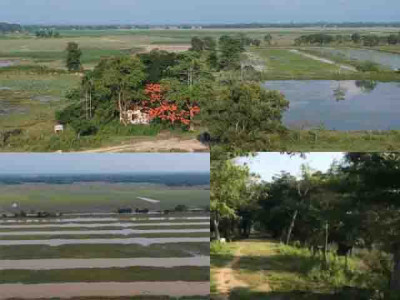
Unlike conventional zoos that rely on cages, Pohugarh was designed as a large natural enclosure where animals lived freely within forests, wetlands, and protective earthen embankments.
Originally, the site housed several wild animals, including rhinoceroses, deer, elephants, and tigers. The king intentionally created a natural landscape with seasonal water bodies, making it one of the most innovative wildlife enclosures of its time. This unique design is the main reason historians and researchers identify Pohugarh as Asia's first natural zoo.
Over the centuries, the original animals disappeared, but the ecological value of the site increased. Today, Pohugarh is a thriving natural habitat that attracts thousands of migratory birds from Central Asia, Siberia, and beyond. Species such as Siberian pelicans, glossy ibises, greylag geese, and bar-headed geese visit the site each winter, turning it into one of Assam's most popular birdwatching locations.
Located between the Joysagar Tank and the Rudrasagar Tank, about 5 kilometers from Sivasagar town, the site remains an important part of the region's cultural and ecological heritage.
Key Pointers
-
Pohugarh in Assam is considered Asia's first natural zoo.
-
Built by Ahom King Rudra Singha between 1696 and 1714.
-
Designed as an open, natural habitat instead of a traditional caged zoo.
-
Originally housed animals like rhinos, deer, elephants, and tigers.
-
Now a major birdwatching hotspot with thousands of migratory birds.
-
Located near Joysagar and Rudrasagar Tanks in Sivasagar, Assam.