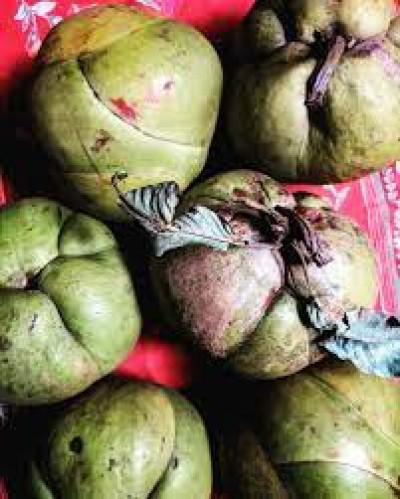
Detailed Notes
Nutritional Benefits of Outenga
-
Rich in Vitamin C: Boosts immunity and skin health.
-
Antioxidant Properties: Helps protect cells from damage.
-
Digestive Aid: Known to improve digestion and appetite.
-
Low in Calories: Ideal for healthy diets and weight management.
Cultural Importance in Assam
Outenga holds a special place in Assamese households where it is commonly used as a souring agent in curries and chutneys. Its unique flavor balances rich and spicy foods, making it a beloved ingredient in the regional cuisine.
How to Cook Outenga – Traditional Assamese Recipe
Ingredients:
-
1-2 medium-sized Outenga (elephant apples), cleaned and cut into pieces
-
1 cup fish or vegetables (optional)
-
1 medium potato or tomato (optional, diced)
-
2 tablespoons mustard oil
-
2 green chilies (slit)
-
Salt to taste
-
Water as needed
Method:
-
Heat mustard oil in a pan and sauté green chilies.
-
Add fish or vegetables and cook for a few minutes.
-
Add potatoes or tomatoes and cook until slightly tender.
-
Add Outenga pieces and salt, stir well.
-
Pour in water to cover the ingredients and simmer until the Outenga softens and flavors blend.
-
Serve hot with steamed rice for a tangy and flavorful Assamese meal.
Popular Variations
-
Outenga fish curry – a classic Assamese delicacy.
-
Outenga mixed vegetable stew – a vegetarian favorite for its tangy flavor.
Outenga is cherished for its unique taste and health benefits, making it an essential ingredient in Assam’s culinary heritage.