Detailed Notes
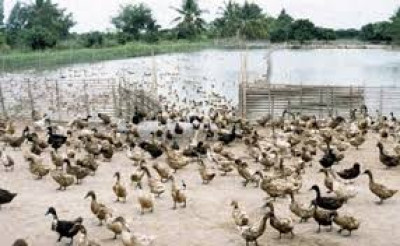
Fish Duck Integrated Farming System in Assam: Sustainable Aquaculture and Poultry Model
This farming method works on a symbiotic relationship between fish and ducks. Duck droppings act as natural manure and feed, enriching pond water with nutrients that stimulate the growth of plankton, the primary food source for many fish species. Ducks also consume insects, tadpoles, weeds, and harmful aquatic organisms, helping maintain water quality. Their constant paddling increases dissolved oxygen levels, functioning as biological aerators and improving fish health and growth rates.
One of the major advantages of this system is cost reduction. Ducks obtain nearly 50 to 75 percent of their feed naturally from the pond, and their droppings eliminate the need for external fertilizers. As a result, farmers save approximately 50 to 60 percent on feed and pond input costs while generating income from fish, duck eggs, and duck meat from the same unit area. Duck shelters are constructed on pond embankments or directly over water, making efficient use of space without requiring extra land.
Fish Species Selection
Fish species selection is critical for maximizing productivity. In this integrated system, plankton feeders should constitute 60 percent and omnivorous species 40 percent of total stocking. The recommended species combination includes:
-
Catla (20%)
-
Silver carp (20%)
-
Rohu (20%)
-
Mrigal (15%)
-
Grass carp (10%)
-
Common carp (15%)
These species are stocked at a density of 8,000 to 8,500 fingerlings per hectare, and this system is suitable for rearing ponds where fish weigh above 12 grams at stocking. Under proper management, fish production can exceed 3,500 kg per hectare annually.
Duck Selection and Management
Common duck varieties used in Assam include Nageswari, Sylhet Meat, Indian Runner, Serachameli, and Khaki Campbell. Among these, Khaki Campbell crossed with local Pati ducks performs best under Assam's climatic conditions. Ducklings should be sourced from government farms and vaccinated after veterinary consultation against diseases such as Duck Plague and Duck Cholera.
Ducks are stocked at a rate of 200 to 300 ducklings per hectare of pond area. Each duck produces approximately 45 to 55 kg of manure per year, which directly fertilizes the pond and contributes to fish nutrition. Duck droppings contain around 81 percent moisture, 0.91 percent nitrogen, and 0.38 percent phosphorus, making them highly effective as natural pond inputs. In addition, about 10 to 20 percent of duck feed is wasted, which further supplements fish food.
Duck Housing System
Duck houses are constructed on pond dikes or over the water surface using locally available materials such as bamboo, cane, and thatch. When built over water, small bamboo bridges connect the shelter to feeding and egg collection areas and allow ducks to move easily between land and water. Housing must be well ventilated, exposed to sunlight, and surrounded by fencing for protection.
Each duck requires 0.3 to 0.5 square meters of space, and the recommended ratio is one male duck for every five to six females. Ducklings under three to four weeks of age require special care due to their vulnerability to diseases.
Duck Feeding Practices
Ducks are typically fed 100 grams per bird per day using rice bran and poultry feed such as layer mash. Feed should be stored in cool and dry conditions. Adding manganese sulphate at 10 grams per 100 kg of feed improves productivity. Ducks also consume natural pond organisms such as duckweeds (Lemna, Wolfia, Azolla), tadpoles, frog juveniles, and dragonfly larvae. These natural protein-rich food sources significantly reduce feed costs and improve egg production.
Leftover duck feed and droppings together fulfill more than 59 percent of the food requirements of pond fish. In cases of excessive algal bloom, manure input should be temporarily stopped by placing plastic sheets beneath duck houses and removing accumulated droppings.
Lime Application and Pond Management
Apart from basal pond preparation, no external organic or inorganic manure is required during culture periods in this integrated system. Only lime application at 250 to 300 kg per hectare per year at suitable intervals is recommended to maintain optimal water quality.
Production and Economic Benefits
Under proper management, the Fish Duck Integrated Farming System can produce annually:
-
3,500 to 4,000 kg of fish per hectare
-
18,000 to 18,500 duck eggs
-
500 to 600 kg of duck meat
All this is achieved without supplementary fish feed or chemical fertilizers, reducing production costs by nearly 60 percent compared to conventional fish farming. This system significantly improves farm income, strengthens rural livelihoods, and supports sustainable agriculture, making it one of the most successful integrated farming models in Assam and Northeast India.