History & Traditions
Origin and Cultural Background
Assam is a land shaped by rivers, with the Brahmaputra and its countless tributaries influencing agriculture, transport, livelihood, and festivals. The tradition of boat racing emerged naturally from this riverine lifestyle. Over time, rowing contests evolved into organized festivals held during religious and seasonal celebrations, particularly after the monsoon when rivers flow at full strength.
Nao Khel is believed to be over a hundred years old in several regions, especially in parts of Lower Assam. These races were traditionally organized to mark festive occasions, honor local deities, and celebrate harvest prosperity. Even today, the festival reflects the deep emotional bond between Assamese communities and their rivers.
When and Where Boat Races Are Celebrated
Traditional boat races in Assam are commonly organized during Vijaya Dashami, Durga Puja, Krishna Janmashtami, and occasionally during Bihu celebrations. The most renowned venues include:
-
Kukurmara and Champupara on the Kolohi or Kalahi River in South Kamrup
-
Morigaon district, known for vibrant community races
-
Bajali district, especially Medhikuchi on the Pahumara River
-
Nazira area on the Dikhow River
Among these, the Kukurmara boat race has gained iconic status, drawing thousands of spectators each year and nearing its golden jubilee as one of Assam's most enduring cultural events.
The Boats and the Boatmen
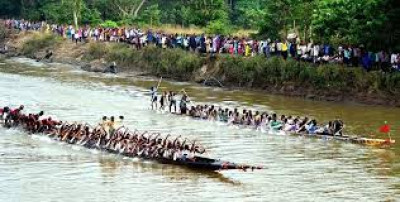
The boats used in traditional Assamese races are long, narrow, and handcrafted, designed specifically for speed and balance. Depending on the region, boats range from 50 to 100 feet in length and require immense skill to maneuver. Many boats are made using sal timber, preferred for its weight and durability, which allows smoother and faster movement through strong currents.
Each boat is powered by 40 to 70 skilled oarsmen, who row in perfect rhythm. The race is not merely about strength but about coordination, discipline, and timing. The boatmen often sing Nau Khel geet (boat race songs) while rowing, helping maintain tempo and boosting morale as the crowd cheers from the riverbanks.
The Festive Atmosphere
One of the most captivating aspects of the Traditional Boat Race Festival is its electrifying atmosphere. Riverbanks come alive with thousands of spectators, traditional music, folk songs, and festive food stalls. The air resonates with drumbeats, whistles, and collective chants as boats surge forward in tightly contested races.
In some events, as many as eight to nine boats compete simultaneously, creating a thrilling spectacle of speed and teamwork. The excitement intensifies as boats approach the finishing point, often separated by only inches.
Community Participation and Organization
Traditional boat races in Assam are entirely community-driven. Local committees, cultural groups, and volunteers work together to organize the event, raise funds, manage safety, and maintain tradition. Villages take immense pride in their teams, and participation is seen as an honor passed down through generations.
In Bajali district's Medhikuchi village, the Nouka Baich is believed to be around 121 years old, with boats covering a course of nearly 600 metres and attracting 20,000 to 50,000 spectators annually. Such events demonstrate how living traditions survive through collective effort rather than commercial promotion.
Rewards and Recognition
While the spirit of the festival lies in participation and honor, competitive rewards have become part of modern celebrations. Winning teams receive cash prizes, trophies, and widespread recognition. In some major races, winners have taken home prizes exceeding one lakh rupees, with runner-up teams also receiving substantial awards.
However, beyond monetary prizes, the true reward is prestige. Victorious teams earn admiration across districts, and their boats become symbols of excellence and teamwork.
Cultural and Tourism Significance
The Traditional Boat Race Festival plays a vital role in preserving Assam's intangible cultural heritage. It highlights indigenous boat-building skills, folk music, oral traditions, and the importance of rivers in Assamese identity.
From a tourism perspective, Nao Khel has emerged as a major cultural attraction, drawing visitors, photographers, and researchers. The visual spectacle of decorated boats racing against the backdrop of autumn skies and flowing rivers makes it one of the most picturesque festivals in Northeast India.
Why the Traditional Boat Race Festival Is Unique
What sets Assam's boat race apart is its authenticity. Unlike modern water sports, these races are not mechanized or commercialized. Every stroke of the oar reflects collective rhythm, inherited skill, and cultural memory. The festival celebrates harmony between humans and nature, reinforcing respect for rivers that sustain life in Assam.
In a rapidly modernizing world, the Traditional Boat Race Festival stands as a living reminder of how culture, sport, and community can thrive together.