History & Traditions
The name of the festival itself carries strong symbolic meaning. The word Dwisa comes from the Bodo language and means river, while Grongani in Garo means to meet. Together, Dwisa Grongani translates to where the river meets. This phrase beautifully reflects the coming together of cultures, traditions, and ways of life that define the village of Uttar Rongagora, where Bodo and Garo families have lived side by side since the settlement of the area.
Location and Natural Setting
The festival is held in Uttar Rongagora village, located near Tezpur town in Sonitpur district of Assam. The village lies in a serene rural landscape surrounded by rice fields, forest land, and rivers that flow towards the Brahmaputra valley. Its proximity to the Nameri Tiger Reserve adds to the ecological significance of the region, making Dwisa Grongani not just a cultural event but also a celebration of harmony between people and nature.
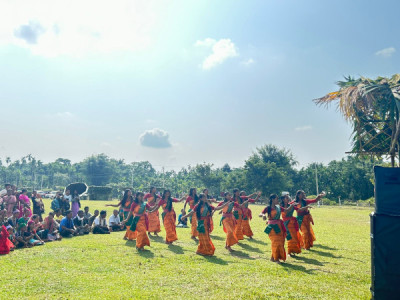
During the festival, the open grounds of the village transform into a vibrant cultural space, with performances set against golden paddy fields and forested hills. This natural backdrop makes the festival visually captivating and deeply immersive for visitors seeking authentic rural experiences.
Cultural Significance of Dwisa Grongani
Dwisa Grongani Festival is primarily a celebration of Garo culture, while also honoring Bodo traditions. It is community-led and driven by local participation, making it a true reflection of grassroots cultural expression. Traditional Garo dances form the heart of the festival, performed by young men and women dressed in traditional attire. The rhythmic movements, drum beats, and folk songs narrate stories of identity, community, and ancestral traditions.
Beyond dance and music, the festival highlights indigenous food, traditional hospitality, and age-old customs that are slowly fading in many parts of the country. Visitors are welcomed with warmth and simplicity, often offered local delicacies and traditional rice beer, which remains an integral part of tribal social life and ceremonial gatherings.
A Festival Rooted in Unity
What makes Dwisa Grongani unique among Assamese festivals is its message of unity. The festival commemorates the peaceful coexistence of Bodo and Garo communities in a single village. Rather than focusing on a single tribe, Dwisa Grongani celebrates shared spaces, shared rivers, and shared histories. It reflects how cultural boundaries dissolve in daily village life, giving rise to collective identity and mutual respect.
The festival was initiated by Erica Megam, whose vision was to preserve indigenous traditions while promoting rural tourism in an ethical and sustainable manner. Her initiative demonstrates how local leadership and cultural pride can create platforms that empower communities without commercial exploitation.
Focus on Sustainability and Rural Tourism
Dwisa Grongani Festival places strong emphasis on sustainability and eco-conscious living. Alongside cultural performances, the festival showcases traditional agricultural practices, indigenous medicinal knowledge, and locally sourced products. The event encourages visitors to understand village life beyond entertainment, highlighting the importance of forests, rivers, and farmlands in sustaining tribal communities.
As a rural tourism initiative, Dwisa Grongani offers an alternative to mainstream tourism. It attracts travelers interested in culture, photography, anthropology, and responsible travel. The intimate scale of the festival allows meaningful interaction between visitors and villagers, fostering cultural exchange rather than spectacle.
Festival Experience and Atmosphere
The festival usually takes place in November, a time when Assam experiences pleasant weather and post-harvest celebrations. Daytime events include dance performances, cultural exhibitions, and interactions with local artisans and farmers. As evening approaches, the atmosphere becomes more energetic, with music, dance, and collective celebrations extending into the night as villagers from surrounding areas join the festivities.
The simplicity of the setting, combined with the richness of cultural expression, creates an experience that feels genuine and emotionally resonant. Many visitors describe Dwisa Grongani as intimate, soulful, and deeply connected to the land and people of Assam.
Importance of Dwisa Grongani Festival
Though still in its early years, Dwisa Grongani Festival holds great cultural importance. It stands as an example of how small villages can take ownership of their heritage and present it proudly to the world. The festival strengthens community bonds, provides visibility to indigenous traditions, and creates opportunities for sustainable livelihood through tourism.
As Assam continues to modernize, festivals like Dwisa Grongani play a vital role in safeguarding cultural diversity. They remind us that progress does not require abandoning tradition, but rather nurturing it in ways that remain relevant and respectful.
Dwisa Grongani Festival is not just an event. It is a living expression of identity, unity, and cultural awakening in rural Assam.