History & Traditions
Festivals in Assam are not merely occasions of celebration; they serve as important cultural markers that bring communities together and reinforce shared traditions. Tora Chira Bihu stands out as a distinctive festival because of its rituals, beliefs, and the strong sense of unity it fosters among the Thengal Kachari people. While the broader Assamese society celebrates Bohag Bihu, Magh Bihu, and Kati Bihu, Tora Chira Bihu holds a special place as a preparatory festival that symbolizes renewal, hope, and agricultural readiness.
The festival typically begins on the second Wednesday of Chaitra, which is the last month of the Assamese calendar. This timing is significant as it aligns with the transition from the dry season to the onset of spring, a period crucial for agricultural activities. During Tora Chira Bihu, the community prepares for the upcoming farming season while also honoring their traditional practices and ancestral beliefs.
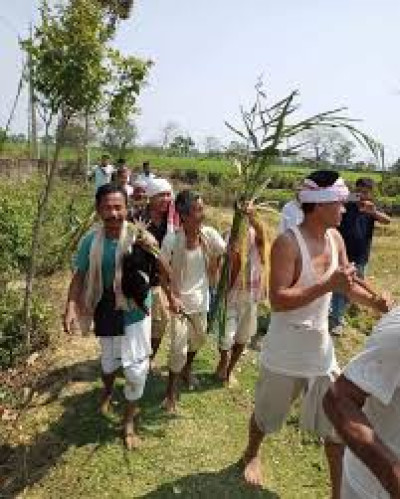
One of the most notable aspects of Tora Chira Bihu is the ritual of collecting the tora plant. Young men from the village venture into nearby forests to gather this plant, which is traditionally used to make ropes. These ropes are later used during Goru Bihu, a day dedicated to cattle during Bohag Bihu. The act of collecting tora is not just a physical task but also a spiritual one. Before entering the forest, the participants offer prayers to Bon Debota, the forest deity, seeking protection and blessings for a safe journey.
This ritual highlights the deep respect the Thengal Kachari community has for nature and supernatural forces. The belief in forest deities and spiritual guardians reflects their traditional worldview, where nature is considered sacred and interconnected with human life. Although some of these beliefs have diminished over time due to modernization, they remain an integral part of the festival's identity.
After the tora plants are collected, they are dried and processed into ropes. This activity often involves the participation of elders in the community, who guide the younger generation in the traditional methods of rope-making. This intergenerational exchange of knowledge plays a crucial role in preserving cultural heritage. It ensures that traditional skills and practices are passed down and remain relevant in contemporary times.
The festival is also marked by communal gatherings, where villagers come together to celebrate with music, dance, and traditional food. Folk songs, known as Bihu geet, are sung to express joy, gratitude, and the spirit of the festival. These songs often narrate stories of daily life, agricultural practices, and the beauty of nature, creating a vibrant cultural atmosphere.
Food is another essential element of Tora Chira Bihu. Traditional dishes and locally prepared beverages are shared among community members, strengthening social bonds and fostering a sense of belonging. The sharing of food symbolizes unity and collective celebration, which are central themes of the festival.
Over the years, Tora Chira Bihu has experienced a decline due to various factors such as urbanization, cultural assimilation, and changing lifestyles. Many traditional rituals, including certain forms of worship and community practices, have become less common. However, efforts have been made to revive and preserve this important cultural festival.
In recent times, community leaders and cultural organizations have taken initiatives to reintroduce Tora Chira Bihu as a public celebration. Events are now organized in regions such as Bihpuria in the Lakhimpur district, where people gather to celebrate and promote their heritage. These revival efforts have played a significant role in raising awareness about the festival and encouraging younger generations to reconnect with their roots.
The recognition of Tora Chira Bihu as an important cultural festival of the Thengal Kachari community has also contributed to its preservation. Institutions and councils dedicated to the welfare of the community have supported initiatives such as cultural programs, documentation, and the establishment of museums. These efforts aim to safeguard the traditions and ensure their continuity in the future.
Today, Tora Chira Bihu is not only a festival but also a symbol of cultural identity and resilience. It represents the determination of the Thengal Kachari people to preserve their traditions in the face of changing times. The festival serves as a reminder of the importance of cultural diversity and the need to protect indigenous heritage.
For visitors and cultural enthusiasts, Tora Chira Bihu offers a unique glimpse into the traditions of Assam. It provides an opportunity to experience authentic rituals, traditional music, and the warmth of community celebrations. As interest in cultural tourism grows, festivals like Tora Chira Bihu have the potential to attract attention and appreciation from a wider audience.
In conclusion, Tora Chira Bihu is a vibrant and meaningful festival that embodies the cultural richness of Assam and the traditions of the Thengal Kachari tribe. Its rituals, community involvement, and deep connection with nature make it a significant part of the region's cultural landscape. With continued efforts towards preservation and promotion, Tora Chira Bihu will continue to thrive as a symbol of heritage, unity, and tradition.
FAQs on Tora Chira Bihu
1. What is Tora Chira Bihu?
Tora Chira Bihu is a traditional pre Bihu festival celebrated by the Thengal Kachari tribe in Assam, marking the preparation for Bohag Bihu.
2. When is Tora Chira Bihu celebrated?
It is observed on the second Wednesday of the Assamese month of Chaitra.
3. Which community celebrates Tora Chira Bihu?
The festival is celebrated by the Thengal Kachari tribe of Assam.
4. What is the significance of the tora plant?
The tora plant is used to make ropes that are later used during Goru Bihu to tie cattle.
5. Why is Tora Chira Bihu important?
It symbolizes agricultural preparation, cultural identity, and community bonding.
6. What rituals are performed during the festival?
Rituals include collecting tora plants, offering prayers to forest deities, rope-making, and community celebrations.
7. Is Tora Chira Bihu still widely celebrated?
It declined over time but has been revived through community efforts and public celebrations.
8. How is Tora Chira Bihu different from Bohag Bihu?
Tora Chira Bihu is a preparatory festival, while Bohag Bihu is the main Assamese New Year celebration.
9. Where can tourists experience Tora Chira Bihu?
It is mainly celebrated in parts of Assam like Lakhimpur district, especially Bihpuria.
10. What role does the festival play in cultural preservation?
It helps preserve the traditions, rituals, and identity of the Thengal Kachari community.