History & Traditions
More than a harvest celebration, Bushu Dima reflects the social structure, traditional lifestyle, and deep-rooted cultural identity of the Dimasa people. Villages across Dima Hasao, along with Dimasa-inhabited regions of Karbi Anglong, Cachar, Nagaon, and parts of Nagaland, come alive with music, dance, feasting, and communal gatherings.
Meaning and Cultural Importance
The name Bushu Dima carries deep cultural meaning. The word Dima refers to the Dimasa people and their land, while Busu or Bishu is associated with prayer and peace. Together, the festival represents gratitude for nature's bounty and a collective prayer for harmony, prosperity, and wellbeing.
Bushu Dima is celebrated after the hard labor of farming is complete. It offers the community a much-needed pause from strenuous agricultural work and allows families to reconnect through shared meals, rituals, and cultural activities. The festival plays a crucial role in preserving traditional Dimasa food habits, weaving practices, music, and oral traditions.
Time and Duration of the Festival
Bushu Dima is generally celebrated around January 27 every year, although the duration varies from village to village depending on resources and preparation. The festival can last from three days to as long as seven days.
There are three recognized forms of Bushu Dima celebrations:
-
Busu Jidab: A three-day celebration
-
Surem Busu: A five-day celebration
-
Hangseu Busu: A grand seven-day celebration, observed less frequently due to its scale and cost
Each form follows the same spirit of celebration but differs in scale, rituals, and number of community events.
How Bushu Dima Is Celebrated
The celebration of Bushu Dima is deeply intertwined with agriculture, food, and social life. The festival begins with rituals and prayers, followed by days of feasting, singing, dancing, and merrymaking.
Food plays a central role in the festival. Families prepare dishes using newly harvested rice, along with traditional rice cakes, fish, meat, and locally brewed rice beer known as judima. Sharing food strengthens community bonds and symbolizes abundance and hospitality.
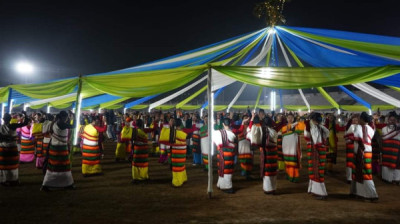
People wear colorful, handwoven Dimasa attire during the celebrations. Handwoven cloth is often gifted to relatives and friends, reinforcing traditions of craftsmanship and generosity.
Music, Dance, and Cultural Performances
One of the most captivating aspects of Bushu Dima is its music and dance. The Baidima dance, the traditional folk dance of the Dimasa Kachari tribe, is the heart of the celebration. Men, women, children, and elders participate together, reflecting unity across generations.
The dance is accompanied by traditional instruments such as the khram (drum) and the muri (fife). The rhythmic beats and melodies create an energetic atmosphere, with entire evenings dedicated to dancing and singing. The movements of Baidima are simple yet expressive, symbolizing joy, gratitude, and togetherness.
Apart from dance, folk songs narrating stories of agricultural life, ancestral traditions, and community values are performed throughout the festival.
Community Bonding and Social Unity
Bushu Dima is a powerful expression of community life. During the festival, social barriers dissolve as everyone participates equally in the celebrations. Traditional games, sports, and group activities are organized, especially for the youth.
The festival strengthens relationships among villages and Dimasa communities spread across different regions. People from neighboring districts such as Cachar, Karbi Anglong, Nagaon, and even Dimapur gather to take part in the festivities, reinforcing cultural ties.
Religious and Spiritual Elements
While Bushu Dima is largely celebratory, it also includes religious observances. Offerings are made to traditional deities, particularly Sibrai, seeking blessings for peace, prosperity, and good harvests in the coming year. These rituals are simple and community-oriented, emphasizing harmony with nature rather than elaborate ceremonies.
Bushu Dima in Modern Times
In recent years, Bushu Dima has gained wider recognition beyond Dimasa communities. Cultural organizations and tourism departments have started promoting the festival as a key cultural event of Assam. Public celebrations are held in towns like Haflong, attracting visitors, researchers, and cultural enthusiasts.
Despite modern influences, the essence of Bushu Dima remains unchanged. The festival continues to serve as a living link between the Dimasa people and their ancestral traditions, ensuring cultural continuity for future generations.
Importance of Bushu Dima Today
Bushu Dima stands as a reminder of sustainable living, respect for nature, and the importance of community cooperation. In a rapidly changing world, the festival preserves traditional knowledge related to agriculture, food, music, and social harmony.
For visitors, Bushu Dima offers an authentic cultural experience that showcases the vibrant heritage of the Dimasa tribe. It is not just a festival but a celebration of identity, resilience, and collective joy.