History & Traditions
Unlike many other festivals that involve ritualistic worship, Hacha Kekan is largely secular in nature. It focuses on celebration rather than propitiation of deities, setting it apart from festivals like Rongker. The spirit of Hacha Kekan lies in shared happiness, cultural expression, and remembrance of traditional agricultural practices passed down through generations.
Significance of Hacha Kekan in Karbi Culture
Agriculture forms the backbone of Karbi society. Hacha Kekan symbolizes thanksgiving for a successful harvest and hope for continued prosperity in the coming agricultural cycle. Once crops are harvested and stored, families and villages come together to celebrate the fruits of their labor.
The festival reinforces values of unity, cooperation, and sustainability. It is also an occasion to honor the traditional knowledge of farming, land selection, sowing, guarding crops, and harvesting methods practiced by Karbi ancestors. Through songs and dances, the community narrates each stage of rice cultivation, preserving these memories in cultural form.
Time and Places of Celebration
Hacha Kekan is usually celebrated from January 14 onwards and continues until the end of the month. In recent years, large-scale celebrations have taken place at venues such as Taralangso and the Karbi Peoples Hall in Diphu, along with numerous village-level observances across Karbi Anglong.
The Karbi Anglong Autonomous Council has officially declared January 14 as a local holiday in recognition of the festival's cultural importance. Community leaders, cultural organizations, and elders actively participate in organizing the celebrations.
Traditional Hacha Dance and Songs
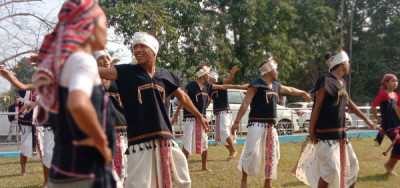
The highlight of the Hacha Kekan Festival is the Hacha dance, a traditional song-and-dance form of the Karbis. The dance is primarily performed by men and is characterized by simple yet rhythmic body movements. The accompanying song includes a repeated chant sung in unison by all performers, creating a powerful collective rhythm.
At the end of each stanza, dancers chant phrases that echo across the gathering, energizing both performers and spectators. The lyrics of the songs describe various stages of rice cultivation, from land preparation to harvest, making the dance a living narrative of agricultural life.
In Karbi tradition, the term Hacha is used broadly to denote male dances, highlighting the dance's cultural depth and importance.
Community Participation and Youth Involvement
Historically, Hacha Kekan was closely linked with youth participation in agricultural activities. In earlier times, unmarried boys and girls formed groups known as Jir-Kedam to jointly undertake paddy cultivation. They built temporary camps called Terank, where they stayed throughout the agricultural cycle.
These youth groups selected farmland, sowed seeds, guarded crops, and worked together until harvest. The festival commemorates this collective effort and reinforces the importance of teamwork and shared responsibility. Even today, young boys and girls participate in the celebrations dressed in traditional attire, carrying farming tools and materials used in cultivation.
Cultural Identity and Secular Nature
Unlike many Karbi festivals that involve ritual worship, Hacha Kekan is not associated with appeasing any god. It is free from fear elements or ritual obligations, making it secular in character. This distinguishes it from festivals like Rongker, which require ceremonial offerings.
The secular nature of Hacha Kekan allows open participation from all community members and visitors. It emphasizes joy, social harmony, and cultural pride rather than religious formality.
Relationship with Karbi Social Traditions
While Hacha Kekan is a celebration of joy, Karbi society also observes elaborate ceremonies such as Chomangkan, the post-cremation death ceremony. Though different in nature, both events highlight strong community participation and the symbolic importance of unity.
Symbols like the Jambili Athon, representing clan unity, remind participants of shared identity and collective responsibility. Even in celebratory festivals like Hacha Kekan, the underlying values of kinship and solidarity remain central.
Modern Observance and Cultural Preservation
In contemporary times, organizations such as the Karbi Cultural Society have played a key role in preserving and promoting Hacha Kekan. Public celebrations now include cultural programs, speeches, and performances that introduce the festival to wider audiences.
Community leaders often use the occasion to highlight the importance of preserving Karbi language, dance, music, and traditional knowledge. Greetings and messages are exchanged, reinforcing cultural pride among younger generations.
Importance of Hacha Kekan Today
Hacha Kekan remains a powerful symbol of sustainable living and respect for nature. At a time when traditional agricultural knowledge is rapidly disappearing, the festival serves as a reminder of harmonious coexistence with the environment.
For visitors and cultural enthusiasts, Hacha Kekan offers an authentic glimpse into Karbi life, values, and traditions. It stands as a vibrant example of Assam's rich cultural diversity and living heritage