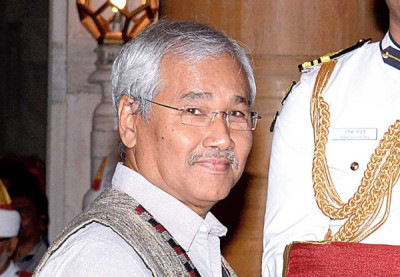
Life & Legacy
After completing his early education in Assam, he pursued a B.Sc from B. Barooah College, Guwahati, and later enrolled in the Film and Television Institute of India (FTII), Pune, to specialise in film direction. This formal training laid the foundation for his journey as one of India's most respected filmmakers.
Jahnu Barua began his career in Mumbai as an assistant director before joining the Indian Space Research Organisation (ISRO), where he produced educational programmes under the Satellite Instructional Television Experiment (SITE). His deep interest in social issues and human relationships inspired him to create meaningful stories that emotionally connect with audiences. He made his directorial debut with the Assamese feature film Aparoopa in 1982, produced by NFDC. The film received widespread appreciation and marked the beginning of his influential career.
Over the decades, Jahnu Barua directed several acclaimed Assamese and Hindi films such as Papori, Firingoti, Halodhia Choraye Baodhan Khai, Konikar Ramdhenu, Pokhi, Bonani, Hkhagoroloi Bohu Door, Baandhon, Ajeyo and Bhoga Khirikee. His Hindi film Maine Gandhi Ko Nahin Mara (2005) earned national and international recognition for its powerful portrayal of Gandhian principles and psychological drama. Barua stands out as a filmmaker who consistently focuses on human values, socio-political issues, and the emotional depth of everyday life.
His film Halodhia Choraye Baodhan Khai brought immense fame to Assamese cinema by winning the National Award for Best Film (Golden Lotus) in 1988 along with multiple international honours. Another landmark film, Hkhagoroloi Bohu Door, won the National Award for Best Director in 1995 and earned more than 15 international awards, including the World Peace Prize at the Chicago International Film Festival and Best Director at the Brussels Independent Film Festival.
Jahnu Barua has contributed extensively to national cinema institutions including NFDC, FTII, SRFTI, NFAI, CFSI and the Directorate of Film Festivals. He has represented Indian cinema at more than 40 international film festivals and has often served as jury member and chairperson for major film events in India and abroad.
Recognised as a pioneer of Assamese cinema, Jahnu Barua has been honoured with some of the highest awards in India. He received the Padma Shri in 2003 and the Padma Bhushan in 2015 for his outstanding contribution to Indian cinema. With nine National Film Awards and multiple global recognitions, his work continues to inspire young filmmakers across India. Jahnu Barua remains one of the strongest creative voices from Assam, dedicating his career to showcasing the region's culture, struggles and stories on the world stage.
Filmography of Jahnu Barua
| Year | Title | English Title | Language | Director | Producer | Writer | Editor |
|---|---|---|---|---|---|---|---|
| 1982 | Aparoopa | Aparoopa | Assamese | Yes | Yes | Yes | Yes |
| 1984 | Apeksha (Hindi version of Aparoopa) | Expectation | Hindi | Yes | Yes | Yes | Yes |
| 1986 | Papori | – | Assamese | Yes | Yes | Yes | Yes |
| 1987 | Halodhia Choraye Baodhan Khai | Catastrophe | Assamese | Yes | Yes | Yes | Yes |
| 1990 | Bonani | Forest | Assamese | Yes | – | – | Yes |
| 1992 | Firingoti | Spark | Assamese | Yes | Yes | Yes | Yes |
| 1995 | Hkhagoroloi Bohu Door | It is a Long Way to the Sea | Assamese | Yes | Yes | Yes | Yes |
| 1998 | Kuhkhal | Price of Freedom | Assamese | Yes | Yes | Yes | Yes |
| 2000 | Pokhi | And the River Flows | Assamese | Yes | Yes | Yes | Yes |
| 2003 | Konikar Ramdhenu | Ride on the Rainbow | Assamese | Yes | Yes | Yes | Yes |
| 2004 | Tora | Toras Love | Assamese | Yes | – | Yes | Yes |
| 2005 | Maine Gandhi Ko Nahin Mara | I Did Not Kill Gandhi | Hindi | Yes | – | Yes | – |
| 2010 | Mumbai Cutting (Anjane Dost) | – | Hindi | Yes | – | – | – |
| 2012 | Baandhon | Waves of Silence | Assamese | Yes | – | Yes | Yes |
| 2014 | Ajeyo | Invincible | Assamese | Yes | – | Yes | Yes |
| 2018 | Bhoga Khirikee | Broken Window | Assamese | Yes | – | Yes | Yes |
Awards Received by Jahnu Barua
| Award / Prize | Year | Category / Film |
|---|---|---|
| Padma Shri | 2003 | Contribution to Indian Cinema |
| Padma Bhushan | 2015 | Contribution to Indian Cinema |
| National Film Award | 2013 | Best Feature Film in Assamese – Ajeyo |
| National Film Award | 2012 | Best Feature Film in Assamese – Baandhon |
| National Film Award | 2003 | Best Regional Film – Konikar Ramdhenu |
| National Film Award | 2003 | Best Children's Film – Tora |
| National Film Award | 1999 | Best Regional Film – Pokhi |
| National Film Award | 1998 | Best Regional Film – Kuhkhal |
| National Film Award | 1995 | Best Director – Hkhagoroloi Bohu Door |
| National Film Award | 1995 | Best Regional Film – Hkhagoroloi Bohu Door |
| National Film Award | 1992 | Second Best Feature Film – Firingoti |
| National Film Award | 1990 | Best Film on Environment – Bonani |
| National Film Award | 1987 | Best Film – Halodhia Choraye Baodhan Khai |
| National Film Award | 1983 | Best Regional Film – Aparoopa |
| Getz World Peace Prize (Chicago International Film Festival) | 2005 | Hkhagoroloi Bohu Door |
| Best Director (Brussels International Independent Film Festival) | 1996 | Hkhagoroloi Bohu Door |
| Kodak Vision Award (Fukuoka International Film Festival) | 2006 | Maine Gandhi Ko Nahin Mara |
| Audience Award (Fribourg Film Festival) | 1996 | Hkhagoroloi Bohu Door |
| Pestalozzi Children Village Foundation Award (Fribourg) | 1996 | Hkhagoroloi Bohu Door |
| Prize of the Ecumenical Jury – Special Mention (Locarno) | 1988 | Halodhia Choraye Baodhan Khai |
| Silver Leopard (Locarno International Film Festival) | 1988 | Halodhia Choraye Baodhan Khai |
| International Fipresci Award (Singapore International Film Festival) | 1996 | Hkhagoroloi Bohu Door |
| International Fipresci Award (Mumbai International Film Festival) | 2005 | Maine Gandhi Ko Nahin Mara |
| Bhupen Hazarika National Award (Sarhad NGO) | 2012 | First Recipient |