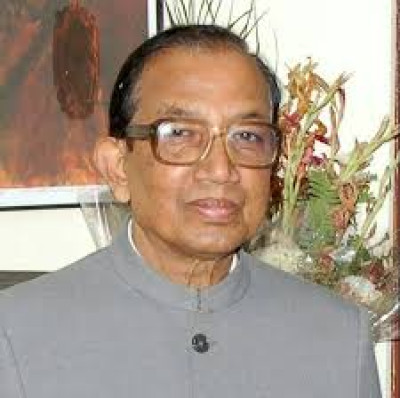
Life & Legacy
Nagen Saikia – A Timeless Pillar of Assamese Literature and Intellectual Thought
Born on 11 February 1939 in Hatiakhowa village of Golaghat district, Nagen Saikia grew up in an intellectually nurturing environment that shaped his early interest in language and literature. From a young age, he displayed exceptional academic brilliance, which later translated into a remarkable career spanning several decades. His journey from a rural background to becoming a nationally recognized literary authority is a source of inspiration for generations of students, writers, and researchers across Assam and India.
Academic Excellence and Teaching Career
Education played a central role in shaping Nagen Saikia intellectual outlook. After completing his early schooling in Assam, he pursued higher education in Assamese literature and went on to earn his postgraduate degree with distinction. His academic journey culminated in a doctoral degree from Dibrugarh University, where his research focused on the social and intellectual foundations of modern Assamese literature.
Nagen Saikia began his professional career as a teacher and gradually rose to become a professor at Dibrugarh University. His classroom teaching was widely admired for its clarity, depth, and ability to connect literary theory with social realities. Students remember him not only as a teacher but as a mentor who encouraged critical thinking, originality, and cultural awareness. His long association with Dibrugarh University helped establish it as a significant center for Assamese literary studies.
Literary Contributions Across Multiple Genres
What truly distinguishes Nagen Saikia among famous Assamese writers is the extraordinary range of his literary work. He is not confined to a single genre but has excelled as a poet, short story writer, novelist, essayist, critic, researcher, biographer, autobiographer, and travelogue writer. His writings reflect a deep understanding of human psychology, social change, cultural identity, and historical continuity.
His short stories are particularly celebrated for their realism, emotional depth, and subtle narrative style. Through ordinary characters and everyday situations, he explores complex themes such as alienation, memory, morality, and social transformation. One of his most acclaimed works earned him the prestigious Sahitya Akademi Award, firmly establishing his position at the national level.
As a novelist, Nagen Saikia brought intellectual seriousness and stylistic innovation to Assamese fiction. His novels combine strong narrative structure with philosophical reflection, making them relevant both as literary works and as social documents. His travel writings offer insightful observations on cultures and societies beyond Assam, while still maintaining a distinctly Assamese perspective.
Pioneer of Literary Editing in Assamese Language
An often underappreciated but highly significant contribution of Nagen Saikia is his pioneering role in literary editing. He systematized and professionalized book editing in Assamese literature, treating it as a serious scholarly discipline rather than a mechanical task. Over the years, he edited dozens of important literary works, critical editions, and anthologies that have become essential reading for students and scholars.
Through his editorial work, he preserved rare texts, refined linguistic standards, and provided historical context that enriched readers understanding. This contribution alone places him among the most important cultural custodians of Assam.
Research, Criticism, and Intellectual Leadership
Nagen Saikia research writings have played a crucial role in shaping modern Assamese literary criticism. His analytical works examine language evolution, literary movements, comparative literature, and research methodology in Assamese. He successfully bridged traditional literary scholarship with modern academic frameworks, making complex ideas accessible without compromising intellectual rigor.
His essays and critical studies are frequently cited in universities and research institutions. By emphasizing methodical research and disciplined inquiry, he helped elevate Assamese literature to global academic standards.
Role in Journalism and Public Discourse
Beyond academia, Nagen Saikia made meaningful contributions to Assamese journalism. As an editor of leading Assamese newspapers, he upheld ethical journalism, intellectual honesty, and cultural responsibility. His editorials reflected balanced reasoning and a deep concern for society, democracy, and cultural identity.
Through newspapers and public lectures, he emerged as an opinion maker whose views were respected across ideological boundaries. His ability to communicate scholarly ideas to the general public strengthened the bond between literature and society.
Parliamentary Service and Cultural Administration
Nagen Saikia also served the nation as a Member of the Rajya Sabha, representing Assam at the highest legislative level. During his tenure, he contributed thoughtfully to parliamentary debates, particularly on issues related to education, language, and culture. His appointment as Vice Chairman of the Rajya Sabha further testified to his integrity, intellect, and leadership.
In addition, he held numerous positions in cultural organizations, literary committees, and academic boards. His involvement with institutions like Asam Sahitya Sabha and Sahitya Akademi helped shape language policy, literary recognition, and cultural planning in Assam.
Awards, Honors, and National Recognition
Over the decades, Nagen Saikia has received numerous awards for his outstanding contributions. These honors reflect not only his literary excellence but also his lifelong commitment to education, culture, and public service. From prestigious literary awards to lifetime achievement recognitions, each honor acknowledges his enduring influence on Assamese intellectual life.
Universities have conferred honorary degrees on him, and literary bodies have recognized him as a guiding force for future generations. Such recognition places him among the most decorated and respected cultural figures of Assam.
Amongst his vast and diverse literary contributions, several works by Nagen Saikia stand out for their scholarly depth, editorial excellence, and lasting impact on Assamese literature. Titles such as 'Axomiya Lipi Xomoshya' (1975) and 'Adhyan Chakra' (1976) reflect his deep engagement with linguistic issues and critical thought, while 'Abhinay Xekh Khel' (1985) showcases his creative sensitivity towards literary expression. His editorial mastery is clearly evident in important compilations like 'Axomiya Golpo Koumudy' (2005), 'Adhunik Axomiya Kobita-Manjuri' (1985), 'Chandradhar Baruahar Gronthawali' (1975), 'Bezbaruahar Rachanawali' (2010), and 'Benudhar Sarma Rachanawali' (2014), which have played a crucial role in preserving and systematizing Assamese literary heritage. Works such as 'Jonaki' (2001), 'Jotayu' (2003), 'Aaxam Bondhu' (1984), and 'Prachi' (1997) highlight his contribution to literary criticism and cultural discourse, while 'Xeujiya Pator Maje Maje' (1956) reflects his early literary sensibility. His English work 'Assam and the Assamese Mind' (1980) remains an important text for understanding the intellectual and cultural identity of Assam. Collectively, these notable works establish Nagen Saikia as a versatile scholar, editor, and writer whose contributions continue to shape modern Assamese literature.
Legacy and Influence
The legacy of Nagen Saikia extends far beyond his books and academic titles. He represents a tradition of scholarship rooted in humility, discipline, and social responsibility. His life demonstrates how literature can serve as a bridge between the past and the present, between knowledge and humanity.
Today, Nagen Saikia remains a symbol of Assamese cultural pride. His works continue to inspire students, researchers, writers, and readers who seek depth, clarity, and authenticity in literature. Among the famous people of Assam, his name stands as a beacon of intellectual excellence and cultural dedication.
FAQs on Nagen Saikia
1. Who is Nagen Saikia?
Nagen Saikia is a renowned Assamese writer, scholar, academician, and former Rajya Sabha member from Assam.
2. Why is Nagen Saikia famous in Assam?
He is famous for his immense contribution to Assamese literature as a writer, editor, researcher, and cultural leader.
3. What are the major works of Nagen Saikia?
His major works include short stories, novels, literary criticism, research books, and edited volumes in Assamese literature.
4. Has Nagen Saikia won the Sahitya Akademi Award?
Yes, he received the Sahitya Akademi Award for his outstanding contribution to Assamese literature.
5. Was Nagen Saikia a professor?
Yes, he served as a professor at Dibrugarh University and played a key role in Assamese literary studies.
6. Did Nagen Saikia serve in the Rajya Sabha?
Yes, he was a Member of the Rajya Sabha and later served as its Vice Chairman.
7. What is Nagen Saikia contribution to Assamese editing?
He systematized and professionalized book editing in Assamese literature and edited numerous important works.
8. Where was Nagen Saikia born?
He was born in Hatiakhowa village in Golaghat district of Assam.
9. What genres did Nagen Saikia write in?
He wrote poetry, short stories, novels, essays, travelogues, biographies, and research literature.
10. Why is Nagen Saikia important to Assamese culture?
He preserved, enriched, and modernized Assamese literature while guiding future generations through scholarship and leadership.