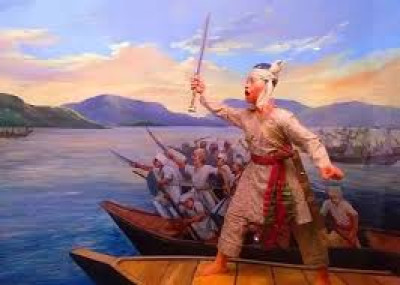
Life & Legacy
Momai Tamuli Borbarua: The Visionary Who Shaped Medieval Assam
Born around 1590, Momai Tamuli Borbarua lived during a crucial phase of Ahom history when the kingdom faced continuous pressure from Mughal expansion as well as internal challenges of governance. His contributions went far beyond battlefield victories. He reorganized the administration, systemized labor management, strengthened village economies, and shaped diplomatic relations that ensured Assam retained its sovereignty for decades.
Early Life and Humble Origins
Unlike many nobles of his time, Momai Tamuli Borbarua did not belong to a powerful aristocratic lineage. He was born into an ordinary family in the region around Garhgaon, the Ahom capital. His early life was marked by simplicity and hard labor. Historical traditions recall that he worked as a gardener and agricultural laborer, performing tasks that were far removed from royal courts and military councils.
It was this dedication to work and exceptional discipline that caught the attention of Ahom king Pratap Singha. The king, known for recognizing talent beyond birth, observed Momai Tamuli's efficiency, intelligence, and organizational skill. These qualities would soon propel him from obscurity into positions of increasing responsibility within the Ahom administration.
Rise Through Royal Service
Momai Tamuli Borbarua's rise was gradual but steady. He was first entrusted with minor administrative duties, including responsibilities related to royal gardens and resource management. His success in managing manpower and resources efficiently led to further promotions.
Eventually, during the reign of Swargadeo Pratap Singha, a new and powerful office was created to strengthen centralized administration and military command. Momai Tamuli was appointed as the first Borbarua, making him one of the most powerful officials in the Ahom kingdom. The office combined executive authority, judicial responsibility, and military leadership, reflecting the king's deep trust in his abilities.
Architect of the Paik System
One of the greatest achievements of Momai Tamuli Borbarua was the systematic organization of the Paik system. This system formed the backbone of the Ahom state machinery. Under this framework, every able-bodied adult male within a defined age group was required to render service to the state.
Momai Tamuli transformed the Paik system from a loosely organized labor structure into a disciplined administrative network. He classified paiks into groups, assigned clear duties, and ensured accountability at every level. Officials such as Bora, Saikia, Hazarika, Barua, Rajkhowa, and Phukan were placed in a hierarchical structure, each responsible for managing a fixed number of paiks.
This reform ensured that the state had access to manpower for agriculture, military campaigns, infrastructure development, and royal service without overburdening any single group. It also created a sense of shared responsibility among the population, strengthening loyalty to the Ahom state.
Strengthening Village Economy and Self-Reliance
Beyond administration and warfare, Momai Tamuli Borbarua focused heavily on rural development. He believed that a strong kingdom depended on economically independent villages. Under his guidance, villages were reorganized into manageable administrative units, making governance more efficient.
One of his most lasting contributions was the encouragement of household industries. Spinning and weaving were promoted as essential domestic skills, particularly among women. This policy helped make Assamese households largely self-sufficient in clothing and textiles. Over time, weaving became an integral part of Assamese culture, a tradition that continues even today.
Villages were also structured to include artisans, priests, and service providers so that daily needs could be met locally. This reduced dependence on external markets and strengthened economic resilience, especially during periods of war or political instability.
Military Leadership and Mughal Conflicts
Momai Tamuli Borbarua played a decisive role in defending Assam against Mughal expansion. As commander-in-chief of the Ahom forces, he led military operations during critical confrontations in the early seventeenth century.
In 1638, Ahom forces under his command inflicted a significant setback on Mughal armies, forcing them to retreat from strategic locations. These victories were not just military successes but morale-boosting events that reaffirmed Ahom sovereignty over Assam.
Realizing the cost of prolonged warfare, Momai Tamuli also demonstrated diplomatic wisdom. In 1639, he negotiated the Treaty of Asurar Ali with Mughal commander Allah Yar Khan. This treaty clearly defined territorial boundaries and ushered in a period of relative peace, allowing the Ahom kingdom to recover resources and strengthen internal administration.
Diplomatic Skill and Firm Governance
Following the death of Pratap Singha, Momai Tamuli Borbarua effectively managed state affairs during a politically sensitive period. He maintained firm control over diplomatic interactions with Mughal officials, consistently prioritizing Ahom sovereignty.
He refused trade conventions that could compromise independence and took strict action against unauthorized Mughal incursions into Ahom territory. His decisive responses sent a clear message that Assam would not tolerate violations of its borders or authority.
Family Legacy and Historical Importance
Momai Tamuli Borbarua was also the father of Lachit Borphukan, the legendary Ahom general who later defeated the Mughals at the Battle of Saraighat. The values of discipline, courage, and service to the state that Momai Tamuli embodied were clearly passed on to his children.
He passed away in 1663, leaving behind a legacy that shaped Assam for generations. His administrative reforms, economic policies, and diplomatic foresight ensured stability during one of the most challenging periods in Assamese history.
Enduring Legacy
Today, Momai Tamuli Borbarua is remembered not just as a powerful official but as the architect of a sustainable governance model. His life demonstrates that leadership rooted in merit, discipline, and vision can transform societies. In the history of Assam, his name stands alongside the greatest architects of the Ahom kingdom.
FAQs on Momai Tamuli Borbarua
1. Who was Momai Tamuli Borbarua?
Momai Tamuli Borbarua was a renowned Ahom administrator, military commander, and statesman of Assam. He was the first person to hold the office of Borbarua and played a key role in strengthening the Ahom kingdom through administrative reforms and military leadership.
2. Why is Momai Tamuli Borbarua famous in Assam history?
Momai Tamuli Borbarua is famous for systemizing the Paik system, strengthening village economies, leading Ahom forces against the Mughals, and shaping the administrative structure of medieval Assam. He is also known as the father of Lachit Borphukan.
3. What was the Paik system introduced by Momai Tamuli Borbarua?
The Paik system was a compulsory state service system where adult males provided labor or military service to the Ahom kingdom. Momai Tamuli Borbarua organized this system efficiently, making it the backbone of Assam's administration and economy.
4. Was Momai Tamuli Borbarua related to Lachit Borphukan?
Yes, Momai Tamuli Borbarua was the father of Lachit Borphukan, the legendary Ahom general who led Assam to victory against the Mughals in the Battle of Saraighat.
5. How did Momai Tamuli Borbarua rise to power?
Momai Tamuli Borbarua rose from humble beginnings and initially worked in royal service. His dedication, discipline, and administrative skill impressed Ahom king Pratap Singha, who gradually promoted him to higher offices before appointing him as the first Borbarua.
6. What role did Momai Tamuli Borbarua play in Ahom Mughal relations?
Momai Tamuli Borbarua played a crucial diplomatic and military role in Ahom Mughal relations. He led Ahom forces during conflicts and negotiated the Treaty of Asurar Ali in 1639, which defined boundaries and brought temporary peace between the two powers.
7. What were Momai Tamuli Borbarua's contributions to village economy?
He reorganized villages into administrative units, promoted self-sufficiency, and encouraged household industries such as weaving and spinning. These measures strengthened rural Assam and reduced economic dependency.
8. When did Momai Tamuli Borbarua die?
Momai Tamuli Borbarua died in the year 1663 after a long career of service to the Ahom kingdom and Assam.
9. What was the role of the Borbarua in the Ahom administration?
The Borbarua was a powerful administrative and military office combining executive authority, judicial responsibilities, and command over armed forces. As the first Borbarua, Momai Tamuli defined the importance and scope of this position.
10. Why is Momai Tamuli Borbarua still remembered today?
He is remembered for his visionary governance, strong administrative reforms, defense of Assam's sovereignty, and for laying the foundation of systems that shaped Assamese society for generations.