Detailed Narrative
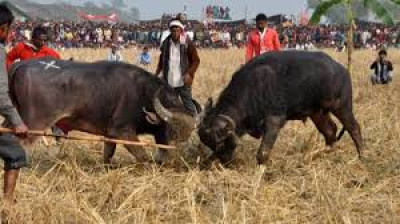
The event usually takes place in open harvested paddy fields where male buffaloes, strengthened by post-harvest grazing, are brought together in controlled pairings. Owners carefully prepare and train their animals before the contests, ensuring discipline and safety throughout the event. The buffaloes lock horns naturally, displaying power, stamina, and dominance, while large crowds gather to witness the contest as part of the Magh Bihu celebrations.

Historically, Moh Juj traces its origins to the Ahom period, when it received royal patronage from King Rudra Singha in the early 18th century. Over time, the sport became especially popular in regions like Ahatguri and Baidyabori in Morigaon district, where organized contests continue to attract thousands of spectators. These events are not gambling competitions but community gatherings that promote social bonding, entertainment, and seasonal joy after months of agricultural labor.

Two main types of buffalo are commonly seen in Moh Juj. Assamese buffaloes, known for their broad foreheads and wide horns, engage in shorter head-to-head clashes. Adrangi or mixed-breed buffaloes, on the other hand, display greater endurance and often compete in longer bouts, sometimes referred to locally as Caap Juj. Once defeated, a buffalo typically avoids further confrontation, reflecting the natural order within herds.

In modern times, Moh Juj has faced legal challenges due to concerns over animal welfare and cruelty. National bans on animal fights temporarily restricted the practice, leading to debates between cultural preservation and ethical responsibility. However, local administrations and community groups have worked toward organizing these events under strict supervision, medical checks, and safety guidelines to balance tradition with humane treatment.
Today, Moh Juj remains one of the most distinctive expressions of Assamese folk culture. Beyond the physical contest, it symbolizes bravery, resilience, unity, and celebration of rural life. The tradition continues to thrive as a powerful reminder of Assam's agrarian heritage and the enduring connection between people, festivals, and nature.
FAQs on Moh Juj
1. What is Moh Juj in Assamese culture?
Moh Juj is a traditional buffalo fight held during Magh Bihu in Assam, symbolizing strength, celebration, and rural heritage.
2. When is Moh Juj celebrated?
Moh Juj takes place every year in mid-January during the harvest festival of Magh Bihu or Bhogali Bihu.
3. Where is Moh Juj most popular in Assam?
The tradition is especially famous in regions like Ahatguri and Baidyabori in the Morigaon district.
4. Why is Moh Juj important to Assamese people?
It represents community bonding, bravery, post-harvest celebration, and preservation of indigenous traditions.
5. What does Moh Juj mean?
In Assamese, Moh means buffalo and Juj means fight.
6. Are buffaloes harmed during Moh Juj?
Modern events follow safety guidelines, veterinary checks, and supervision to minimize risk and ensure animal welfare.
7. What types of buffaloes take part in Moh Juj?
Assamese buffaloes and Adrangi or mixed-breed buffaloes commonly participate in these contests.
8. Is Moh Juj legal in India?
The tradition has faced legal restrictions due to animal welfare laws, but some events occur under regulated conditions and local permissions.
9. How is Moh Juj different from other animal sports?
Unlike commercial animal sports, Moh Juj is a community festival activity focused on tradition, not competition or betting.
10. What festival is Moh Juj associated with?
Moh Juj is closely linked with Magh Bihu, the Assamese harvest festival celebrating abundance and togetherness.