Introduction: The Mystery Beneath Talatal Ghar
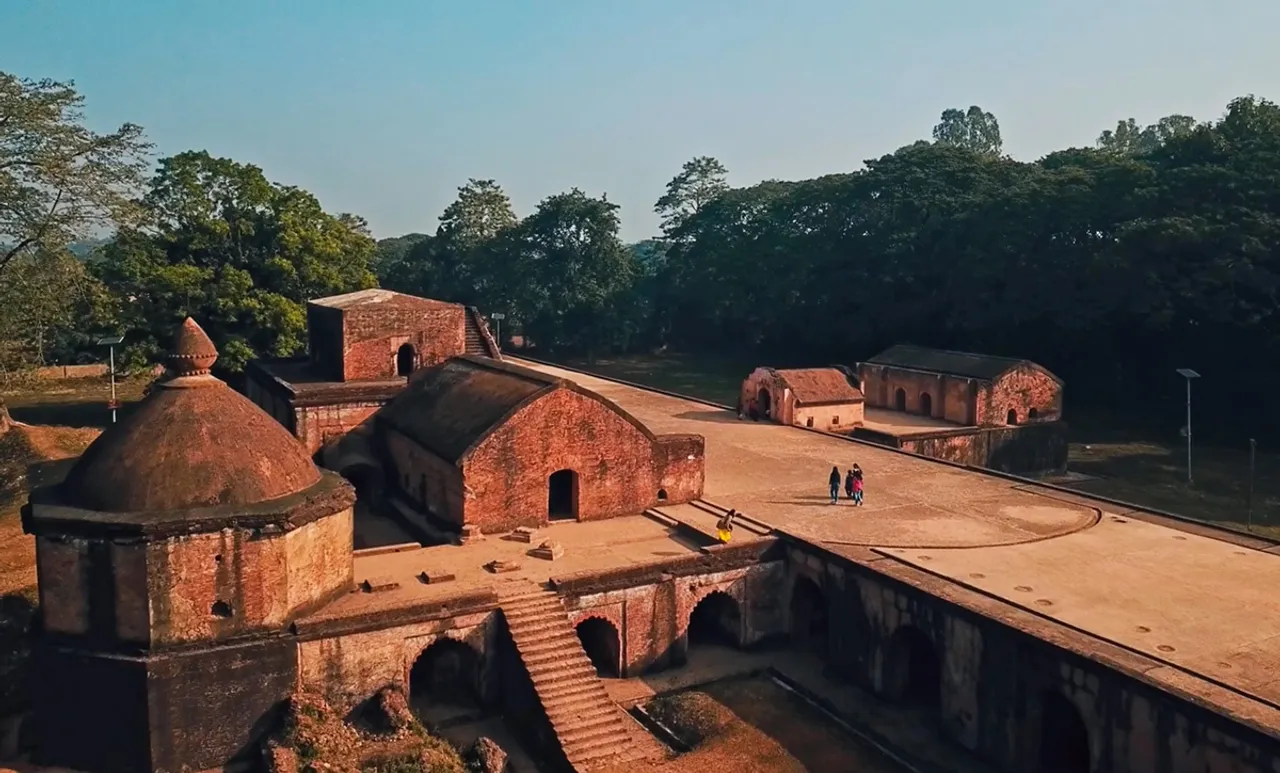
In the historic town of Sivasagar, Assam stands Talatal Ghar, one of the grandest surviving monuments of the Ahom dynasty. Built in 1765 by Swargadeo Rajeswar Singha, this seven-storied structure was not merely a royal residence but a fortified military base designed with strategic precision.
While visitors admire its visible upper floors, the true intrigue of Talatal Ghar lies underground, where secret passages and hidden chambers reflect the military intelligence of a kingdom that ruled Assam for nearly 600 years from 1228 to 1826.
Historical Background of Talatal Ghar
The Ahom capital was shifted from Garhgaon to Rangpur in 1707 by King Rudra Singha. To design the new capital, architect Ghanashyam from Cooch Behar was invited. Talatal Ghar formed a central part of this newly planned administrative and military complex.
Originally constructed using semi-permanent materials like timber and wood, the palace was later extensively rebuilt in brick by Rajeswar Singha in 1765. Over time, the upper portions suffered damage during the Moamoria rebellion, Burmese invasions, and later British occupation.
Despite these destructions, Talatal Ghar remains one of the largest and most elaborate Tai-Ahom monuments.
Architectural Structure: Seven Levels of Strategy
Talatal Ghar is a seven-storied palace divided into two main sections:
-
The three underground levels known as Talatal Ghar.
-
The four above-ground levels known as Kareng Ghar.
Underground Military Zone
The subterranean floors functioned primarily as military areas. These levels were used for:
-
Strategic planning
-
Secure storage
-
Defensive operations
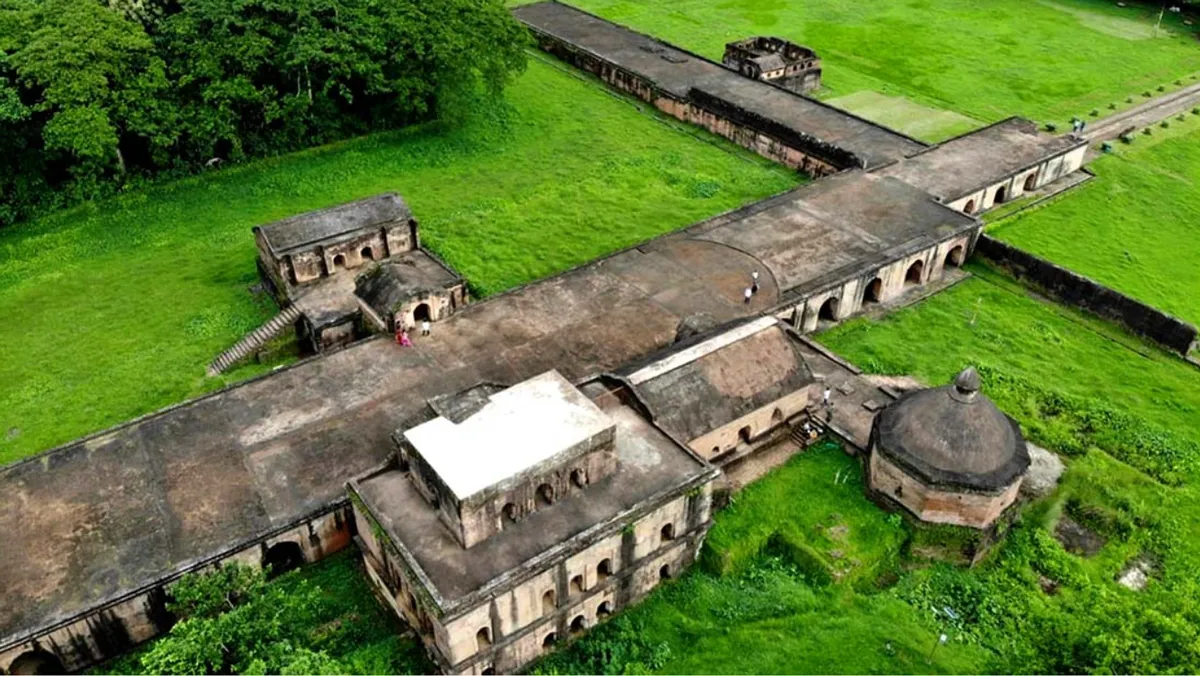
The ground floor contained horse stables, military storehouses, warehouses, guards' quarters known as chantri-chaudang, and rooms for attendants called ligiris. A long east-west corridor connects multiple chambers across this level.
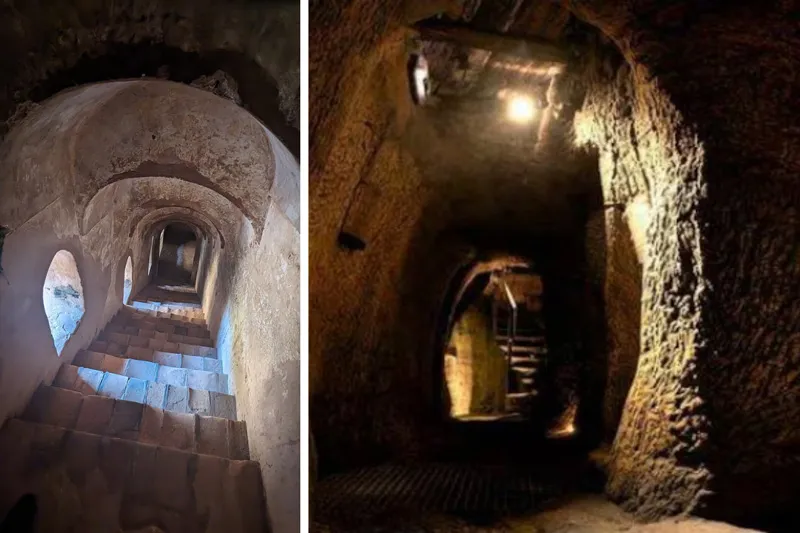
The Legendary Secret Tunnels
The most fascinating aspect of Talatal Ghar is its underground escape system.
According to historical accounts and local tradition, two major tunnels were constructed:
1. The 3 km Tunnel to the Dikhow River
This passage reportedly connected the palace to the Dikhow River, enabling water-based escape during enemy attacks.
2. The 16 km Tunnel to Garhgaon Palace
The longer tunnel is believed to have linked Talatal Ghar to the Garhgaon Palace, ensuring safe movement of royalty in times of invasion.
These passages were designed in a maze-like pattern to confuse intruders. Stories suggest that some individuals lost their way permanently inside these chambers. Due to safety concerns and structural risks, the British administration later sealed the underground entrances.
Although modern surveys have not fully confirmed the complete extent of these tunnels, their legend continues to shape the monument's identity.
2015 Ground Penetrating Radar Survey
In 2015, a Ground Penetrating Radar survey was conducted by IIT Kanpur in collaboration with the Archaeological Survey of India, Guwahati Circle.
The survey indicated possible underground structures located between 1.9 and 4 meters beneath the garden area toward the monument's left side. Researchers speculated that this could represent a double foundation system, potentially designed to withstand earthquakes.
This finding highlights the engineering foresight of the Ahoms.
Indigenous Construction Techniques
Talatal Ghar showcases advanced indigenous building technology.
The Ahoms used locally made bricks and a unique type of cement composed of:
-
Bora chaul (sticky rice)
-
Swan eggs
-
Limestone
This traditional mixture created strong binding material capable of enduring Assam's climate and seismic activity.
Such innovation demonstrates the scientific knowledge embedded within Ahom architecture.
Interior Layout and Unique Features
The palace contains numerous chambers and architectural elements:
-
Eighteen steps lead to the first floor.
-
The second floor includes a room with five doors and remains of sculptural decorations.
-
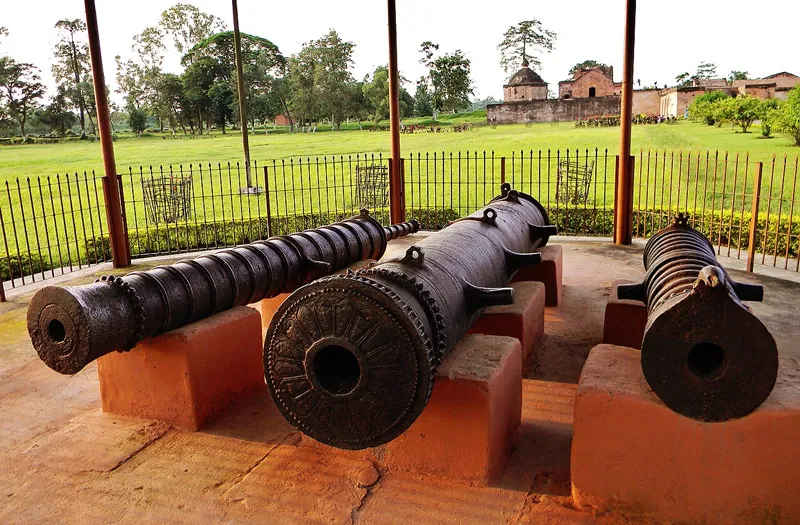
A large cannon known as Bahikhowa Barphukanar Bortop stands within the complex and was among the largest of the Ahom era.
-
On the opposite side stood a maternity house with two doors and four windows.
Puja House
On the northern side lies an octagonal puja house with eight corners. Lord Shiva was worshipped here. The chamber has a single door approximately 7.1 feet high and 5.2 feet wide. The prayer space remains preserved even today.
Defensive Strength and Mughal Resistance
Talatal Ghar was surrounded by brick fortifications and an earthen fort known as Garh. These defensive systems played a significant role in protecting the Ahom capital.
Despite multiple invasions in the region, Mughal forces never succeeded in conquering this part of Assam. Strongholds like Talatal Ghar were central to maintaining Ahom sovereignty.
The Rajbharal Legend
Another enduring legend claims that one sealed chamber of Talatal Ghar conceals the Rajbharal, the royal treasury of the Ahom dynasty. It is believed by some that immense wealth remains hidden within.
However, no verified evidence confirms the existence of this treasure, and the mystery remains unsolved.
Present Status and Heritage Importance
Today, Talatal Ghar is preserved by the Archaeological Survey of India. Visitors can explore the surviving above-ground levels, including labyrinthine galleries and the expansive flat rooftop with pavilions.
Though the underground tunnels remain closed for safety reasons, the monument continues to attract historians, researchers, and heritage enthusiasts.
Talatal Ghar stands as a symbol of Ahom military intelligence, architectural excellence, and Assam's royal past.
Conclusion: A Testament to Ahom Ingenuity
Talatal Ghar is not just a palace. It is a military masterpiece combining underground defense systems, strategic escape routes, indigenous engineering, and royal administration under one structure.
Its secret tunnels, fortified design, and resilient construction reflect the foresight of a dynasty that ruled Assam for six centuries.
For anyone seeking to understand the martial and architectural heritage of Assam, Talatal Ghar remains one of the most powerful and enduring symbols of Ahom strength.