Patharughat Peasant Uprising of 1894: Assam's Forgotten Chapter of Indian History
The Patharughat Peasant Uprising was one of the most significant agrarian protests against British colonial rule in Assam. It took place on 28 January 1894 at Patharughat in present-day Darrang district, when thousands of farmers gathered to oppose steep increases in land revenue. The peaceful protest ended in a tragic police firing that killed and injured many peasants.
Although the event happened decades before India's independence and 25 years before the Jallianwala Bagh massacre, it remains comparatively less known outside Assam. In Assamese historical memory, the incident is often remembered as Patharughatar Ran and is regarded as an important symbol of resistance against colonial economic exploitation.
Historical Background
After the British established control over Assam following the Treaty of Yandabo in 1826, the colonial administration introduced new systems of land assessment and revenue collection. Traditional arrangements that had allowed cultivators to pay through produce, labour or other forms of contribution gradually gave way to stricter cash-based revenue demands.
Repeated land surveys and revisions increased the financial burden on rural households. By the early 1890s, agricultural land revenue in several areas had risen sharply, with the increase around Patharughat reported at approximately 70% to 80%. For farmers dependent primarily on agriculture, such demands created severe economic pressure.
Patharughat and the Raij Mel Tradition
Patharughat was a farming settlement in Darrang where local cultivators organised themselves through Raij Mels, traditional public assemblies in which villagers discussed matters affecting their communities.
The Raij Mel became an important means of collective representation. Farmers from surrounding villages could gather, discuss revenue-related grievances and communicate their demands to colonial officials. The British administration became increasingly suspicious of these gatherings and viewed large assemblies as potential challenges to government authority.
By January 1894, dissatisfaction over the enhanced land revenue had reached a critical point. Farmers decided to organise a large Raij Mel at Patharughat and oppose the increased assessment.
The Protest of 28 January 1894
Thousands of peasants assembled at Patharughat to request relief from the increased land revenue. Their primary demand was a reduction in the excessive tax burden placed on agricultural land.
Colonial officials, however, treated the gathering as a threat to administrative authority. Deputy Commissioner J.D. Anderson and other officials were present in the area, while armed police and military police were deployed.
As the confrontation intensified, the authorities attempted to disperse the gathering. A lathi charge was followed by firing when the situation escalated. The protesters were predominantly ordinary cultivators and, according to accounts cited in the historical record, were not carrying firearms.
The Patharughat Firing
The firing caused heavy casualties among the protesting farmers. The exact number of deaths remains disputed.
The Darrang District Gazetteer of 1905 recorded 15 deaths and 37 injuries. However, local accounts, oral traditions and later historical narratives have placed the number of deaths considerably higher, often around 140, with more than 150 people reportedly injured.
This difference in casualty figures is an important part of the historical discussion surrounding the Patharughat uprising. Rather than presenting one figure as universally established, the event should be understood through both official colonial records and the memories preserved by local communities.
The uprising also involved people from different social and religious backgrounds, reflecting the broad rural character of the movement. Its central issue was not communal identity but opposition to an economic policy that placed severe pressure on agricultural families.
Why the Patharughat Uprising Matters?
The Patharughat incident demonstrates how economic policies could generate resistance among ordinary people during colonial rule. Farmers were challenging an increase in land revenue that directly affected their ability to sustain their livelihoods.
The uprising also illustrates the importance of local institutions such as the Raij Mel. Long before organised national movements reached every rural community, such assemblies allowed villagers to collectively express their grievances.
For this reason, Patharughat is frequently described as an early example of mass agrarian resistance in Assam. Its significance becomes even clearer when viewed alongside other peasant movements in the region, including the Phulaguri uprising of 1861 and the Rangia and Lachima protests of 1893-94.
Patharughat and Jallianwala Bagh
Patharughat is sometimes called the "Jallianwala Bagh of Assam" because both incidents involved British forces firing on civilian gatherings.
The comparison, however, should not obscure the distinct historical circumstances of each event. The Patharughat firing occurred in 1894, while the Jallianwala Bagh massacre took place in Amritsar in 1919. Patharughat was primarily rooted in opposition to colonial land revenue policies, making it especially important in the history of agrarian resistance in Assam.
The memory of Patharughat also highlights how several important episodes of India's anti-colonial history occurred outside the better-known centres of the national movement.
Leaders and Historical Records
The confrontation involved several colonial officials, including Darrang Deputy Commissioner J.D. Anderson and police authorities such as J.R. Barrington. Local villagers and Raij Mel representatives played an important role in organising the protest.
The names and experiences of ordinary farmers are preserved not only through administrative records but also through Assamese oral traditions and literature. Folk memories and writings helped ensure that the story of the victims was not completely lost.
The event has also been associated with Assamese literary works and historical accounts that document the atmosphere of colonial Assam and the suffering of rural communities.
Patharughat Memorial and Krishak Swahid Divas
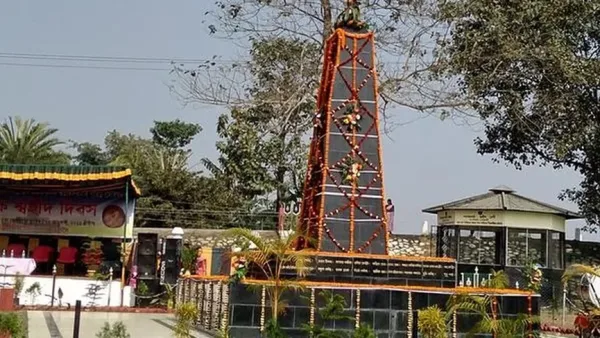
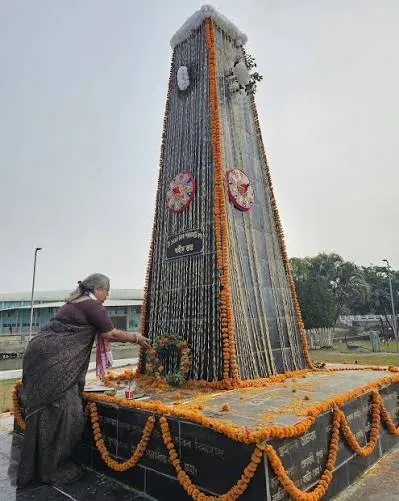
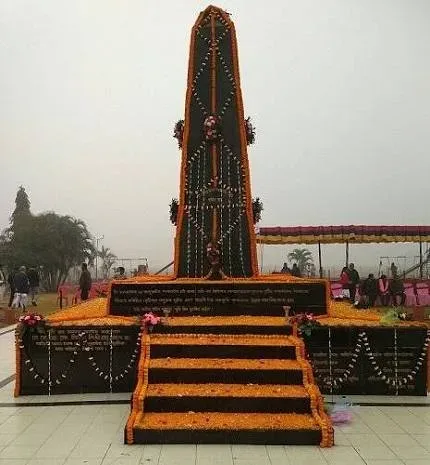
Today, Patharughat remains an important historical site in Darrang district. A memorial was constructed at the site to honour the farmers who lost their lives during the 1894 firing. The Patharughat Swaheed Minar has become a place where people gather to remember the martyrs and reflect on Assam's history of resistance.
28 January is observed as Krishak Swahid Divas, or Farmers' Martyrs Day, in memory of those who died at Patharughat. The annual observance keeps the story alive through commemorative programmes and public tributes.
The Patharughat Peasant Uprising is therefore much more than a local historical incident. It represents the struggle of ordinary cultivators against an unequal colonial revenue system and reminds us that India's freedom movement was shaped by countless local acts of resistance.
Remembering Patharughat
The history of India's freedom struggle extends far beyond the events that appear most frequently in textbooks. Patharughat offers an important example of how farmers in Assam organised themselves, challenged colonial policies and paid a heavy price for demanding economic justice.
More than a century later, the Patharughat Peasant Uprising remains an important part of Assam's historical heritage. The memorial, annual commemorations, oral traditions and historical writings continue to preserve the memory of the farmers who stood together at Patharughat in 1894.
Remembering their story gives a broader understanding of Assam's role in India's anti-colonial history and ensures that this important chapter does not remain forgotten.
FAQs about Patharughat Peasant Uprising
- What was the Patharughat Peasant Uprising?
The Patharughat Peasant Uprising was a major farmers' protest against increased British land revenue in Assam. It took place at Patharughat in Darrang district on 28 January 1894.
- When did the Patharughat Peasant Uprising take place?
The Patharughat Peasant Uprising took place on 28 January 1894 in Patharughat, Darrang district, Assam.
- Why did the Patharughat Peasant Uprising happen?
The uprising was mainly caused by steep increases in agricultural land revenue imposed by the British colonial administration. Farmers believed the enhanced taxes were too heavy for rural households to bear.
- Who were the Patharughat peasants?
The protesters were primarily local cultivators from Patharughat and surrounding villages who gathered through Raij Mel assemblies to oppose increased land revenue.
- What was a Raij Mel in Assam?
A Raij Mel was a traditional public gathering where villagers discussed community issues and collective grievances. During the colonial period, these assemblies became an important platform for farmers to express opposition to revenue policies.
- How many people died in the Patharughat firing?
The casualty figures are disputed. The Darrang District Gazetteer of 1905 recorded 15 deaths and 37 injuries, while local accounts and later historical sources commonly cite around 140 deaths.
- Why is Patharughat called the Jallianwala Bagh of Assam?
Patharughat is often called the Jallianwala Bagh of Assam because British forces opened fire on a civilian gathering there in 1894. The incident occurred 25 years before the Jallianwala Bagh massacre of 1919.
- Where is Patharughat located?
Patharughat is located in the Darrang district of Assam, near Mangaldai. The historic site is known for the 1894 peasant uprising and its memorial.
- What is Krishak Swahid Divas?
Krishak Swahid Divas, or Farmers' Martyrs Day, is observed on 28 January to remember the farmers who lost their lives during the Patharughat firing of 1894.
- What is the Patharughat Swaheed Minar?
The Patharughat Swaheed Minar is a memorial at the historic site dedicated to the farmers who died during the 1894 uprising. It serves as a place of remembrance and homage to the martyrs of the Patharughat Peasant Uprising.