Majuli's Sandy Soil Yields Success with Island's First Tea Plantation
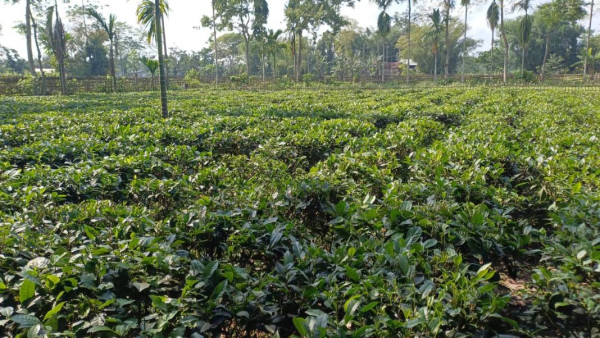
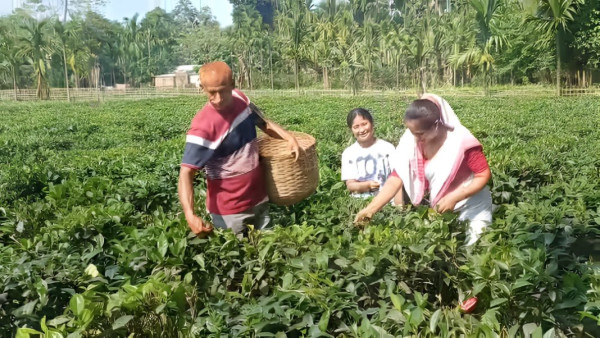
Majuli, the world's largest inhabited river island in Assam, is witnessing a remarkable agricultural transformation with the establishment of its first registered tea garden. In a breakthrough that challenges long-held beliefs about the island's sandy and flood-prone terrain, brothers Dulal Saikia and Tilak Saikia have successfully developed the Chenimai Tea Garden, proving that tea cultivation is possible even on the Brahmaputra island's unique soil.
The achievement is being viewed as a major milestone for Assam's geography, sustainable agriculture, and rural self-reliance. It has also opened new possibilities for economic growth and eco-friendly farming practices in Majuli.
Majuli Begins a New Agricultural Journey
For decades, tea cultivation in Majuli was considered nearly impossible due to the sandy soil deposited by the Brahmaputra River. The island is globally known for its Neo-Vaishnavite culture, satras, biodiversity, and riverine landscape, but large-scale tea farming had never been attempted successfully.
Determined to challenge this belief, Dulal and Tilak Saikia began experimenting with tea cultivation in 2020. Before starting the plantation, they conducted scientific soil testing through Assam Agricultural University in Jorhat. The results revealed that Majuli's clay-rich soil layers could support tea cultivation if managed properly.
Encouraged by the findings and inspired by guidance from a relative, the brothers planted their first tea saplings on September 27, 2021, celebrated as World Tourism Day.
Their vision was not only to grow tea but also to create a sustainable agricultural model that could inspire local youth and farmers to build livelihoods within Majuli itself.
Chenimai Tea Garden Receives Official Recognition
After years of hard work and careful nurturing of tea saplings, the project achieved a historic milestone in 2025 when the Tea Board of India officially registered Chenimai Tea Garden as Majuli's first recognised tea garden.
The success story has attracted attention across Assam because it demonstrates how innovation and scientific farming methods can overcome geographical challenges.
According to Dulal Saikia, many people initially doubted whether tea could survive in Majuli's porous and sandy terrain. However, through experimentation and persistence, the brothers proved that the island's soil could successfully support tea bushes.
Today, the tea plantation stands as a symbol of self-reliance, innovation, and agricultural resilience in Assam.
Challenges Faced During the Initial Years
The journey was not easy for the Saikia brothers. During the early phase of the plantation, they faced several practical difficulties, including the absence of tea factories in Majuli, shortage of trained workers, and lack of technical guidance regarding tea cultivation.
Despite these obstacles, they continued developing the plantation and gradually transformed nearly one bigha of land into a productive tea estate.
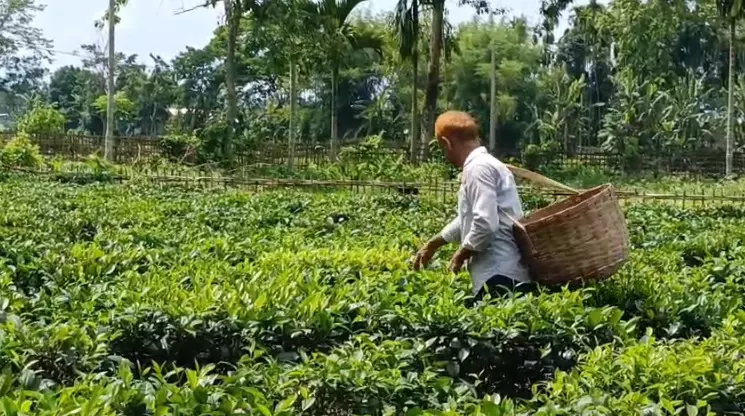
Currently, fresh tea leaves are plucked four times every month and sent to a tea processing factory in Habung, Dhemaji. Earlier, the leaves were supplied to a tea factory in Maskhowa.
The plantation currently produces around 66 kilograms of tea leaves during peak collection periods, while a fully mature one-bigha plantation is expected to yield nearly 80 to 90 kilograms of leaves.
Expansion Plans and Future Possibilities
Encouraged by the success of the first phase, the brothers are now preparing to expand the tea plantation to more than three bighas of land. Infrastructure development work has already started for the expansion project.
The success of Chenimai Tea Garden has also sparked discussions about new opportunities for sustainable agriculture and tea-based economic activities in Majuli.
Experts believe the plantation could inspire more farmers to experiment with diversified farming models suited to the island's riverine ecosystem.
Environmental and Geographical Importance
The development is highly significant from the perspective of Assam geography and environment studies. Majuli constantly faces challenges such as erosion, floods, and shrinking landmass caused by the Brahmaputra River.
Tea cultivation on the island's sandy terrain highlights the adaptive resilience of local farming communities and showcases how scientific agricultural practices can support sustainable land use.
Deep-rooted tea plants may also help stabilise loose soil in certain areas, potentially contributing to erosion control along vulnerable riverbanks.
The achievement proves that even environmentally sensitive regions like Majuli can adopt innovative farming practices without compromising ecological balance.
A New Identity for Majuli
Majuli has long been internationally recognised for its Vaishnavite monasteries, satra culture, mask-making traditions, and scenic river landscapes. With the success of Chenimai Tea Garden, the island is now gradually building a new identity in Assam's tea landscape as well.
The achievement by Dulal and Tilak Saikia represents more than just the success of a tea plantation. It is a story of determination, innovation, and belief in local potential.
As Assam continues exploring sustainable agricultural development, Majuli's first registered tea garden stands as a powerful example of how scientific thinking and local entrepreneurship can create new opportunities even in the most challenging geographical conditions.