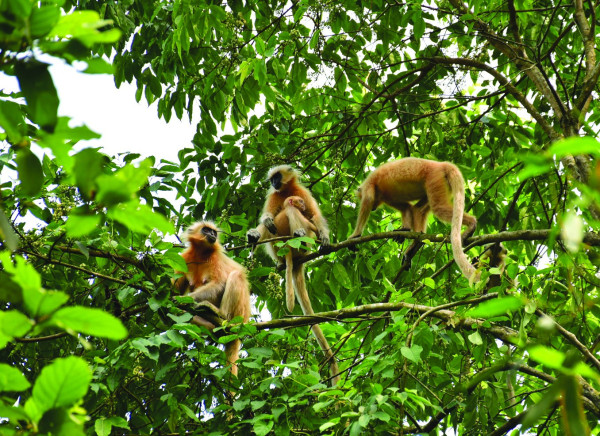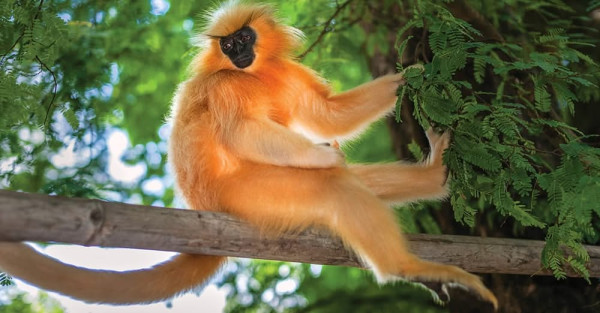
The golden langur (Trachypithecus geei) is one of the most endangered primates in the world, found only in western Assam in India and parts of southern Bhutan. Known for its striking golden fur and shy nature, this rare species has become a symbol of biodiversity in the eastern Himalayan region. However, with a population of fewer than 7,400 individuals as of 2024, the golden langur is facing serious threats that could push it closer to extinction.
Discovery and Historical Significance
The golden langur was scientifically documented in the 1950s by British naturalist Edward Pritchard Gee, after whom it is also named Gee’s golden langur. While the global scientific community recognized it only recently, local communities such as the Bodo and Rabha people had long been aware of the species and held it in cultural reverence.
This primate is considered one of the rarest Old World monkeys and remains unique to a narrow geographic range between the Manas and Sankosh rivers.
Habitat and Distribution
Golden langurs inhabit subtropical forests in the Himalayan foothills, typically at elevations ranging from 100 to 1,500 meters. Their distribution is limited to a few protected and fragmented forest areas in Assam, including:
- Chakrashila Wildlife Sanctuary
- Kakoijana Reserved Forest
- Manas National Park
- Raimona National Park
- Forest patches in Kokrajhar and Dhubri districts
These forests provide the dense canopy cover that golden langurs depend on for movement, feeding, and shelter.
Physical Characteristics and Behavior
Golden langurs are easily recognized by their long, silky fur that changes color with the seasons—from creamy white in summer to deep golden-orange in winter. They have a black face, expressive eyes, and a long tail that can exceed one meter in length.
These primates are strictly arboreal, meaning they live and move through trees. They are highly social animals, typically found in small groups consisting of one dominant male, several females, and their offspring. Despite their social nature, golden langurs are shy and tend to avoid human interaction.
Major Threats to Survival
Habitat Loss and Fragmentation
One of the biggest threats to golden langurs is the rapid loss of forest cover. Infrastructure development, deforestation, and agricultural expansion have broken their habitat into smaller, isolated patches. Over the last three decades, their population has declined significantly due to these changes.
Electrocution and Road Accidents
As forests become fragmented, langurs are forced to cross roads and power lines. This exposes them to fatal risks such as electrocution and vehicle collisions, which have become common causes of death.
Restricted Gene Flow
Fragmentation also limits movement between groups, leading to inbreeding. This reduces genetic diversity and weakens the species' long-term survival chances.
Human-Wildlife Conflict
Encroachment into forest areas has increased interactions between humans and langurs, often resulting in conflict and habitat disturbance.
The Last Strongholds: Kakoijana and Chakrashila
Kakoijana Reserved Forest in Assam is considered one of the last critical habitats for the golden langur. However, it is highly fragmented and surrounded by human settlements.
Chakrashila Wildlife Sanctuary remains another important refuge, supporting a relatively stable population. These areas are vital for conservation but require immediate protection and restoration efforts.
Conservation Efforts
Community-Based Conservation
Local communities play a crucial role in protecting golden langurs. In areas like Kakoijana and Chakrashila, community groups actively patrol forests, prevent illegal logging, and plant native trees to restore canopy connectivity.
Canopy Bridges
To reduce deaths from road accidents and electrocution, canopy bridges have been constructed over highways. These allow langurs to safely cross between forest patches without descending to the ground.
Habitat Restoration
Efforts are underway to reconnect fragmented forests through ecological corridors. This helps improve gene flow and supports long-term population stability.
Institutional Support
Organizations like the Wildlife Trust of India and regional authorities are working with conservationists, researchers, and policymakers to implement sustainable strategies for protecting the species.
Why Conservation Matters
The golden langur is not just a rare primate but also an indicator of forest health in the eastern Himalayan ecosystem. Protecting this species helps preserve biodiversity, maintain ecological balance, and safeguard the livelihoods of communities dependent on forest resources.
Conclusion
The golden langur’s survival depends on immediate and sustained conservation action. While community efforts and conservation initiatives have shown promising results, challenges like habitat fragmentation and human interference continue to threaten its existence. Protecting Assam’s golden langur is not just about saving a species—it is about preserving an entire ecosystem for future generations.