Famous Food of Assam - 25 Traditional Assamese Dishes You Must Try
Assam is widely known for its tea gardens, the Brahmaputra River, wildlife and rich cultural traditions, but its food is equally distinctive. Assamese cuisine has developed around the state's fertile plains, rivers, forests, wetlands and diverse communities. Rice, freshwater fish, leafy greens, seasonal vegetables, bamboo shoots, local herbs, sesame, mustard and naturally sour ingredients form the foundation of many traditional dishes.
One of the most noticeable features of Assamese food is its simplicity. Traditional recipes generally use less oil and fewer spices than many other Indian cuisines, allowing the natural flavour of the main ingredients to remain prominent. Fresh, dried and fermented ingredients are often used to create distinctive tastes without making the food excessively spicy.
Assam is also home to numerous ethnic communities, including the Bodo, Mising, Tiwa, Karbi and Dimasa communities, each of which has its own culinary traditions. As a result, there is no single style that represents every dish eaten in Assam. Instead, Assamese food is a broad collection of rice-based meals, fish and meat preparations, vegetarian dishes, fermented foods, snacks, sweets and traditional beverages.
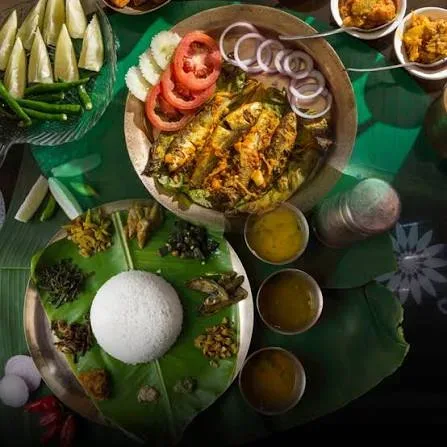
A traditional Assamese meal may include rice, dal, xaak or leafy vegetables, a vegetable preparation, fish or meat, khar and a sour preparation known as tenga. Different households arrange and prepare these dishes according to their own customs and available ingredients.
Khar - A Distinctive Assamese Preparation
Khar is one of the most characteristic foods associated with traditional Assamese cuisine. It is also the name given to a number of preparations made using an alkaline liquid traditionally produced by filtering water through the ash of dried banana peels. Bhim Kol banana is commonly associated with this traditional process.
The resulting alkaline liquid can be combined with raw papaya, gourds, lentils and other vegetables, while some versions are prepared with fish or meat. Khar has a mild, earthy and slightly alkaline character that makes it very different from ordinary curries.
In many traditional Assamese meals, khar is served near the beginning of the meal. Its importance is not limited to flavour; it represents an old culinary practice closely connected with local agriculture and household food traditions.
Masor Tenga - The Famous Assamese Sour Fish Curry
Masor Tenga is among the best-known dishes of Assam and is an essential food to try for visitors who enjoy fish. It is a light and tangy fish curry prepared with freshwater fish and a souring ingredient.
Depending on the region and household, ingredients such as ou tenga or elephant apple, tomato, lemon and other locally available sour fruits may be used. Rohu and other freshwater fish are commonly used. The preparation generally contains relatively little oil and spice, allowing the flavour of the fish and souring ingredient to stand out.
Masor Tenga is particularly enjoyable with plain rice and is a familiar part of Assamese home cooking.
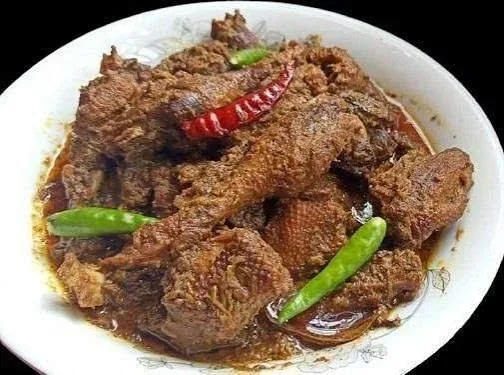
Hahor Mangkho - Assamese Duck Meat Curry
Duck meat, locally known as hahor mangkho, occupies an important place in Assamese food culture. It is especially associated with winter meals, celebrations and occasions when special food is prepared for family or guests.
Duck can be cooked in several ways in Assam. One popular preparation combines duck with ash gourd, while other recipes use sesame, pumpkin or lentils. The rich flavour of duck is balanced by these comparatively mild ingredients, creating a hearty but distinctly Assamese curry.
Aloo Pitika - Assamese Mashed Potato
Aloo Pitika is one of the simplest and most comforting dishes in Assam. Boiled potatoes are mashed and mixed with ingredients such as mustard oil, onion, green chilli, coriander and salt.
Despite its simplicity, Aloo Pitika is an important part of everyday Assamese meals and is commonly served with rice and dal. Similar pitika preparations can also be made using other vegetables, roasted ingredients and, in some versions, fish.
For visitors interested in experiencing everyday Assamese home-style food rather than elaborate dishes, Aloo Pitika is an excellent choice.
Pitha - Traditional Assamese Rice Cakes
Pitha is one of the most important traditional foods associated with Assamese festivals, especially Bihu. These rice-based preparations can be sweet or savoury and are made using techniques such as steaming, roasting, frying or cooking inside bamboo.
Til Pitha is prepared using sticky rice flour and a filling of sesame and jaggery. Sunga Pitha is cooked inside bamboo, giving it a distinctive preparation method and subtle aroma. Ghila Pitha is generally fried and has a soft, slightly crisp texture, while Kol Pitha uses ripe banana and rice flour.
Pitha is much more than a snack. Its preparation is closely connected with family gatherings, seasonal celebrations and the transmission of traditional Assamese food skills from one generation to another.
Doi Chira - Traditional Assamese Jolpan
Doi Chira is a popular form of Assamese jolpan, particularly associated with Bihu and other festive occasions. It combines flattened rice, locally known as chira, with curd and jaggery, with additional ingredients sometimes included according to family preference.
It is simple, filling and refreshing, making it suitable for breakfast or a traditional festive meal. Jolpan itself represents an important part of Assamese food culture and can include several rice-based and dairy-based preparations.
Poita Bhat - Fermented Rice of Assam
Poita Bhat is a traditional preparation made by soaking cooked rice in water and allowing it to rest overnight. By the following morning, the rice develops a mild fermented character and is usually eaten with salt, onion, green chilli and mustard oil.
It is particularly associated with rural households and hot summer days because the dish is light and refreshing. Different families serve it with a variety of accompaniments, including mashed vegetables, fish, fermented bamboo shoot preparations and other traditional sides.
Poita Bhat also reflects an older household practice of making practical use of leftover cooked rice.
Xaak aru Bhaji - Traditional Assamese Greens
Xaak aru Bhaji refers broadly to preparations made from leafy greens and locally available vegetables. Assam has a wide variety of edible greens, many of which feature regularly in traditional home cooking.
The greens may be cooked with mustard seeds, garlic, ginger, onion or other simple seasonings. The preparation is generally light and allows the natural taste of the vegetables to remain prominent.
For vegetarians, xaak preparations are an important part of Assamese cuisine and demonstrate how local plants and seasonal produce are incorporated into everyday meals.
Baanhgajor Lagot Kukura - Chicken with Bamboo Shoot
Baanhgajor Lagot Kukura combines chicken with bamboo shoots, another ingredient strongly associated with food traditions across Assam and Northeast India. Bamboo shoots may be used fresh or after fermentation and provide a distinctive aroma and tangy flavour.
The dish demonstrates how Assamese cooking uses ingredients obtained from the surrounding landscape and combines them with meat, lentils and simple seasonings.
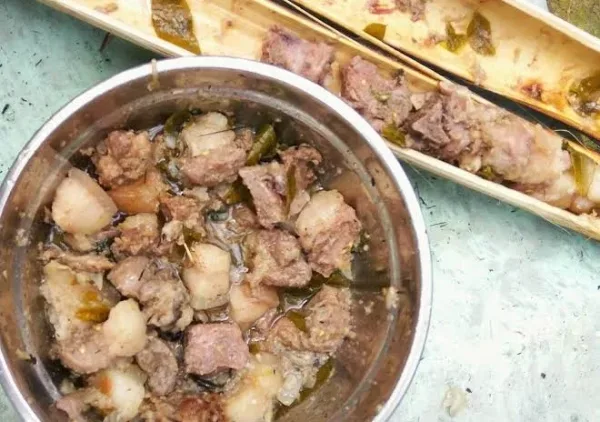
Pork with Bamboo Shoot
Pork is particularly important in the food traditions of several indigenous communities of Assam. One popular preparation combines pork with fermented bamboo shoots, chilli and other local ingredients.
Smoked pork may also be used, producing a deeper flavour when combined with bamboo shoot. The resulting dish is strongly flavoured and is especially associated with tribal food traditions in the state.
Til Gahori - Pork with Black Sesame
Til Gahori is another traditional pork preparation in which black sesame plays an important role. The sesame is usually roasted and ground before being incorporated into the dish along with pork, ginger, garlic and other seasonings.
Black sesame gives the preparation a nutty flavour and distinctive character. This type of cooking illustrates the Assamese preference for building flavour through a small number of carefully selected ingredients rather than using large quantities of spices.
Chicken with Black Sesame
Black sesame is not limited to pork dishes. It is also used in traditional chicken preparations in some Assamese communities. A notable example is associated with Tiwa food traditions.
The sesame is roasted and ground before being combined with chicken and a selection of herbs and spices. The result is a rich, nutty preparation with a distinctive colour and flavour.
Pani Hamuk - Water Snail Preparation
Pani Hamuk, or water snail, is an unusual traditional food for visitors unfamiliar with the cuisine of Assam and the wider Northeast. The snails are traditionally collected from suitable wetland and agricultural areas and cooked with ingredients such as pumpkin and potato.
The dish reflects the close relationship between local communities and the natural resources available around paddy fields and wetlands. For adventurous food travellers, Pani Hamuk offers an opportunity to experience a lesser-known part of Assam's culinary heritage.
Ou Tenga - Elephant Apple Preparation
Ou Tenga is made using elephant apple, known locally as ou. The fruit has a naturally sour flavour and is used in different Assamese preparations.
It may be cooked into a tangy accompaniment with mustard seeds and jaggery, creating a balance between sour and sweet flavours. Elephant apple is also widely used as a souring ingredient in fish preparations, making it an important ingredient in Assamese cooking.
Paror Mangkho - Pigeon Meat Curry
Pigeon meat has traditionally been used in Assamese cuisine, particularly for special meals and occasions. Paror Mangkho is generally prepared as a curry and may be served with rice and accompanying vegetable preparations.
In some traditional versions, banana flower or koldil is served alongside the meat. The dish represents the use of locally available ingredients in older Assamese household cooking.
Kangthu or Maas Patot Diya - Fish Cooked in Leaves
Maas Patot Diya is a traditional cooking technique in which fish and other ingredients are wrapped in banana or turmeric leaves and cooked over heat.
Small fish may be combined with ingredients such as raw turmeric, onion, garlic, chilli, herbs and salt before being wrapped in leaves. The parcel is then cooked over a pan or charcoal.
This method, also associated with Karbi food traditions in Assam, allows the ingredients to cook together while developing a subtle smoky and earthy aroma.
Assamese Fish Thali
Fish is an important part of Assamese cuisine because of the state's extensive river systems, wetlands, ponds and other freshwater resources. Traditional meals may feature several types of locally available fish, including rohu and smaller indigenous varieties.
There are numerous fish preparations across Assam. Fish may be cooked with sour ingredients, fermented bamboo shoots, leafy vegetables or mustard. It can also be roasted, fried, boiled or prepared with vegetables.
A traditional Assamese fish meal can therefore vary considerably from one household or community to another, but rice remains the essential accompaniment.
Rice - The Foundation of Assamese Food
Rice is at the centre of Assamese food culture. Assam has a remarkable diversity of traditional rice varieties, with different types used for everyday meals, festive preparations, snacks and sweets.
Joha rice is known for its natural aroma and is often served on special occasions. Bora saul, a sticky rice variety, is particularly important for pitha and other traditional preparations.
Rice is also used to make many forms of jolpan, fermented foods and festival dishes, demonstrating how deeply it is connected with Assamese culture.
Jolpan - Traditional Assamese Breakfast
Jolpan is a traditional Assamese breakfast or light meal rather than one specific dish. It can include chira, curd, jaggery, puffed or sticky rice and other locally prepared items.
Jolpan is particularly important during festivals and when guests are welcomed into an Assamese household. Its simplicity reflects the wider food philosophy of the state, where rice-based ingredients are combined with fresh and locally available foods.
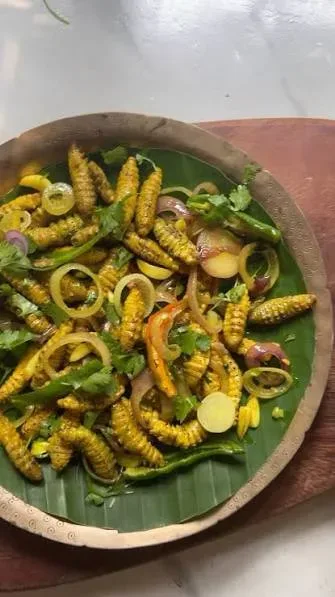
Silkworm Preparations
Silkworm is another distinctive food associated with some communities of Assam and the Northeast. The edible larvae are prepared with local seasonings and may be fried or cooked into a spicy preparation.
Although it may seem unusual to visitors from outside the region, insect-based foods are part of the traditional food culture of several indigenous communities. It is therefore an example of the considerable diversity found within Assam's cuisine.
Festival Sweets of Assam
Assamese festivals, particularly Bihu, are closely associated with homemade sweets and rice-based delicacies. Coconut, sesame, jaggery and sticky rice are among the most common ingredients.
Narikolor Laru is made from coconut and jaggery, while Tilor Laru combines sesame with jaggery. Til Pitha uses sticky rice and sesame filling, and Bhapot Diya Pitha is a steamed preparation often filled with coconut and jaggery.
These foods are traditionally prepared at home and shared with family, neighbours and guests during festive occasions.
Narikolor Laru - Coconut Sweet
Narikolor Laru is a traditional Assamese sweet prepared from grated coconut and jaggery. The mixture is cooked until it reaches the right consistency and is then shaped into small balls.
It is especially popular during Bihu and other festive occasions. Its simple ingredients and homemade preparation make it an enduring part of Assamese hospitality.
Tilor Laru - Sesame and Jaggery Sweet
Tilor Laru is another popular Bihu delicacy. Roasted sesame seeds are combined with jaggery and shaped into small round sweets.
The nutty flavour of sesame and the deep sweetness of jaggery make it a simple but memorable Assamese festive treat.
Payox - Assamese Rice Pudding
Payox is a traditional rice pudding prepared by slowly cooking rice with milk and sugar or jaggery. Aromatic rice varieties can add a pleasant fragrance to the preparation.
It is commonly associated with celebrations, religious occasions and meals prepared for guests. Its creamy texture and mild sweetness make it one of the traditional desserts worth trying in Assam.
Assamese Tea - The State's Signature Drink
No discussion of Assam's food culture is complete without tea. Assam is internationally recognised for its black tea, particularly the strong and full-bodied tea produced in the Brahmaputra Valley and other tea-growing areas.
Tea is more than a commercial crop in Assam; it is deeply connected with everyday hospitality. A cup of hot tea is commonly offered to visitors and guests, and Assamese tea may be enjoyed with milk or without it.
Visitors travelling through Assam can experience the drink in many settings, from homes and local tea stalls to tea gardens and cafes.
Vegetarian Food in Assam
Assamese cuisine offers many choices for vegetarians. Rice, dal, xaak, vegetable preparations, pitika, pitha, jolpan and several forms of khar can form a complete traditional vegetarian meal.
Aloo Pitika, vegetable khar, xaak aru bhaji, poita bhat and different varieties of pitha are examples of dishes that can be enjoyed without meat or fish. The use of seasonal vegetables and fresh greens gives Assamese vegetarian food a distinctive character.
Where to Try Famous Assamese Food?
Travellers can experience Assamese cuisine in traditional restaurants, local eateries, homestays and households across the state. Guwahati offers the widest choice for visitors who want to sample several regional dishes in one trip, while smaller towns and rural areas can provide a more local food experience.
Bihu celebrations and other cultural events are also excellent opportunities to experience traditional snacks and sweets. However, some dishes are strongly associated with particular communities or seasons, so availability can vary depending on where and when you travel.
Best Assamese Foods to Try First
If you are visiting Assam for the first time and want to begin with a small selection, Masor Tenga, Khar, Aloo Pitika, Pitha, Duck Curry, Poita Bhat, Xaak aru Bhaji, bamboo shoot preparations, Doi Chira and Assamese tea are good starting points.
Those interested in exploring the state's wider tribal and community food traditions can also look for Pani Hamuk, pork with bamboo shoot, black sesame preparations, Maas Patot Diya and silkworm dishes.
Why Assamese Cuisine Is Special?
The uniqueness of Assam food comes from its close relationship with the land and its people. Rice from local fields, fish from rivers and wetlands, greens from the surrounding countryside, bamboo shoots from the forests and seasonal fruits all contribute to the character of the cuisine.
Assamese cooking does not generally depend on heavy spice mixes. Instead, it makes careful use of sour fruits, fermented ingredients, herbs, mustard, sesame and other locally available products. The result is food that can be mild, earthy, tangy, smoky, fermented or aromatic depending on the dish.
For travellers, exploring Assamese cuisine is therefore more than simply tasting regional recipes. It provides a way to understand Assam's agricultural traditions, festivals, ethnic diversity, hospitality and connection with nature.
Conclusion
The famous food of Assam represents a rich combination of traditional knowledge, local ingredients and cultural diversity. From the earthy flavour of Khar and the tangy freshness of Masor Tenga to festive Pithas, comforting Aloo Pitika, aromatic rice, bamboo shoot dishes and Assam tea, each preparation offers a different glimpse into the state's culinary heritage.
Whether you prefer vegetarian food, fish, meat, traditional sweets or simple rice-based meals, Assam has plenty to explore. The best way to understand Assamese cuisine is to try different dishes across the state and discover how the same ingredients can be prepared differently by different communities and families.